Starting calisthenics can feel overwhelming when social media feeds explode with athletes executing flawless handstands and cranking out endless push-ups.
But here’s the truth: bodyweight training doesn’t require fancy equipment, expensive gym memberships, or years of athletic background.
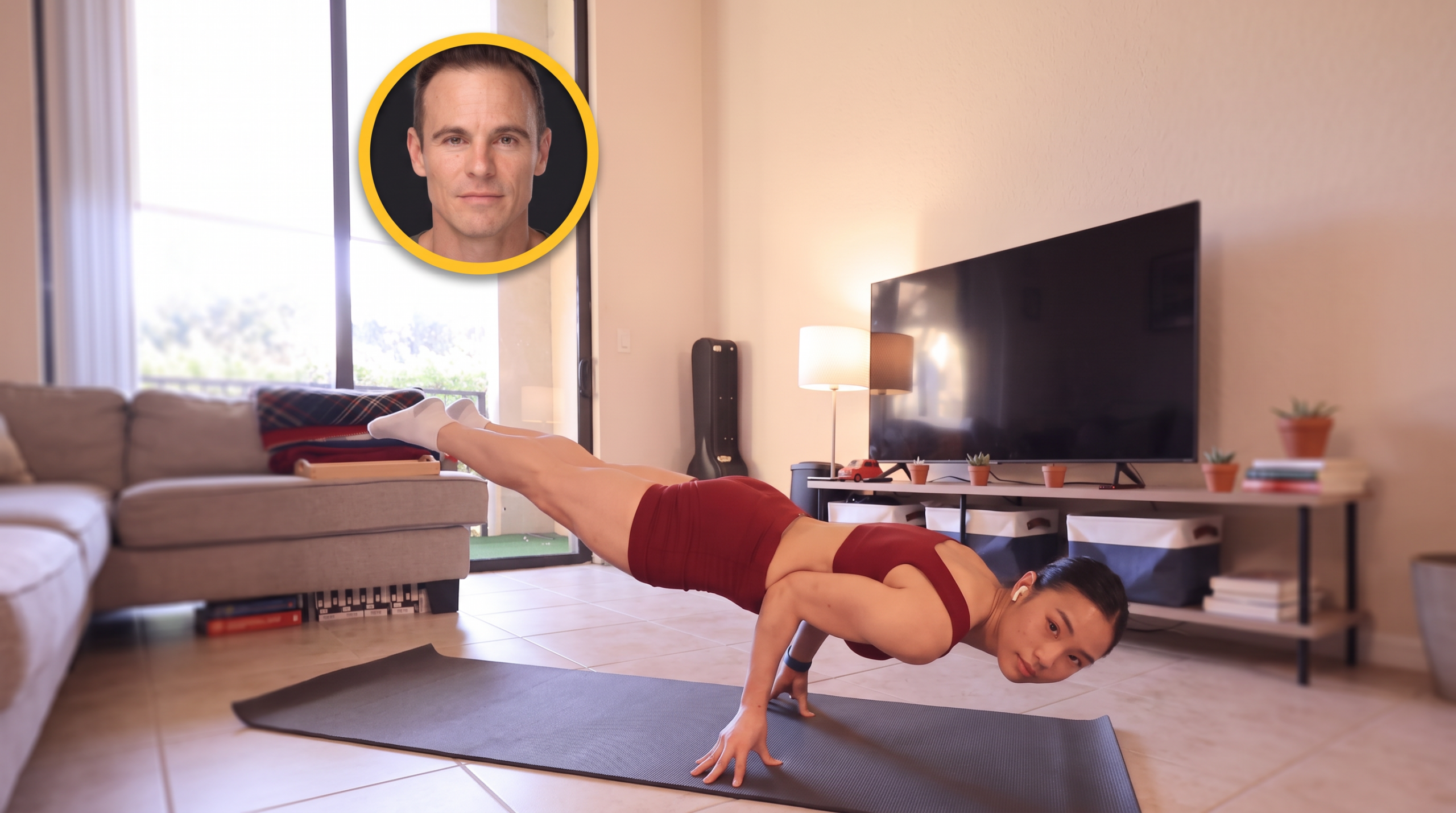
One athlete who learned this lesson early is sharing her 14-year journey—complete with a wrist injury that forced her to reimagine how handstands work.
Her advice cuts through the noise and offers a practical roadmap for anyone ready to move their body, starting right now.
Jump to:
- What Calisthenics Actually Means
- One Athlete’s 14-Year Journey From Living Room to Finger Handstands
- Step One: Eliminate Every Excuse Standing in Your Way
- Step Two: Assess Where You Actually Stand
- Step Three: Set Goals That Actually Motivate
- Step Four: Build a Structure You’ll Maintain
- Mistakes That Sabotage Beginners
- The Four-Step Roadmap to Launch Your Practice
- Why This Approach Works Long-Term
- What Happens After the First Month
- When Modifications Become Necessary
- The Mental Game: Patience and Self-Compassion
- Starting Today, Not Monday
What Calisthenics Actually Means
At its core, calisthenics is simply bodyweight training—push-ups, squats, planks, handstands, and any movement powered by your own muscle against gravity.
No dumbbells. No barbells. No complicated machines.
You don’t need a gym to start. That doesn’t mean that you can’t do it in a gym. Go right ahead. Do it wherever, whenever you want to.
This flexibility makes calisthenics uniquely accessible. A bedroom corner, a patch of carpet, even a hotel room on the road—all viable training grounds.
One Athlete’s 14-Year Journey From Living Room to Finger Handstands
The instructor behind this advice started teaching herself calisthenics at age 10, long before YouTube algorithms perfected fitness content.
Little 10-year-old me thought, ‘Well, this looks cool, and I want to do cool things.’
Without parental buy-in for equipment—they assumed interest would fizzle in 48 hours—she carved out space on her bedroom floor and started moving.
Fourteen years later, she performs handstands on her fingers, press handstands, and weighted stalder presses.
When Injury Redefines Technique
At 14, pain and swelling in her right wrist signaled something more serious than overuse. Two years later, doctors diagnosed Kienböck disease, a form of avascular necrosis where blood supply to a wrist bone—the lunate—shuts down.
Surgery at 16 left her wrist permanently limited in flexion, unable to bear weight flat on the palm.
I can no longer bend my wrist fully, and my wrist kind of looks like this. This is as far as I can bend it, and I can’t put my weight all the way flat on my palm.
Rather than abandon handstands, she adapted—training on fists, then progressing to finger balances over years of patient skill-building.
Step One: Eliminate Every Excuse Standing in Your Way
The most common barriers beginners cite—no equipment, no space, no perfect plan—dissolve under scrutiny.
There are no excuses for starting calisthenics other than what is in your mind.
A mindset shift helps: calisthenics begins the moment you move your body. Knee push-ups on carpet? That counts. Squats during a commercial break? Absolutely calisthenics.
Waiting for Monday, for new gear, or for motivation to strike wastes time. Start now, even if “now” means three wall push-ups before breakfast.
Step Two: Assess Where You Actually Stand
Comparison to elite athletes poisons progress. Training begins from where you are, not where Instagram suggests you should be.
Simple tests reveal your baseline without judgment:
- Push-ups: How many can you complete—standard, knee, incline, or wall variations?
- Air squats: Track total reps before form breaks down
- Plank hold: Time an elbow plank to gauge core and shoulder endurance
- Dead hang: Grip a bar (or door frame) and measure seconds before letting go
This is information, not judgment. It’s totally fine. If you can’t do a push-up right now, that is totally fine.
Document numbers, but skip the shame. Every accomplished athlete remembers struggling through their first rep.
Step Three: Set Goals That Actually Motivate
Vague aspirations—”get stronger,” “build muscle,” “lose weight”—lack the specificity needed to drive behavior.
Measurable, short-term milestones work better:
- Complete one full push-up (if currently doing knee push-ups)
- Hold a dead hang for 20 seconds (if baseline is 10)
- Achieve a 10-second wall handstand (before attempting freestanding balance)
- Progress to a 3-second freestanding handstand, then 5, then 10
Long-term dreams—full planche, one-arm pull-up, 60-second handstand—provide direction. But intermediate checkpoints prevent discouragement and map tangible progress.
Having shorter, measurable goals in between will help you get there sooner.
Step Four: Build a Structure You’ll Maintain
Consistency outweighs perfection. Two paths work, depending on personality:
Option A: Fixed Schedule
Designate specific days and times—Monday/Wednesday/Friday at 7 a.m., for example. Non-negotiable calendar blocks reduce decision fatigue.
Option B: Flexible Frequency
Commit to three sessions weekly, fitting them around life’s chaos. Risk: procrastination piles workouts into the weekend, when soreness or plans derail momentum.
If structure keeps you accountable, choose Option A. If autonomy fuels you—and you trust your discipline—Option B works.
Consistency over perfection. As long as you do it, it’s better than not doing it at all.
Missed sessions don’t equal failure. Life interrupts. Friends invite you out. Work explodes. One skipped day doesn’t erase progress—just resume the next.
Mistakes That Sabotage Beginners
Doing Too Much, Too Soon
Excitement drives newcomers to attempt every drill in one marathon session. Result? Crippling soreness that demands a full week of recovery.
Worse, pushing beyond current capacity invites injury—strains, sprains, or overuse damage that sidelines training indefinitely.
You want calisthenics to be additive to your life, to add something good, to add strength, to add positivity, rather than to take away things like having an injury.
Comparing Yourself to Other Athletes
Social media amplifies this trap. Comment sections fill with comparisons—”Have you heard of this person?” or “You’re not as good as them.”
Every athlete carries different histories. Some practiced gymnastics for years. Others face physical limitations—chronic injuries, joint conditions, genetic factors—that shape what’s possible.
It all doesn’t really matter because in the end, it’s you against yourself.
Satisfaction comes from personal milestones, not leaderboard rankings.
Quitting Before Skills Mature
Advanced movements take time—sometimes months, sometimes years. Beginners often bail after a few weeks when handstands remain elusive or pull-ups feel impossible.
Progress isn’t linear. Skills emerge, vanish during breaks, then return with renewed practice.
I have been working on skills that have taken me years to accomplish. Sometimes I get it and then I lose it. I get it and I lose it. And it’s like I’m bouncing on that line and it’s so close.
Persistence matters more than talent. Stay consistent, and breakthroughs eventually arrive.
Overplanning Instead of Moving
Perfect plans seduce procrastinators. “I’ll map out cardio days, strength days, skill days, then start Monday.”
Monday arrives. Fatigue hits. “Next week will be better.”
Every week feels too busy. Meanwhile, months pass without a single push-up attempted.
There is no barrier to start. You don’t need a gym. You don’t need equipment. You can do it in your pajamas.
Action beats strategy. Start moving now, refine the plan later.
The Four-Step Roadmap to Launch Your Practice
To distill everything into actionable steps:
- Eliminate excuses. Movement is calisthenics—no gear, no gym, no perfect conditions required.
- Evaluate your baseline. Test push-ups, squats, planks, and hangs to establish honest starting data.
- Set specific, short-term goals. Five push-ups. Twenty-second dead hang. Ten-second wall handstand. Celebrate each, then set the next.
- Choose your structure. Fixed schedule or flexible frequency—pick what you’ll actually maintain. Consistency trumps perfection every time.
Why This Approach Works Long-Term
Calisthenics thrives on accessibility and adaptability. No monthly fees. No commute. No waiting for equipment.
Travelers train in hotel rooms. Parents squeeze sessions between school drop-off and meetings. Athletes recovering from injury modify movements to protect vulnerable joints.
The practice scales to life’s demands rather than forcing life around rigid gym schedules.
Intrinsic motivation fuels longevity. Progress feels personal—you completed that first unassisted pull-up, you held that handstand two seconds longer. External validation fades; self-defined achievement endures.
What Happens After the First Month
Early gains arrive quickly. Neurological adaptations—your brain learning to recruit muscle fibers efficiently—boost strength before visible muscle growth appears.
Expect push-up reps to climb. Plank holds to lengthen. Balance to improve.
Then progress slows. This is normal. Advanced skills demand patience, technique refinement, and progressive overload—gradually increasing difficulty through harder variations or longer holds.
Check in regularly. Are goals still motivating? Does the routine need adjustment? Is rest adequate?
Training evolves as you do. The athlete who started with wall push-ups eventually programs one-arm push-up progressions. The beginner who trembled through 10-second planks later holds front levers.
When Modifications Become Necessary
Injuries, chronic conditions, or joint issues don’t disqualify anyone from bodyweight training—they simply require creative adaptation.
Wrist pain? Explore fist push-ups, parallettes, or grips that shift load. Shoulder impingement? Adjust hand placement, reduce range of motion, or substitute exercises.
Listen to your body’s signals. Discomfort during a stretch differs from sharp joint pain. One builds capacity; the other warns of damage.
Modifications aren’t inferior—they’re intelligent training tailored to individual needs.
The Mental Game: Patience and Self-Compassion
Physical progress gets attention, but mental resilience determines who sustains a practice for years.
Bad days happen. Some sessions feel strong; others, sluggish and frustrating. Skills regress during breaks or high-stress periods.
Self-compassion matters. One athlete’s journey included wrist surgery, years rebuilding strength, and learning finger balances because standard handstands became impossible.
Rather than viewing limitations as failure, she redefined success on her own terms.
That mindset—adapting rather than quitting—separates lifelong practitioners from those who abandon training after the first plateau.
Starting Today, Not Monday
The hardest rep is the first one. Not because it’s physically demanding, but because it requires deciding to begin.
No equipment to buy. No membership to activate. No outfit to assemble.
Drop and complete three push-ups—any variation. Hold a plank for 15 seconds. Execute five squats.
Congratulations. You’ve started calisthenics.
Everything that follows—strength gains, skill acquisitions, confidence—builds from that single decision to move your body right now.