Burning 15 calories on the ski erg might sound simple, but it’s a powerful benchmark for testing your power endurance—your ability to maintain explosive output across an extended effort.
This isn’t just about pulling harder—it’s about pulling smarter, faster, and more efficiently with solid technique.
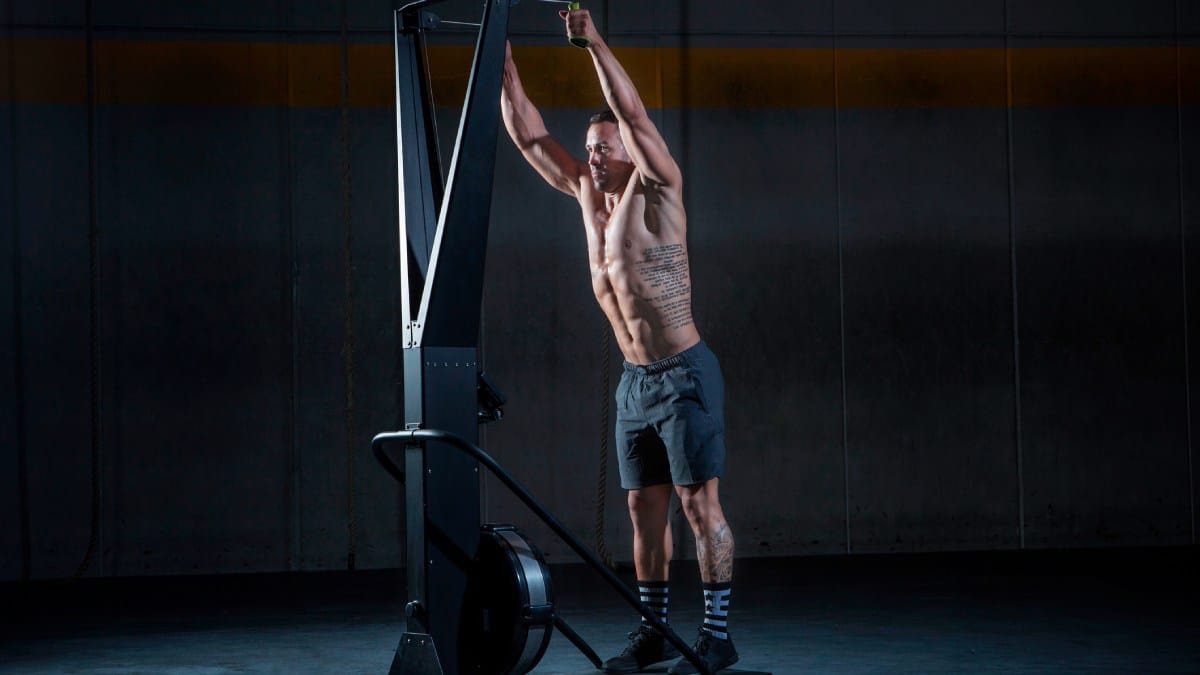
Power endurance is essential in nearly every sport, from sprinting to CrossFit, where explosive movements often stack on top of each other for time or reps.
If you’ve ever done a series of box jumps, kettlebell swings, or repeated sprints, you’ve already tapped into this energy system—and the ski erg is one of the best tools to train it.
Here’s how to conquer the 15-calorie sprint, why it matters, and the tips to do it better, every time.
Jump to:
What Is the 15-Calorie Ski Benchmark?
This test challenges how quickly you can burn 15 calories on the ski erg, which in turn reflects your ability to perform repeated, powerful efforts under fatigue.

If you want something simple that actually works, this is one of the most effective tools I’ve used to build strength, conditioning, and endurance without needing a full gym setup.
- Full-body training with one weight using swings, squats, and presses
- Solid cast iron build that feels stable and lasts for years
- Comfortable grip that makes high-rep workouts easier to handle
Unlike maximal power tests like a vertical jump or one-rep max, this benchmark blends explosive force and sustained output. That’s what power endurance is all about.
The faster you accumulate those calories, the more power you’re producing—and the better you’re managing fatigue in a short window.
Why Power Endurance Matters
Power endurance bridges the gap between short, max-effort exercise and longer, sustained efforts.
It’s critical in sports like soccer, hockey, CrossFit, and MMA, where multiple high-intensity efforts are required back-to-back with limited rest.
From a training perspective, the benefits are even broader:
- Improved conditioning: Train your cardio system and muscular system simultaneously.
- More efficient movement: Learn to maintain explosiveness without burning out quickly.
- Higher work capacity: Handle more intense workouts with less recovery.
Technique Guide: How to Maximize Your Ski Erg Pull
Form is everything on the skierg, especially in a power sprint. Using clean, fluid mechanics reduces energy leaks and improves calorie efficiency.
If you want something simple that actually works, this is one of the most effective tools I’ve used to build strength, conditioning, and endurance without needing a full gym setup.
- Full-body training with one weight using swings, squats, and presses
- Solid cast iron build that feels stable and lasts for years
- Comfortable grip that makes high-rep workouts easier to handle
1. Set Your Stance
Begin with your feet shoulder-width apart, standing slightly toward the back of the base.
If you’re tall, step a bit further back to give yourself more room for a strong downward pull.
2. Grab the Handles — and Engage
Hold the handles with a slight bend in your elbows to reduce shoulder strain and allow better force transfer.
“Keep your core tight and spine neutral. Think of this movement like a standing hinge rather than a squat,” notes many coaches across functional training communities.
3. Pull with Purpose
Drive the handles down by hinging at the hips and engaging your core before you bend your knees.
The lowest position should have your knees bent and your hands reaching past them, around the level of your thighs. That’s your bottom range.
If you want something simple that actually works, this is one of the most effective tools I’ve used to build strength, conditioning, and endurance without needing a full gym setup.
- Full-body training with one weight using swings, squats, and presses
- Solid cast iron build that feels stable and lasts for years
- Comfortable grip that makes high-rep workouts easier to handle
4. Reset Smoothly
From the bottom, rise onto your toes as you lift the handles up overhead again. Avoid staying too upright or overextending on the return phase.
This tall yet fluid reset sets up a more powerful next pull while conserving energy.
5. Keep the Rhythm
Sink back down into the next pull using gravity to fuel your downward motion. Don’t muscle it—let the return phase load your body like a spring.
Transition from pull to pull should feel like one continuous motion. Breaks or pauses slow the flywheel down and cost you precious seconds.
Pro Tips to Shave Time Off Your Sprint
While solid technique is non-negotiable, small tweaks can massively impact performance during this short sprint.
- Start with high-intensity pulls: Open with 3–5 fast, shallow pulls. This quick burst will spike the flywheel speed before you transition to fuller pulls.
- Lengthen gradually: Once momentum builds, elongate each pull through the full range of motion to maximize calorie return per rep.
- Breathe smart: Many athletes forget to breathe—don’t. Exhale on the pull, inhale on the return, keeping a rhythmic cycle.
- Keep your eyes up: Looking down rounds your spine and disrupts mechanics. Focus forward to maintain posture.
How to Track and Improve Over Time
Like any benchmark, it’s most useful when you revisit it periodically.
If you want something simple that actually works, this is one of the most effective tools I’ve used to build strength, conditioning, and endurance without needing a full gym setup.
- Full-body training with one weight using swings, squats, and presses
- Solid cast iron build that feels stable and lasts for years
- Comfortable grip that makes high-rep workouts easier to handle
Record the time it takes to hit 15 calories and aim to beat it every few weeks. You can also track your watts (power output) for a deeper look at how much force you’re generating per stroke.
Supplement with power-focused movements like:
- Box jumps
- Kettlebell cleans
- Short sprints
- High-intensity intervals on the air bike or rower
These will help build the kind of aggressive explosiveness you need for better skierg benchmarks.
The Bottom Line
Crushing the 15-calorie ski erg benchmark is about more than brute strength—it requires explosive power, endurance, and precise technique.
By improving your pull mechanics and strategic pacing, you’ll get faster, stronger, and more efficient at one of the most transferable fitness tools in the game.
Whether you’re an athlete or just training for overall fitness, mastering this test will level up how you perform under pressure—and how long you can sustain your peak power.
If you want something simple that actually works, this is one of the most effective tools I’ve used to build strength, conditioning, and endurance without needing a full gym setup.
- Full-body training with one weight using swings, squats, and presses
- Solid cast iron build that feels stable and lasts for years
- Comfortable grip that makes high-rep workouts easier to handle