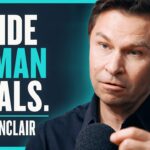
In a recent episode of the Modern Wisdom podcast, Harvard longevity scientist Dr. David Sinclair sat down with host Chris Williamson.
Their first conversation happened back in 2019.

Since then, Sinclair says age reversal has reached human patients for the first time.
He also unpacked his fasting habits, his daily supplement stack, and one unexpected medication he swallows every morning.
Curious what a famous longevity researcher actually does, and where the evidence gets thin?
Jump to:
Age Reversal Has Entered Human Trials
In 2020 we published on the cover of Nature magazine that we could reverse aging safely in an animal for the first time, a mouse.
That work reversed blindness in mice. Since then, Sinclair says, other labs have repeated it, including in monkeys.
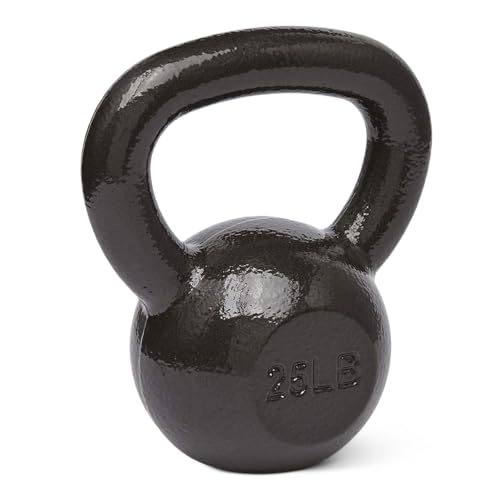
If you want something simple that actually works, this is one of the most effective tools I’ve used to build strength, conditioning, and endurance without needing a full gym setup.
- Full-body training with one weight using swings, squats, and presses
- Solid cast iron build that feels stable and lasts for years
- Comfortable grip that makes high-rep workouts easier to handle
The approach is a gene therapy using three Yamanaka factors, nicknamed OSK. A fourth factor, c-Myc, was deliberately left out, because without it cells rewind roughly 75 percent and then stop rather than turning into stem cells or cancer.
Why start in the eye? Sinclair says safety, not effectiveness. An enclosed space keeps virus-like delivery particles from spreading.
People are now receiving a candidate called ER 100, short for epigenetic reversal 100. Human results haven’t been discussed yet, so this remains a promising animal finding rather than a proven human therapy.
The “Corrupted Software” Theory
I hypothesize that the body has software that gets corrupted as we get older.
DNA is the music. The epigenome is the reader that decides which genes get bundled away and which stay open.
Sinclair calls this his information theory of aging. It remains a hypothesis, though he says his team scrambled that system in mice and watched the animals age faster.
Next up from his lab: a pill. Old mice received it three days a week for a month, and Sinclair reports improved memory and skin quality. His team believes it works through TET enzymes, which strip chemical tags off DNA.
If you want something simple that actually works, this is one of the most effective tools I’ve used to build strength, conditioning, and endurance without needing a full gym setup.
- Full-body training with one weight using swings, squats, and presses
- Solid cast iron build that feels stable and lasts for years
- Comfortable grip that makes high-rep workouts easier to handle
Will Someone Live to 150?
I do think that some of us will have a chance to live decades longer and probably the first person to live to 150 is already alive.
Sinclair admits colleagues urge him to drop that number, fearing lost credibility. He considers himself an outlier willing to say it anyway.
Treat this as informed optimism, not forecast. Humans haven’t yet shown reversed aging.
How Sinclair Eats: One Meal and Long Fasts
I think three meals a day plus snacks is marketing.
He typically eats one meal daily, sometimes two. After travel, he stretches fasts further.
But I can go without food for 2 weeks. It feels great.
He says that after about three days, chaperone-mediated autophagy, a protein-cleanup process, kicks in. He tracks glucose, body composition, and blood work, and takes vitamins and minerals while fasting.
This is not for everybody. If you’re skinny and you’ve got barely any fat or you’re elderly, it’s not for you.
Sinclair himself concedes that no placebo-controlled study shows calorie restriction extends human life. His case rests on animal data, including monkey research in which Wisconsin animals showed less cancer and lower overall disease burden.
A Beginner’s Approach
- Skip one meal and replace it with liquids.
- Choose zero- or low-calorie drinks: water, tea, black coffee.
- Expect hunger for several days. Push through.
- Eat dinner early if skipping breakfast feels hard.
Protein: Pulse It, Don’t Ban It
Sinclair likes protein and eats plenty, mostly from plants. His objection targets strict carnivore diets, which he calls inconsistent with longevity science.
If you want something simple that actually works, this is one of the most effective tools I’ve used to build strength, conditioning, and endurance without needing a full gym setup.
- Full-body training with one weight using swings, squats, and presses
- Solid cast iron build that feels stable and lasts for years
- Comfortable grip that makes high-rep workouts easier to handle
Animal protein carries more branched-chain amino acids, which keep mTOR active. Active mTOR builds muscle but, in animals, tracks with shorter lifespans. His answer: cycle between muscle-building periods and low-mTOR stretches.
Exercise, Sleep, and Stress
- Weights for hormones and bone strength.
- Balance work as the years pass.
- Aerobic effort that leaves conversation difficult, at least three times weekly for 10 minutes.
So if you have an active sex life, count that as part of your daily longevity routine or your weekly longevity routine.
Sleep quality matters more than hours, Sinclair says. He gets by on about five hours with heart-rate variability in the 80s and 90s, thanks to avoiding afternoon caffeine and practicing breathing exercises.
For stress, he mentally visits a Cape Cod orchard. His broader rule: stop ruminating, and postpone worries until later.
Inside Sinclair’s Daily Stack
- Resveratrol: about a gram each morning, mixed with yogurt or olive oil.
- NMN: an NAD precursor, with a mouse lifespan paper resubmitted after reviewer comments.
- Baby aspirin (81 mg): he cites high lipoprotein(a).
- Alpha-lipoic acid and CoQ10: CoQ10 because he takes a statin.
- Nattokinase: roughly 10,000 units daily, hoping to reduce arterial plaque.
- Low-dose tadalafil: for blood flow, which he links to brain and hair health.
- Omega-3s: chosen from purity-tested brands.
Sinclair considers the resveratrol dispute settled, though he acknowledges some critics still disagree. His nattokinase and tadalafil rationales are, in his own words, hopes and early signals, not proven results.
But I’m totally against the word everybody when it comes to health.
His aspirin comment carries a clear warning: personal medical decisions belong with a physician.
The NMN Contamination Problem
There is endotoxin in NMN bulk and supplements.
Sinclair says his lab discovered this the hard way while feeding NMN to mice. He also pointed to a Singapore researcher, Andrea Meyer, who found many NMN products contained little or none.
If you want something simple that actually works, this is one of the most effective tools I’ve used to build strength, conditioning, and endurance without needing a full gym setup.
- Full-body training with one weight using swings, squats, and presses
- Solid cast iron build that feels stable and lasts for years
- Comfortable grip that makes high-rep workouts easier to handle
- Choose companies with strong reputations.
- Look for good manufacturing practice certification and third-party badges.
- Request batch analytics if they aren’t posted online.
Heat, Cold, and Brown Fat
Sinclair calls sauna evidence strong. Finnish studies, mostly on men, link regular sessions several times weekly with lower heart disease rates.
Cold exposure is murkier. Ice baths remain barely studied, he says, though cold can activate brown fat, a calorie-burning tissue once thought exclusive to babies.
His mouse-based reasoning suggests building brown fat early, since conversion gets harder with age. Human confirmation is still pending, and he admits that some claims around Wim Hof’s methods may be less spectacular than advertised.