

A 29-year-old runner from Oklahoma just crossed one of the most demanding finish lines in the world of marathon racing — and she did it while 32 weeks pregnant.
Ali Anderson clocked a 2:59:43 at the Sydney Marathon on Sunday, slipping under the three-hour barrier by just seventeen seconds to join the roughly one percent of women who have ever run that fast.
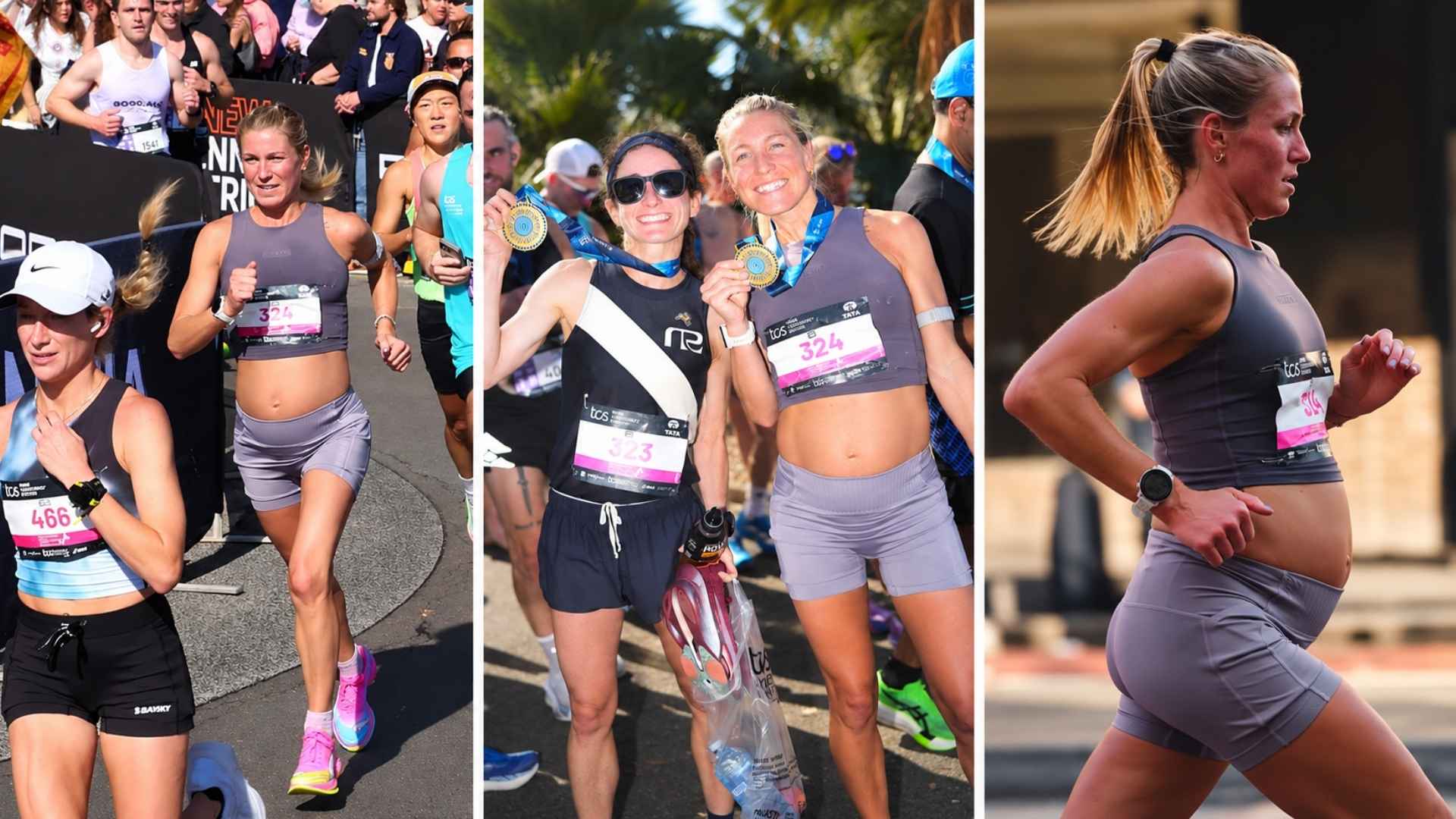
It was her second marathon of the pregnancy — and her body, her doctor, and the science behind her decision tell a story that’s far more nuanced than the headlines suggest.
Here’s everything you need to know about what she did, how she did it, and why the medical community’s actual position on this might surprise you.
Jump to:
- From Boston to Sydney: A Pregnancy Played Out Across Two World Marathon Majors
- What the Medical Guidelines Actually Say About Running While Pregnant
- The Physics of Running in the Third Trimester
- What the Research on Athletes Who Train Through Pregnancy Actually Shows
- What Anderson Is — and Isn’t — Saying
- Seventeen Seconds That Belong in the Record Books
From Boston to Sydney: A Pregnancy Played Out Across Two World Marathon Majors
Anderson’s 2025 racing calendar was already locked in before she discovered she was expecting.
At Boston in April, just 13 weeks pregnant, she ran a stunning 2:41:58 — a personal best — and announced her pregnancy to the world afterward. Sydney was always next on the list, her seventh marathon overall and her fourth World Marathon Major.
Race organizers gave her an easy out. Sydney’s 2026 pregnancy and postpartum policy offered any pregnant entrant the option to defer to 2027, 2028, or even 2029, requiring nothing more than a letter from a doctor.
The deadline was 5pm AEST on August 14. Anderson let it pass.
She told News24 Australia she saw no reason to step away from the start line, joining a record field of 40,000 runners making their way from North Sydney to the iconic Opera House forecourt.
Sunday’s time was roughly 18 minutes slower than her Boston best — a difference she addressed with characteristic candor when reflecting on the two races and what comes next.
I have put her through two marathons now and that is enough for her.
What the Medical Guidelines Actually Say About Running While Pregnant
Most people assume pregnancy means rest. The American College of Obstetricians and Gynecologists says otherwise — at least for women who were already training at a high level before conceiving.
Updated ACOG guidance from 2020 confirms that vigorous-intensity exercise into the third trimester appears safe for most healthy pregnancies, running included. Competitive athletes are explicitly recognized as a distinct category within those guidelines.
That said, four specific concerns apply to any pregnant athlete training at intensity:
- Avoiding hyperthermia (overheating)
- Maintaining proper hydration
- Sustaining calorie intake to prevent weight loss
- Staying under close and consistent medical supervision
There is one hard ceiling the research returns to repeatedly. Fetal heart rate decelerations have been documented when maternal effort pushes above approximately 90 percent of maximum heart rate.
Anderson’s Sydney pace was built around that limit — deliberately, methodically, and with seventeen seconds to spare.
The Physics of Running in the Third Trimester
The gap between Anderson’s Boston and Sydney times isn’t a fitness story. It’s a physiology story.
Three major shifts define what running feels like at 32 weeks. The center of gravity moves forward as the bump grows, joint laxity increases as the hormone relaxin peaks, and the overall energy cost of running rises by roughly 10 to 15 percent.
None of those changes are inherently dangerous. All of them dramatically alter the relationship between effort and pace.
Add in Sydney’s demanding course — 313 meters of climbing against a net drop of just 83 meters, making it arguably the toughest of all the World Marathon Majors — and the numbers start to look even more remarkable.
Anderson ran all of it carrying an estimated 20 or more pounds of gestational weight, on her seventh marathon start overall.
What the Research on Athletes Who Train Through Pregnancy Actually Shows
A recent descriptive study tracked 60 women — 10 elite athletes and 50 recreational runners — who exercised through pregnancy above the standard guidelines. The elite group averaged 11.6 hours of training per week. Recreational athletes came in at 7.0 hours.
The outcomes are worth sitting with.
Most participants had spontaneous labor and vaginal deliveries at term. The average birthweight across the group was 3,487 grams — squarely within the healthy range. Most women resumed exercise within six weeks postpartum.
Two of the elite athletes developed gestational diabetes and two experienced hypertension during pregnancy. Among the 50 recreational athletes, not a single pregnancy complication was reported.
The full paper is publicly available via PMC for anyone who wants to go directly to the primary data.
What Anderson Is — and Isn’t — Saying
Anderson has been careful in every interview not to frame her experience as a prescription for anyone else.
She isn’t arguing that pregnant women should race marathons. She isn’t positioning herself as a sports scientist or an authority on prenatal fitness.
What she *is* doing is something quieter, and arguably more powerful. She’s demonstrating that the default advice most women still receive — complete rest through pregnancy — doesn’t reflect what the current medical guidelines actually recommend for athletes who were already training at a high level going in.
There’s also a longer arc at play here. Anderson had a third marathon booked for December and was building toward an attempt at the USATF American Olympic Marathon Trials standard for 2028, set at 2:37:00 for women.
Her Boston personal best sits 4 minutes and 58 seconds outside that mark. With almost three years before the qualifying window closes, she has time — and a very clear sense of where she’s headed.
Seventeen Seconds That Belong in the Record Books
Anderson isn’t the first woman to compete deep into a pregnancy, and she won’t be the last. Athletes across every distance — from track events to ultramarathons — have navigated the same question of what the body can safely do while growing a life.
What makes her story different is the precision of the data. A 2:59:43 at 32 weeks, five months removed from a 2:41:58 personal best at 13 weeks. That’s not an anecdote. That’s a training log.
The clock in the Sydney Opera House forecourt confirmed it on Sunday.
Seventeen seconds under three hours. Thirty-two weeks pregnant. On one of the hardest courses in World Marathon Major history.










