Running 240 miles through the Utah desert sounds impossible to most people.
But one content creator decided to document his journey through the Moab 240, one of the world’s most brutal endurance challenges where only half the participants finish.
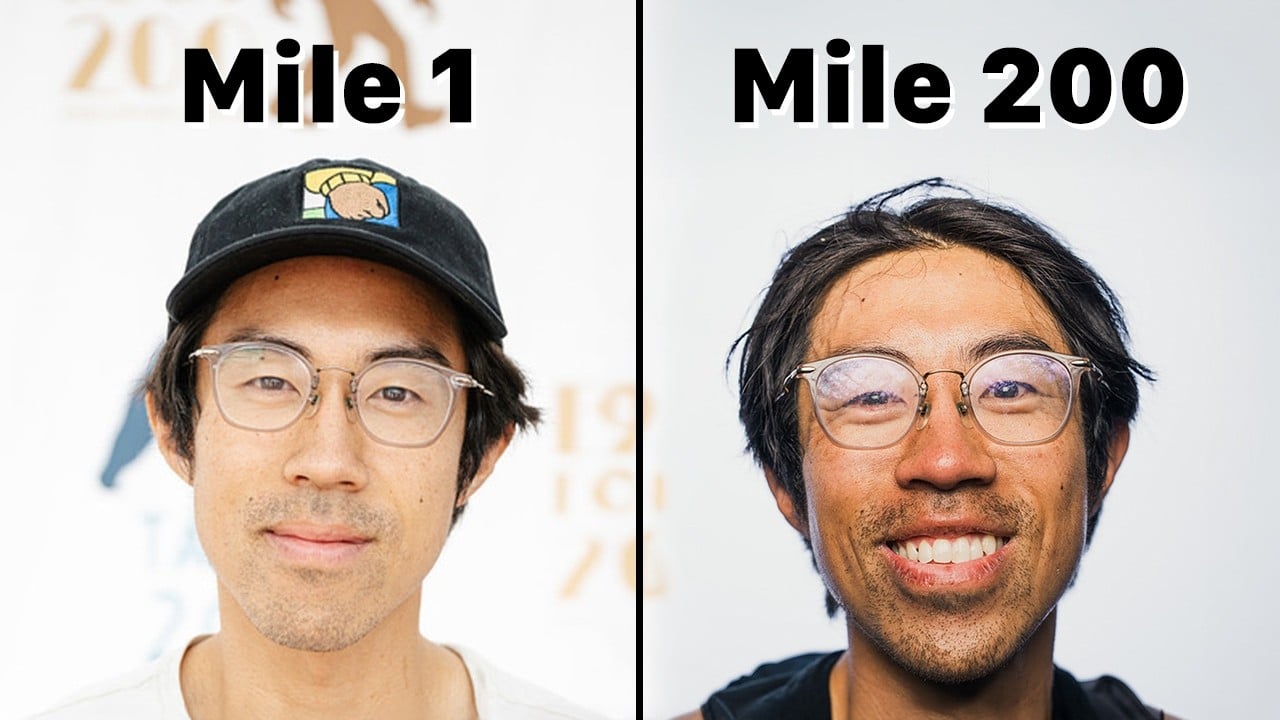
His story reveals not just the physical toll of ultramarathon racing, but the surprising mental and emotional transformations that happen when you push past what seems humanly possible.
What started as chasing internet fame by mimicking retired Navy SEAL David Goggins turned into something much deeper—a journey of self-discovery that would challenge everything he thought he knew about himself.
Jump to:
From “Asian Goggins” to Something More
The runner, who gained recognition after creating workout videos inspired by David Goggins, initially embraced the “Asian Goggins” nickname. He loved the attention and recognition that came with it.
I wasn’t good at anything growing up. I was never anyone’s first pick at school. Running was the first thing I didn’t quit.
For someone who struggled with identity and accomplishment throughout childhood, being recognized for athletic achievement felt validating. Running became his identity, his claim to recognition.
But signing up for Moab 240 would test whether that borrowed identity could carry him through real suffering.
The Training Plan: Three Hundreds to Prepare for 240
Most people would hire coaches and follow structured programs. Instead, he created his own unconventional approach: complete three separate 100-mile races in preparation.
If I could finish three 100 mile races, that’s 300 miles. And 300 miles is bigger than 240 miles, which means I can do Moab. This sounded a lot better in my head.
Each race focused on different challenges: distance capability, heat adaptation, and nutrition strategies.
Race One: Testing Physical Limits
The first 100-miler answered one fundamental question—could his body even cover that distance? It could, barely.
But finishing didn’t bring the triumphant feeling he expected. Instead, it revealed massive gaps in his preparation.
Race Two: Heat Adaptation Through Suffering
Learning that most Moab failures resulted from overheating, he spent weeks training in a heat suit. Running 80+ miles weekly while deliberately overheating sounds miserable because it absolutely was.
At first, his heart rate skyrocketed to 180 beats per minute during simple walks—equivalent to sprinting. Gradually, his body adapted, though the sweat-soaked shoes required daily drying to prevent unbearable stench.
During the actual race, while everyone around him desperately tried cooling down, he felt strong. Until mile 60, when nutrition became the new enemy.
I couldn’t eat anything or drink anything. I got to force myself to eat. This is when I realized how important nutrition actually is for these races because in the 100 mile races, you’re burning over 10,000 calories.
After vomiting and taking a quick nap, he finished. Two down, one to go.
Race Three: The Nutrition Disaster
For his final preparatory race, he researched elite athlete nutrition strategies and discovered they consume approximately 460 calories per hour during ultras—roughly equivalent to eating a Big Mac every 60 minutes.
Seems straightforward enough, right?
His body violently rejected the approach. Vomiting every few minutes, the race became his slowest, weakest performance yet.
Vomiting out my dinner. Having a really bad start, but I don’t want it to end right now.
With only 18 days until Moab, he now needed to master heat training, nutrition, and elevation—the equivalent of climbing six miles straight up. Time was running out.
When Everything Goes Wrong: Race Day Reality
After months preparing for desert heat, Mother Nature delivered the opposite. Torrential rain, flooding, lightning, thunder, and bone-chilling cold replaced the expected scorching conditions.
All that heat adaptation training? Potentially worthless.
Starting strong, he managed to keep pace with elite runners, including David Goggins himself. But Goggins gradually pulled away, maintaining a commanding lead.
The Storm That Broke Half the Field
During the first night, approximately 50 athletes dropped out. The rain created rivers where none existed, submerging the course in dangerously deep water.
This is so cold and miserable. There isn’t supposed to be a river here, by the way. It just rained that much.
After crossing improvised waterways, his feet showed alarming damage—severe blistering and a lost toenail. The conditions were deteriorating rapidly.
Another 50 people quit during the second torrential downpour. He wanted to become number 51.
Adjusting Nutrition on the Fly
Having learned from his race three disaster, he modified his approach—consuming 300-400 calories hourly instead of forcing down 460. The adjustment worked.
Peanut butter protein bars became his lifeline, providing consistent energy without triggering nausea. Sometimes the simplest solutions work best.
Running Alone in the Dark
As Goggins continued pulling ahead, something shifted mentally. The borrowed identity that fueled early motivation started feeling hollow.
He keeps getting further away. I guess I’m not like him. I’m sorry, guys. I just can’t keep up.
During a solo picnic break—hamburger to-go while surrounded by stunning natural beauty—he began experiencing the race differently. Not as competition, but as personal journey.
His father had been tracking him continuously, losing sleep from worry. Messages arrived expressing concern. The weight of expectations felt heavy.
Hallucinations and Help
Sleep deprivation brought vivid hallucinations. Cliffside running became genuinely dangerous as exhaustion threatened to send runners tumbling off edges.
Fellow runners Lee and Clarissa provided crucial support during particularly intense hallucination episodes, helping him reach aid stations safely.
At one station, someone offered tuna packets. Eating plain tuna straight from the package, he admitted it tasted like dog food—but anything providing calories mattered now.
The Final Marathon: Finding Personal Meaning
After 97 hours and burning approximately 29,000 calories, only one marathon remained. Everything hurt. Wind, rain, and hail had battered him for days.
But something unexpected happened—he didn’t want the race to end.
I had this strange feeling. I didn’t really want the race to end. I can’t believe how far we’ve come.
The breathtaking views, the solitude, the clarity that comes from stripping away everything nonessential—these experiences transformed suffering into something profound.
What 240 Miles Actually Taught Him
Crossing the finish line brought revelation rather than validation:
I had to run to find out that I’m not going to find what I want in life by chasing what others do. And sometimes you won’t see how far you’ve come until you slow down and look around.
The journey wasn’t about becoming David Goggins or earning internet recognition. Running 240 miles revealed that authentic achievement comes from internal motivation, not external comparison.
Practical Takeaways for Endurance Athletes
While most people won’t attempt 240-mile races, his experience offers valuable lessons:
- Individualize nutrition strategies – Elite athlete protocols don’t work for everyone; experiment during training, not race day
- Heat adaptation requires progressive overload – Gradual exposure allows cardiovascular adjustment without dangerous overheating
- Prepare for worst-case scenarios – Weather, terrain, and conditions rarely match expectations
- Mental preparation matters more than physical – The body often quits before reaching actual limits
- Support systems prevent dangerous situations – Fellow runners, crew members, and aid station volunteers provide crucial safety nets
Beyond Physical Achievement
Ultramarathon racing pushes bodies to extreme limits—29,000 calories burned, severe blistering, lost toenails, hallucinations from sleep deprivation. The physical toll is undeniable.
But the mental and emotional transformations often prove more significant. Stripping away distractions, comforts, and escape routes forces confrontation with fundamental questions: Who am I without external validation? What truly motivates me? Am I chasing my goals or someone else’s?
His immediate post-race action? Calling parents and his partner Emily. Not posting on social media or checking view counts—connecting with people who mattered most.
The runner who started training to mimic David Goggins finished Moab 240 having discovered something more valuable: his own reason for running. Not to become like someone else, but to discover who he actually was beneath borrowed identities and internet personas.
Sometimes you need to run 240 miles through hell to realize you were running in the wrong direction all along.