While many of us struggle to get in 30 minutes at the gym, astronauts aboard the International Space Station put in two full hours of exercise — every day.
In zero gravity, muscle atrophy and bone loss happen quickly. To fight back, NASA-developed workouts include resistance and cardio movements tailored to mimic Earth’s gravity-based tension.
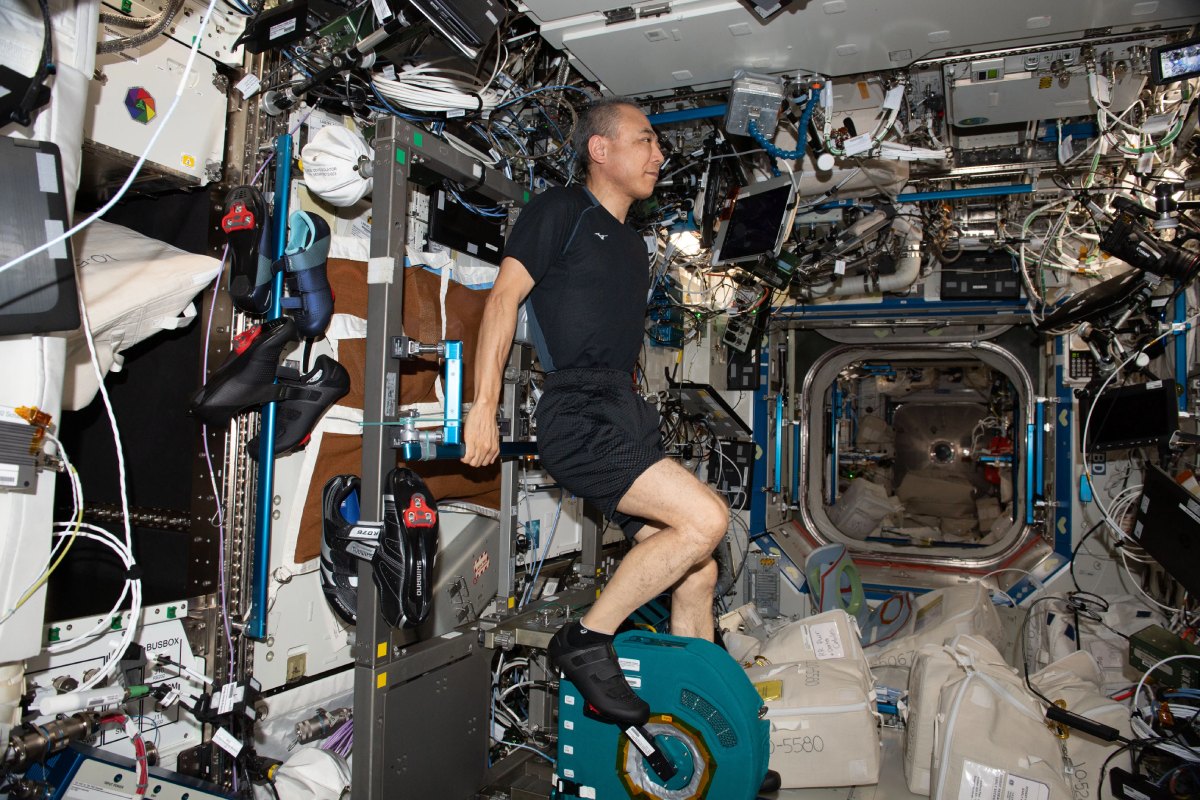
Interestingly, many of the exercises astronauts rely on are nearly identical to those used by serious lifters in any standard gym.
In this article, learn what those space-proof movements are, why they work, and how you can incorporate them into your own program for maximum strength and muscle retention — no spacecraft required.
Jump to:
Why Maintaining Muscle in Space Is Non-Negotiable
Without gravity pulling against your body, muscles and bones begin to deteriorate fast. Studies show that astronauts can lose up to 20% of muscle mass on missions lasting just five to 11 days. For long-term missions, the risks multiply.
“Scientists know that exercising two hours a day, seven days a week aboard the orbital outpost helps offset the effects of long-term weightlessness,” according to a recent NASA report on ares-based exercise research. They’re not just working out for aesthetics — they’re prepping their bodies to survive the return journey to gravity on Earth, the Moon, or Mars.
1. Squats
Squats form the foundation of strength training both on and off the planet. Astronauts use a specially engineered device called the Advanced Resistive Exercise Device (ARED), which simulates the load of a barbell with adjustable resistance via vacuum cylinders.
The goal? If your body weighs 150lbs on Earth, you should be able to squat at least that much in space for muscle preservation. It’s no different than athletes matching or exceeding their body weight on the bar for lower-body hypertrophy and strength.
2. Bench Press
This classic upper-body builder gets a high-tech twist in orbit. Again using vacuum resistance, the ARED enables astronauts to perform bench presses where air pressure substitutes for free weights.
The primary focus here is maintaining chest, shoulder, and tricep strength — crucial for tasks like operating equipment or even lifting your own bodyweight after reentry into Earth’s gravity.
3. Deadlifts
The deadlift reigns supreme as a compound movement here on Earth, recruiting hamstrings, glutes, back, and core — and its reign continues in orbit.
In space, astronauts perform deadlifts using simulated resistance to maintain posterior chain strength, essential not just for function, but also for preventing back injuries due to weakened spinal support muscles.
4. Overhead Press
Upper-body strength isn’t optional when you’re navigating tight spaces in zero gravity. The overhead press keeps shoulder and arm muscles strong and functional.
This movement mirrors the dumbbell or barbell press we do on Earth, targeting the deltoids, triceps, and even the upper chest. It’s especially critical for astronauts, whose shoulders support a significant portion of movement in a weightless environment.
5. Calf Raises
Calves aren’t just vanity muscles in orbit. On Earth, they help with balance, posture, and walking. In space, they help prepare astronauts for landing, when sudden re-entry gravity loads demand strong lower limbs.
Calf raises help maintain gastrocnemius and soleus muscle mass, which can otherwise shrink rapidly without regular mechanical loading.
6. Cardio: Running, Rowing, and Cycling
It’s not all about resistance. Cardio plays a massive role in maintaining cardiovascular health in space.
- Running: Astronauts use a treadmill with a vibration isolation system to protect the shuttle’s stability and research equipment.
- Cycling: A station-mounted spin bike provides low-impact cardio using air resistance. Its special frame ensures force stays contained.
- Rowing: Like rowing on Earth, this targets the entire backside and provides both strength and endurance training. Resistance is dialed all the way up to make every pull count.
Two hours a day might sound like a lot, but paired with nine-month missions, it’s necessary to avoid a dangerous cardiovascular decline.
What Earthlings Can Learn From These Space Workouts
You don’t need to orbit the Earth to benefit from NASA’s training protocol. Here’s how to apply astronaut lessons to your own training plan:
1. Prioritize compound movements
Squats, deadlifts, presses — these exercises give you the most bang for your buck by training multiple muscle groups simultaneously.
2. Train with intent
NASA doesn’t skip leg day, and you shouldn’t either. Structuring your workout around quality, controlled movement beats rushing through reps.
3. Mix resistance with cardio
While many lifters neglect cardio, astronauts know its importance. Adding rowing or interval cycling can boost endurance and protect heart health — especially if you sit a lot during the day.
4. Daily consistency beats occasional intensity
Astronauts work out seven days a week, not just when they “feel like it.” Your body thrives on regular inputs. Even 30–45 minutes consistently can outperform sporadic 90-minute blast sessions.
Space-Proof Fitness for Earth’s Gravity
If two hours a day seems extreme, remember the environment astronauts are adapting to. For those of us back on Earth, integrating just five of these staple movements into a 3–4 day routine can yield exceptional results.
Try this example full-body orbit-inspired workout, 3 times per week:
- Squat: 4 sets of 6–8 reps
- Bench press or push-ups: 3 sets of 8–10 reps
- Deadlifts: 4 sets of 5 reps
- Overhead press: 3 sets of 6–8 reps
- Calf raises: 3 sets of 15–20 reps
- 20 minutes cardio (rowing or treadmill)
This hybrid structure supports muscle maintenance, heart health, and functional strength — and yes, you’ll be gravity-ready whether you’re lifting groceries or planning a return from Mars.
Final Thoughts
Training like an astronaut may sound cool, but it’s also smart. By mastering the basics and staying consistent, you can build a physique grounded in both science and performance.
As NASA continues to push the boundaries of human endurance, their findings provide more than insight — they offer a blueprint for training smarter, recovering better, and living stronger here on Earth.