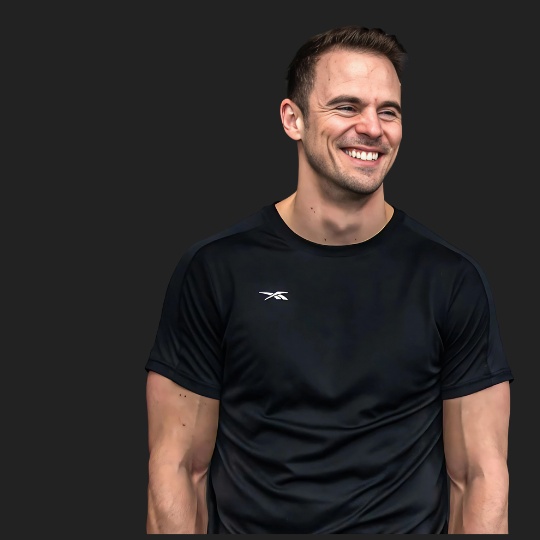

Getting older doesn’t mean giving up your competitive edge—it just means learning to train a little smarter.
In a recent Youtube video, CrossFit Games athlete Jason Grubb and co-host Rick Stevenson pulled back the curtain on a topic every masters athlete can relate to: training while managing injuries.

From body maintenance to navigating small (and big) setbacks, the duo dove into personal stories and valuable lessons that every athlete over 35 should hear—especially those balancing performance goals with aging bodies.
If you’ve ever pushed through shoulder discomfort or tweaked something mid-squat, you’re not alone.
This episode wasn’t just a gripe session—it was an insightful, action-driven talk about long-term athletic health and what it really takes to stay competitive over time. Let’s break it down.
Jump to:
Smart Training Means Listening to Your Body
As athletes age, pain management and injury prevention become just as crucial as daily WODs and strength cycles. Jason shared a sobering experience: a simple tempo back squat led to a sharp pop in his lower back. It wasn’t a max effort day. It wasn’t a flashy lift. And yet—something gave.
“I stood up and thought, that wasn’t just hard—I just hurt myself,” Jason explained. “It wasn’t immediate pain, but I couldn’t bend or hinge. I knew something was wrong.”
This kind of story is common among seasoned athletes. As the body accumulates wear and tear, even moderate loads done with fatigue or minor imbalances can wreak havoc.
Injuries Can Be Sneaky
Jason’s injury turned out to be a strained QL (quadratus lumborum), a deep core stabilizer muscle that helps with spine and hip movement. It’s small but mighty—and when aggravated, it can make even sitting or bending unbearable.
Though grateful it wasn’t more serious, Jason acknowledged a hard truth: “My body was blinking red warning lights days before.” Fatigue, sleep disruption, knee irritation—all were signs pointing to a breakdown.
Bodywork Isn’t a Luxury—It’s a Responsibility
One key takeaway: preventative care isn’t optional. When asked what helped the most, Jason emphasized the deep relief and healing that came from seeing a skilled massage therapist who quickly identified the injury source and began targeted treatment.
Action step: if you train regularly—especially at a competitive level—find your go-to bodywork team:
- Massage therapy to release bound-up tissues and improve mobility
- Dry needling to reduce muscle tension and stimulate healing (Rick shared big relief from this for nagging shoulder issues)
- Physical therapy to address chronic or acute imbalances
Rick added, “It took years before I started dry needling. But I’m amazed at how much better my shoulder feels. Why didn’t I do this sooner?”
Redefining “Hard Work” After 40
Gone are the days when every training session should leave you sprawled on the floor. Both Jason and Rick agreed: training smarter—not harder—is how you stay in the game past 40.
“It used to be if you weren’t gassed after a workout, you didn’t go hard enough,” Rick said. “Now I realize that’s not sustainable.”
Jason echoed that elite-level performance still demands intensity—but it must be calculated. In Boulder Athlete programming, they emphasize “red” workouts no more than two to three times per week—those all-out zone 5 efforts that demand peak output and generate high fatigue.
Every other session is designed to challenge the athlete without creating burnout or setbacks.
Intensity Isn’t the Only Way to Grow
“You can get stronger, fitter, and more capable through moderate, intentional training,” Jason added. “More isn’t always more.”
Top young athletes are catching on too. Jason referenced CrossFit star Dallin Pepper, who publicly shares how strategic volume management has helped him stay healthy and climb to the top.
Pay Attention to Patterns
Another smart tip from the episode: monitor your body’s recurring problem areas. Jason has consistently experienced left-sided issues throughout his athletic career, from his calf to his knee to—this most recent incident—his lower back.
“It’s a pattern. My PT even mentioned my left leg is 2 cm smaller in diameter than my right. That’s something I need to address before it becomes a bigger liability.”
If your injuries or aches are always biased to one side, it’s likely a mobility, alignment, or compensation issue. Early interventions and targeted accessory work can save you months of rehab later.
Train the Weak Side
Unilateral work is a powerful tool. Here’s how to build it into your routine:
- Step-ups, split squats, single-leg RDLs for leg asymmetries
- Single-arm pressing and pulling to expose and fix shoulder imbalances
- Farmer’s carries to build core and grip symmetry
Rick added, “Even bar muscle-ups feel better than ring muscle-ups for my shoulder. I make swaps when needed—it’s not about ego, it’s about execution.”
Athletes Need Pit Crews
Think of yourself as a race car. You might look sleek and fast on the outside, but you still need pit stops, tire changes, and tune-ups. If you wait to fix things only when they break, you’re already behind the curve.
“We take our cars in for oil changes whether they’re driving fine or not,” Jason said. “Why don’t we do the same for our bodies?”
Fun Is the Long-Term Goal
Camaraderie, sweat, banter between training partners—that’s what keeps masters athletes coming back. If constant pain, dysfunction, or discouragement are creeping in, it’s time to evaluate your approach.
“I still want to compete,” Rick said. “But just as importantly, I want to play 18 holes, travel, and enjoy the lifestyle. The gym should keep you fit for that—not beat you down.”
Takeaways for Every Masters Athlete
- Injuries aren’t a badge of honor. Train hard, but train smart. Rest when needed.
- Build your recovery team. Massage. PT. Bodywork. Early intervention keeps you on track.
- Variety matters. Mix redline training with mobility work, zone 2 cardio, and skill refinement.
- Measure progress by performance, not exhaustion. Burnout is not a metric.
- Move with purpose. Address asymmetries, imbalances, and technique flaws before they create setbacks.
Still Got It? Prove It Every Day—with Intent
The grit you need to stay competitive as a masters athlete isn’t about endless suffering—it’s about resilience, self-awareness, and showing up smart. Whether you’re heading to the CrossFit Games or just chasing your best self at the gym, the tools of longevity are the same:
- Recover intentionally
- Train with precision
- Pay attention to your body’s patterns
- Work with professionals who help you stay healthy
As Jason Grubb said best:
“If my back injury taught me anything—it’s that ignoring the warning lights only leads to shutdown. But with the right care, support, and focus, I can bounce back stronger.”
And so can you. Train for the long game—because the best athletes never stop moving forward.