Bodybuilding champion turned Olympic weightlifting novice Eugene Teo has a confession that might shock fitness enthusiasts.
After years dominating physique competitions and coaching some of the industry’s biggest names, he now believes he chose the wrong path.
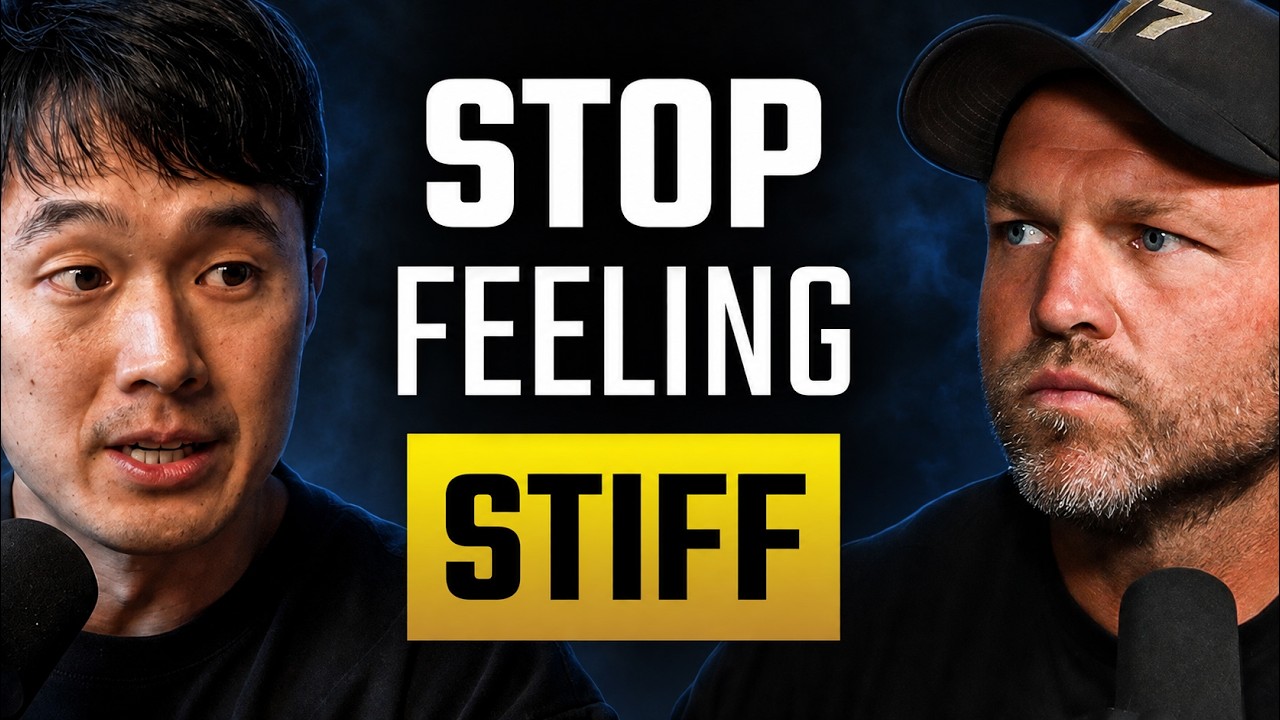
In a recent podcast conversation with strength coach Dane Miller, Teo didn’t hold back about what he’d change if given the chance to start over.
His perspective offers a powerful lesson about longevity, athleticism, and what truly matters as we age.
Jump to:
- The Simplicity of Bodybuilding Versus the Complexity of Athletic Movement
- What Social Media Fitness Is Missing
- If He Could Start Over: The Training Eugene Wishes He’d Done
- Essential Skills Everyone Should Train (Especially After 40)
- Cardiovascular Work: The Hidden Foundation
- Barbell Movements With Unexpected Benefits
- Training Split for the Multi-Disciplinary Athlete
- The Motivation Question Nobody Talks About
- The Legacy of John Meadows
- Final Thoughts on Suboptimal Training
The Simplicity of Bodybuilding Versus the Complexity of Athletic Movement
Teo’s assessment of bodybuilding might surprise those who see it as the pinnacle of fitness dedication.
Having experienced so many different modalities now and being a bodybuilder at heart, that’s what I grew up with. I’ll say bodybuilding is so simple, right?
He elaborates that muscle building essentially comes down to pushing hard in the gym, training close to failure, and maintaining consistency.

If you want something simple that actually works, this is one of the most effective tools I’ve used to build strength, conditioning, and endurance without needing a full gym setup.
- Full-body training with one weight using swings, squats, and presses
- Solid cast iron build that feels stable and lasts for years
- Comfortable grip that makes high-rep workouts easier to handle
While nuances exist around rep ranges and exercise selection, the fundamental approach remains straightforward.
Powerlifting introduces another layer of complexity. Technique, periodization, and programming become critical factors that separate beginners from advanced lifters within just a couple years.
Olympic weightlifting, however, exists on an entirely different plane.
Why Weightlifting Humbled a Bodybuilding Expert
After less than six months of Olympic weightlifting training, Teo describes the experience as “completely” challenging in ways bodybuilding never was.
There’s so much more skill involved with the exercises themselves, you’re learning these new motor patterns. And for somebody who’s so used to just pushing as hard as possible and like redlining it for bodybuilding purposes, knowing that as hard as I’m trying on a clean and jerk or a snatch, it’s nowhere near maximal.
The paradox of weightlifting proves particularly frustrating for those accustomed to grinding through brutal sets.
Trying too hard actually works against you. The harder you push with poor technique, the less weight you’ll successfully lift.
If you want something simple that actually works, this is one of the most effective tools I’ve used to build strength, conditioning, and endurance without needing a full gym setup.
- Full-body training with one weight using swings, squats, and presses
- Solid cast iron build that feels stable and lasts for years
- Comfortable grip that makes high-rep workouts easier to handle
Teo had to unlearn deeply ingrained movement patterns from years of powerlifting and bodybuilding, particularly his tendency toward aggressive bracing strategies.
Whereas weightlifting, you got to have a good degree of looseness in certain areas but not all areas.
What Social Media Fitness Is Missing
Teo identifies a critical blind spot in today’s fitness landscape dominated by Instagram aesthetics and physique-focused content.
I think most of social media fitness that I come across is heavily influenced by bodybuilding. It is purely for aesthetics.
The missing element? A focus on what your body can actually do.
Powerlifting began shifting this conversation a decade ago by emphasizing performance metrics over appearance. Women particularly gravitated toward this approach as it provided validation beyond aesthetics.
Athletic training and Olympic weightlifting represent the next evolution. They demand mobility, fluidity, and coordination that static bodybuilding movements simply don’t develop.
The Mental Health Benefits of Performance Over Appearance
Teo doesn’t mince words about the psychological toll of aesthetics-focused training.
If you want something simple that actually works, this is one of the most effective tools I’ve used to build strength, conditioning, and endurance without needing a full gym setup.
- Full-body training with one weight using swings, squats, and presses
- Solid cast iron build that feels stable and lasts for years
- Comfortable grip that makes high-rep workouts easier to handle
He’s witnessed countless individuals develop eating disorders and body dysmorphia from obsessing over their appearance. This fixation affects how they show up for family, friends, and every aspect of life.
I think a lot of people would be far better off if they never worried about how they looked. If their one goal when they went into the gym was, I want to see what my body can do.
Performance goals offer something bodybuilding cannot: unlimited progression potential.
While physique development inevitably declines with age regardless of pharmaceutical intervention, athletic skills can continually evolve. Grand masters in Brazilian Jiu-Jitsu reach their peak in their 60s and 70s.
If He Could Start Over: The Training Eugene Wishes He’d Done
When asked directly whether he’d choose a different path, Teo’s answer comes without hesitation.
If I had to start over again, essentially, would I have preferred to gone into something more athletically inclined like weightlifting or athletic development, track and field, as opposed to pure bodybuilding? 100%.
He doesn’t regret his journey—it provided valuable experiences and shaped his career. But given a clean slate or advising a 12-year-old starting training, he’d choose athletics and Olympic weightlifting over bodybuilding.
The reasoning comes down to skill acquisition and neural adaptation.
If you want something simple that actually works, this is one of the most effective tools I’ve used to build strength, conditioning, and endurance without needing a full gym setup.
- Full-body training with one weight using swings, squats, and presses
- Solid cast iron build that feels stable and lasts for years
- Comfortable grip that makes high-rep workouts easier to handle
Athletic training challenges the nervous system and develops movement literacy that bodybuilding simply cannot match. This creates what Teo calls “unspoken attention to detail” where elite athletes can correct technique mid-movement at speeds faster than conscious thought.
The Transfer Goes One Direction
Perhaps most telling is Teo’s observation about skill transfer between disciplines.
You put a bodybuilder like me into those things now, and yeah, I’m failing. I’m still going to learn a lot, but I’m at a big deficit. But you put a weightlifter into bodybuilding, it’s easy.
Athletes with backgrounds in Olympic lifting, track and field, or throwing sports find bodybuilding refreshingly simple. The reverse doesn’t hold true.
For his own daughter, now two years old, Teo plans to prioritize gymnastics and Brazilian Jiu-Jitsu to build varied neural stimulus from an early age.
Essential Skills Everyone Should Train (Especially After 40)
For those listening who started with bodybuilding and wonder how to incorporate more athletic development, Teo offers accessible entry points.
Plyometrics and jump training top his list as low-hanging fruit with massive returns.
If you want something simple that actually works, this is one of the most effective tools I’ve used to build strength, conditioning, and endurance without needing a full gym setup.
- Full-body training with one weight using swings, squats, and presses
- Solid cast iron build that feels stable and lasts for years
- Comfortable grip that makes high-rep workouts easier to handle
It’s an essential skill that we don’t appreciate enough until you get to your 60s and 70s and you realize that falls are, you know, leading cause of injury death in older adults, which is crazy.
Falls signal that power development and reactivity have deteriorated—problems that could have been prevented with just 5-10 minutes of jump training weekly.
Unlike Olympic weightlifting, which requires significant time investment to learn properly, plyometric work is:
- Easily scalable for any fitness level
- Time-efficient (requires minimal weekly volume)
- Low recovery cost compared to heavy lifting
- Immediately applicable to daily movement
Simple Starting Points for Jump Training
Teo recommends beginning with basic movements before progressing to more complex patterns:
- Pogos (simple bouncing on the spot)
- Skipping
- Jump rope
- Low box jumps
Once these basics feel comfortable, incorporate lateral motion, change of direction drills, bounds, and single-leg work.
Even simple A-skips and B-skips—fundamental track and field drills—provide challenging coordination work that refreshes the nervous system in ways static lifting cannot.
Cardiovascular Work: The Hidden Foundation
Beyond jumping and lifting, Teo emphasizes cardiovascular training as the true base supporting everything else.
If you want something simple that actually works, this is one of the most effective tools I’ve used to build strength, conditioning, and endurance without needing a full gym setup.
- Full-body training with one weight using swings, squats, and presses
- Solid cast iron build that feels stable and lasts for years
- Comfortable grip that makes high-rep workouts easier to handle
Aerobic fitness determines recovery capacity. The fitter your cardiovascular system, the more training volume you can handle.
Many lifters plateau not because of programming issues but because their aerobic base can’t support increased training demands.
Teo’s Weekly Cardio Protocol
He incorporates 2-4 weekly sessions of varied intensity work on a Concept 2 bike:
- Easy sessions: 60-90 minutes in zone two (sustainable pace just before it gets challenging)
- Fast sessions: 30-60 second sprints at 80-100% effort with 2+ minutes recovery
- Moderate sessions: 1 minute at 80% (100 RPM) followed by 4 minutes easy (70-80 RPM), repeated 6-8 times
He switched from the popular Rogue Echo bike to the Concept 2 bike ergometer because the Echo bike created excessive quad fatigue that limited cardiovascular stimulus.
The failure point for me was my legs, not my heart and lungs essentially.
Barbell Movements With Unexpected Benefits
Teo identifies three barbell exercises that provide disproportionate returns beyond traditional strength metrics.
The Zercher Squat
Once dismissive of this awkward-looking movement, Teo now considers it essential.
If you want something simple that actually works, this is one of the most effective tools I’ve used to build strength, conditioning, and endurance without needing a full gym setup.
- Full-body training with one weight using swings, squats, and presses
- Solid cast iron build that feels stable and lasts for years
- Comfortable grip that makes high-rep workouts easier to handle
The Zercher position—holding the barbell in the crooks of your elbows—forces extreme thoracic extension and upper back engagement that no other loaded movement replicates.
The demands it puts on the upper back and the upper erectors, it is just something otherworldly.
This carryover proves particularly valuable for grappling sports and real-world lifting scenarios involving awkward objects or people.
Snatch Grip Deficit Deadlifts
The wide grip and elevated starting position create massive range of motion while hammering the upper back musculature.
Teo found this variation transferred exceptionally well to lower body power and vertical jump performance despite being primarily a pulling movement.
Dead Bench Press
Coming to a complete stop on pins or in a rack, fully relaxing all tension before each rep, this variation exposes weakness in the most vulnerable position of the bench press.
After tearing his pec, Teo incorporated dead bench work during rehabilitation. He discovered it dramatically improved his explosive upper body power by eliminating the stretch reflex and forcing pure concentric strength development.
If you want something simple that actually works, this is one of the most effective tools I’ve used to build strength, conditioning, and endurance without needing a full gym setup.
- Full-body training with one weight using swings, squats, and presses
- Solid cast iron build that feels stable and lasts for years
- Comfortable grip that makes high-rep workouts easier to handle
While some worry about injury risk from this “dead stop” approach, Teo emphasizes that safety comes from gradual exposure and logical progression, not avoiding challenging positions.
Training Split for the Multi-Disciplinary Athlete
Balancing bodybuilding, Olympic lifting, plyometrics, and cardio requires careful intensity management.
Traditional body part splits created constant burnout when Teo tried incorporating athletic work. His solution? A modified high-low split with strategic intensity distribution.
Currently training three days weekly (with plans to increase to five), his hardest session looks like:
- Olympic lifts (cleans and snatches)
- Intensive plyometrics
- Heavy squats
- Lower body accessories
Following this demanding session, the next workout focuses on upper body with extensive (less intensive) plyometric work—creating necessary recovery space.
No matter how hard you really push with upper body work, you’re never really going to completely wipe yourself out in the same way that you would on that first day.
Bodybuilding work still comprises roughly 50% of his training volume, acknowledging that muscle mass provides the foundation for strength and power expression across all domains.
If you want something simple that actually works, this is one of the most effective tools I’ve used to build strength, conditioning, and endurance without needing a full gym setup.
- Full-body training with one weight using swings, squats, and presses
- Solid cast iron build that feels stable and lasts for years
- Comfortable grip that makes high-rep workouts easier to handle
The Motivation Question Nobody Talks About
Despite his impressive physique and social media presence, Teo admits something most fitness influencers won’t.
I am the most demotivated person when it comes to training a lot of the time. There are more days than not more weeks than not where I’m like I just do not want to go to the gym.
His solution? Make training as enjoyable and varied as possible.
Rather than forcing adherence to “optimal” protocols, he prioritizes movements and modalities that genuinely engage him. Olympic lifting, plyometrics, and diverse training stimuli keep things interesting in ways pure bodybuilding no longer does.
Having specific benchmarks and tests helps maintain direction without becoming obsessive. Working with coach Matt McInnes Watson on plyometric programming, Teo tracks metrics like:
- Broad jump distance
- Triple broad jump
- Vertical jump height
- Reactive Strength Index (RSI)
- Ground contact time
These measurements reveal progress that might not be immediately felt but provides tangible evidence of improvement over time.
The Legacy of John Meadows
No conversation with Eugene Teo feels complete without acknowledging the late John Meadows, whose impact on Teo’s career and philosophy proved transformative.
If you want something simple that actually works, this is one of the most effective tools I’ve used to build strength, conditioning, and endurance without needing a full gym setup.
- Full-body training with one weight using swings, squats, and presses
- Solid cast iron build that feels stable and lasts for years
- Comfortable grip that makes high-rep workouts easier to handle
He completely changed my life, dude.
Meadows was the first person to truly believe in Teo when he was just 21 years old. Their relationship extended beyond coaching and knowledge sharing to genuine mentorship focused on lifting others up.
What separated Meadows from other fitness professionals was his authentic love for the process. He posted content because he genuinely found it exciting, not because algorithms demanded it.
Teo still uses Meadows as a filter for his own content and interactions.
When it comes to pure social media, a lot of what’s on my mind when I post would be like, what is the impact that I want this to have on the viewer? Are they going to be inspired in some way? Are they going to be uplifted?
Despite business pressures and time constraints, Teo spends hours daily answering DMs and coaching questions for free—carrying forward Meadows’ legacy of generous service to the fitness community.
Final Thoughts on Suboptimal Training
Throughout the conversation, Teo repeatedly references “suboptimal” programming—his Olympic lifting isn’t ideal for a competitive weightlifter, his cardio protocols wouldn’t satisfy endurance purists, his bodybuilding volume has decreased from peak levels.
But here’s the critical insight: suboptimal doesn’t mean ineffective.
If you want something simple that actually works, this is one of the most effective tools I’ve used to build strength, conditioning, and endurance without needing a full gym setup.
- Full-body training with one weight using swings, squats, and presses
- Solid cast iron build that feels stable and lasts for years
- Comfortable grip that makes high-rep workouts easier to handle
For those not competing professionally in a single discipline, the “optimal” approach to bodybuilding, powerlifting, or Olympic lifting creates opportunity costs in other valuable physical qualities.
A well-rounded athlete who can squat respectably, perform complex movements skillfully, jump explosively, and sustain aerobic work will likely enjoy better health, functionality, and longevity than the specialist who dominates one area while neglecting others.
The real question isn’t what’s optimal for peak performance in a single domain.
It’s what combination of training helps you look good, move well, feel better, and stay healthy for decades to come.
According to Eugene Teo, that answer looks a lot more like an athlete than a bodybuilder.