Bruce Lee’s 1960s gym routine has exploded on social media in 2024—and it’s easy to see why.
The martial arts icon wasn’t just a cinematic force or a philosophical mind; he was an early fitness visionary.
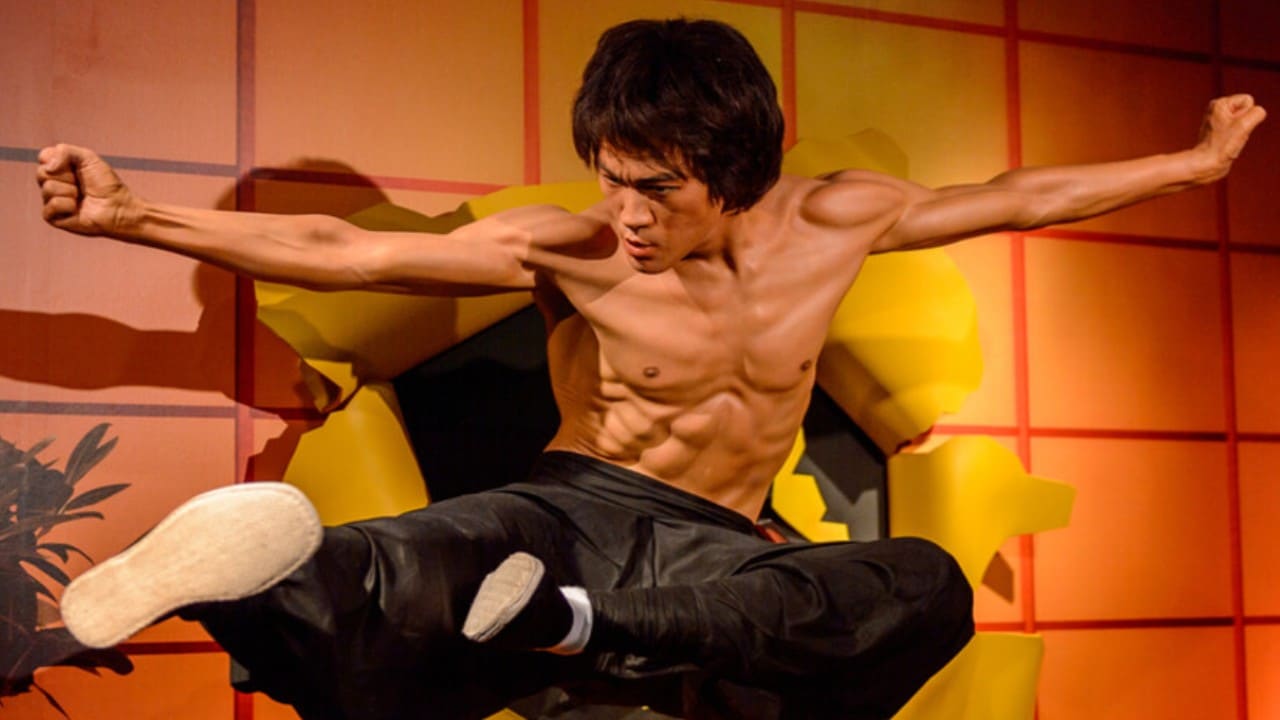
Lee’s minimalist yet brutally effective workout reads like a blueprint for functional strength, agility, and relentless discipline. But what made it revolutionary? And could it still hold up today?
Let’s break down what Bruce Lee actually did in the gym—and what it means for modern training.
Jump to:
- The Core of Lee’s 1960s Gym Routine: Precision Over Volume
- What Made His Program Unique? Fluidity and Feel
- Resistance Training: Low Volume, High Intent
- The Hidden Work: Abs, Stretching, and Cardio—Daily
- Punching and Kicking: 500+ Reps, Every Single Day
- What We Can Learn from Lee’s Philosophy Today
- Could Bruce Lee’s 1960s Workout Still Work Today?
- Final Thoughts: Training As Self-Expression
The Core of Lee’s 1960s Gym Routine: Precision Over Volume
At the Hak Keung Gymnasium in Hong Kong, Lee lifted modest weights with laser-sharp focus. Standing 5’8″ and weighing around 64 kg (141 lbs), he wasn’t chasing hypertrophy like a bodybuilder. His goal? A body built for speed, control, and striking power.
Here’s a look at the key lifts in his program:
- Barbell Back Squat – 3 sets of 10 reps at 43 kg (95 lbs)
- French Press (Triceps Extension) – 4 sets of 6 reps at 29 kg (64 lbs)
- Incline Dumbbell Curls – 4 sets of 6 reps at 16 kg (35 lbs)
- Push-Ups – 3 sets of 10 reps, bodyweight
- Two-Hand Bicep Curls – 3 sets of 8 reps at 32–36 kg
- Reverse Curls, Wrist Curls, Dumbbell Circles – Repeated with varying weights and intensities
Notably, eight of the 14 exercises targeted his arms—a clear sign that grip, wrist, and punching endurance were a major focus.
“Lee wasn’t training for looks. He was training for function—martial arts function,” says Martin Rooney, founder of Training for Warriors. “Everything had to have a purpose. No fluff. No wasted reps.”
What Made His Program Unique? Fluidity and Feel
Bruce Lee’s workouts were never meant to be robotic. His sets weren’t necessarily performed back-to-back. Instead, he likely moved with instinct, feeling into his form and fatigue—something now commonly promoted in intuitive training.
In a world obsessed with perfect set structures and app-based programming, Lee was decades ahead. His approach embraced flexibility, internal feedback, and adaptation.
Resistance Training: Low Volume, High Intent
Modern strength programs often emphasize progressive overload through heavy lifts and long sessions. Lee’s take was different.
Rather than exhausting the body with hours of training, he used 2–4 sets per movement and moderate loads, allowing for consistent performance across multiple sessions each week.
Compare that with his 1970s resistance plan, as detailed in The Art of Expressing the Human Body by John Little:
- Clean and Press – 2×8
- Squats – 2×12
- Pullover – 2×8
- Bench Press – 2×6
- Good Mornings – 2×8
- Barbell Curl – 2×8
Each workout took just 20 minutes and was done 3 times a week. Minimalist? Yes. But also deadly effective.
“He was doing Mike Mentzer’s Heavy Duty before Mentzer,” Brett McKay wrote for The Art of Manliness.
The Hidden Work: Abs, Stretching, and Cardio—Daily
Lee’s training wasn’t confined to weights. His core work was daily, high volume, and obsessive:
- Sit-ups – 4 sets of 20
- Side bends – 4 sets of 15–20
- Leg raises, twists, frog kicks – Performed every morning
Stretching, too, was a non-negotiable. He’d stretch upon waking, midday, and evening, using pulley systems to progressively deepen his range—critical for those devastating head kicks.
Cardio? Bruce jogged 2–6 miles on alternate days, ran with ankle weights, and even held dumbbells for added resistance. On other days, he’d jump rope or cycle—well ahead of today’s “zone 2” aerobic training trend.
Punching and Kicking: 500+ Reps, Every Single Day
Bruce didn’t just lift weights and stretch—he hit bags and honed skills relentlessly. His daily martial arts drills included:
- 500 punches a day
- Shadowboxing, pad work, bag training
- Left- and right-sided kicks in multiple variations
- Combination drills to sharpen hand speed and footwork
These weren’t optional—they were ritual. And for Bruce, physical training and martial arts weren’t separate. They were one and the same.
“You must train every part of your body,” Lee said. “If you talk about combat—as it is—baby, you better be able to move fast and hard with everything.”
What We Can Learn from Lee’s Philosophy Today
Lee’s training remains astonishingly modern. Why? Because it wasn’t built on trends—it was built on first principles:
1. Train for Purpose, Not Ego
Lee didn’t lift to look big. He lifted to move better and strike harder. In doing so, he achieved a physique that bodybuilders still admire.
2. Daily Discipline Beats Complexity
While modern routines often get lost in high-volume confusion, Lee’s success came from consistency and focus. He trained daily, but never wastefully.
3. Simplicity is Supreme
Each movement in Lee’s routine served a specific function. There were no fillers. Every exercise enhanced his martial arts.
4. Adaptability is Power
Lee called his art the “style of no style.” His fitness philosophy followed the same ethos—absorbing what worked, discarding what didn’t.
Could Bruce Lee’s 1960s Workout Still Work Today?
Absolutely—if adapted with care. While some elements (like back squats without warm-up or redundant curls) might need modernization, the overall framework remains rock-solid.
Want to train like Bruce?
Try This Modern Bruce Lee-Inspired Weekly Template:
Monday, Wednesday, Friday
- Morning: Core + Stretch (30 mins)
- Midday: Run or Cycle (30 mins)
- Evening: Martial Arts Focus – Punching, Bag Work, or Sparring (60 mins)
Tuesday, Thursday, Saturday
- Morning: Core + Stretch (30 mins)
- Midday: Resistance Training – Full Body, 20–30 mins
- Evening: Martial Arts Focus – Kicking or Combinations (60 mins)
Sunday
- Off or light stretching + meditation
Final Thoughts: Training As Self-Expression
For Bruce Lee, fitness was never just about aesthetics or performance. It was about freedom of movement and personal growth. Every curl, sprint, and strike was a means to express his identity through motion.
“Absorb what is useful, reject what is useless, and add what is specifically your own.”
That wasn’t just his martial arts motto—it was his entire approach to life and training.
And maybe that’s the real takeaway from his viral 1960s workout: In an era overwhelmed by overcomplication, Lee reminds us that discipline, clarity, and intent will always be stronger than any gimmick.