
For athletes over 40, pushing harder in every workout might feel like the only route to progress. More sweat, more soreness, more volume — that has to mean better results, right? Not quite.
According to five-time Masters CrossFit Games champion Jason Grubb, this all-too-common mindset is actually a fast track to burnout, injury, and stalled performance.
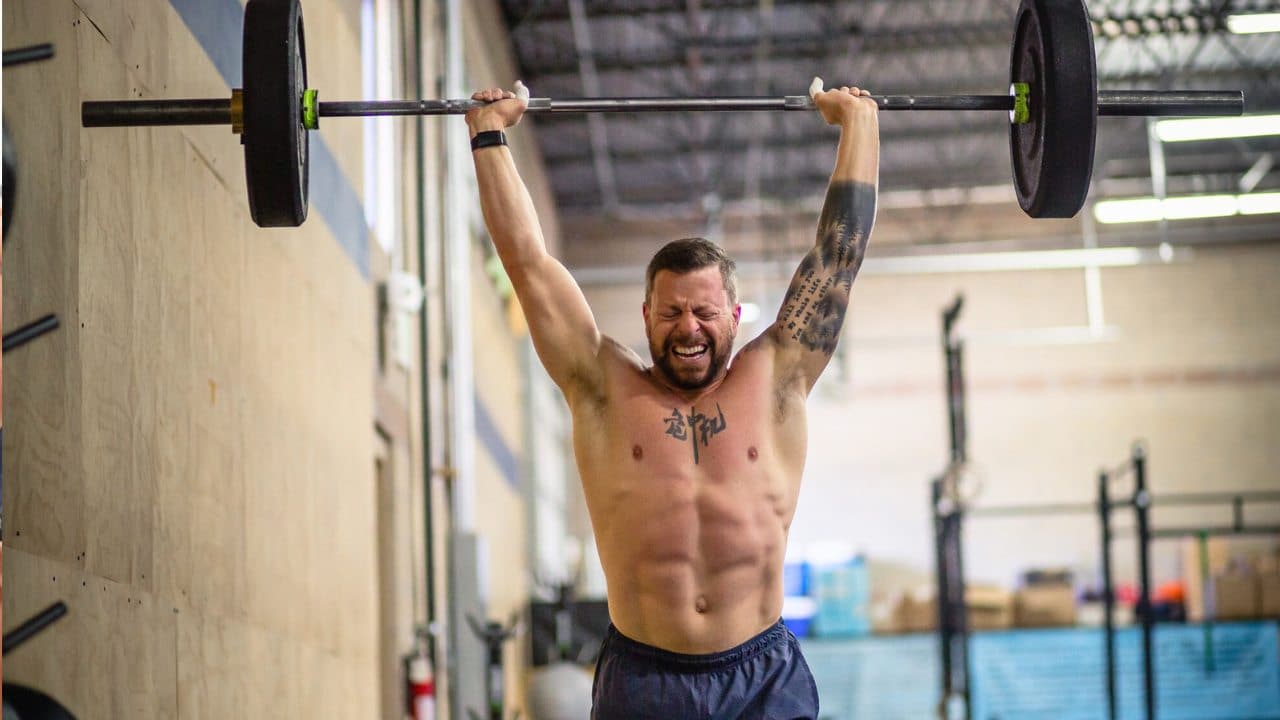
In a recent video, Grubb shared the biggest change he made in his training that transformed the trajectory of his fitness and success at an elite level.
The secret? Less intensity, more intention. If you’re feeling stuck, sore, or defeated, his insight might just be the breakthrough you need.
Jump to:
Why “More is More” Doesn’t Work After 40
Many athletes in their 40s and beyond fall in love with the grind. As Grubb explains, “We wear soreness like a badge,” thinking that crawling out of the car and limping into the grocery store is just part of being an athlete.
But this “train harder, not smarter” approach can do more harm than good. Overtraining overloads the nervous system, elevates injury risk, blunts recovery, and ultimately causes plateaus — or even regression. What worked at 25 won’t work the same way at 45, especially without adequate recovery.
Jason Grubb’s Wake-Up Call
Back in 2016, Grubb pushed himself to the limit: two-a-days, brutal workouts, elite-level intensity — all while following a program designed for much younger athletes. Although he qualified for the CrossFit Open age group qualifier, he quickly realized the method wasn’t sustainable.
“I was just beating myself up over and over again,” he recalls. “Not recovering properly. Not training all the energy systems I needed.” The solution was simple yet profound: slow down and train with purpose.
Train With Intent, Not Ego
Instead of chasing soreness and exhaustion, Grubb shifted toward programming that targets different energy systems throughout the week. He now trains using an intensity-based color spectrum to guide his workouts — a method employed in his Boulder Athlete program for masters athletes.
Understanding the Intensity Spectrum
Each color in this model represents a training intensity zone:
- Blue (Zone 1): Active recovery, warm-up, or cool-down. Very low intensity.
- Green (Zone 2): Aerobic base-building. Conversational pace. Crucial for endurance.
- Yellow (Zone 3): Moderate, sustainable effort. Think longer conditioning pieces (15–30 minutes).
- Orange (Zone 4): Hard, unsustainable effort. Challenging but submaximal. Typically 5–10 minutes long.
- Red (Zone 5): Max effort, short durations. All-out intensity. Reserved for only 1–2 sessions per week.
This spectrum allows Grubb — and his athletes — to distribute stress intelligently throughout the week, avoid overuse, and optimize performance without hitting a wall.
How to Apply the Intensity Spectrum
If You Train at a CrossFit Gym
You don’t need to abandon your gym’s programming. Instead, learn how to “color-code” your workouts mentally. Use these general guidelines from Grubb:
- Short (3–5 min) workouts: Max effort — a red workout.
- Medium (8–12 min) workouts: Hard effort — an orange workout.
- Longer (15–30+ min) workouts: Sustainable pace — yellow or green workout.
- Warm-up runs, recovery rows: Easy effort — a green or blue workout.
The key is to resist turning every workout into a competition. As Grubb says, “Train to improve, not prove.”
If You Train Solo or Follow Custom Programming
Joining a structured program like Boulder Athlete simplifies intensity management by integrating it directly into each session. With color-coded workouts, recovery weeks, and specific energy system targeting, you’ll remove the guesswork — and the ego — from training.
Smart Training Builds Lifelong Fitness
What surprised Grubb the most about his shift to intentional training? He actually got better.
“Working less and working smarter didn’t make me weaker. It made me fitter, more resilient, and more consistent.”
He ticks all the boxes of recovery, avoids injury, and still hits personal records — all while feeling good. His athletes are seeing the same results. Many are making gains they thought were out of reach: faster 5K rows, improved gymnastics, stronger lifts.
The Power of Sustainable Intensity
Not every workout needs to leave you flat on the floor. In fact, most shouldn’t. Grubb now limits his red zone efforts to just twice a week — typically on Wednesdays and Saturdays, followed by recovery or rest days.
He chooses machines — like the Echo Bike, SkiErg, rower, or runner — for these sessions to minimize joint impact. “I’m not doing max touch-and-go power cleans for these,” he notes. “I save that intensity for low-impact movements that let me push without trashing my body.”
Why This Matters — Especially Over 40
For masters athletes, injury risk, recovery time, and lifestyle demands all increase. That’s why sustainable, well-rounded training matters more than ever. Smart intensity scaling allows you to:
- Train more consistently week to week
- Avoid overuse injuries and pain
- Recover faster and sleep better
- Maintain motivation long-term
It’s not about doing less — it’s about training your whole energy system, not just testing your limits every session.
Train Smarter, Not Harder
Grubb’s message is clear: if you’re over 40, chasing intensity without a plan is doing you no favors. Instead, adopt a smarter strategy that respects your physiology, honors recovery, and meets you where you’re at.
“Training harder is not the answer. Training smarter is,” Grubb says. “You don’t have to kill yourself every day — just a couple times a week, and in very short bursts.”
If you’re struggling with plateaus, fatigue, or nagging injuries, this might just be your wake-up call. Whether you train on your own, in a class, or follow a robust program like Boulder Athlete, the shift to training with intent is a game-changer.
Want to take the guesswork out of hydration too? Grubb swears by Element — a zero sugar electrolyte drink that supports athletes without any of the junk found in typical sports drinks. With flavors like limited-time lemonade salt, staying hydrated has never been more efficient or delicious.
Your best days aren’t behind you. With smart training and optimal recovery, they’re just getting started.