Most men over 40 assume athleticism fades with age.
But fitness expert Alain Gonzalez says that’s a myth—athleticism only disappears when people stop training the movement patterns that built it in the first place.
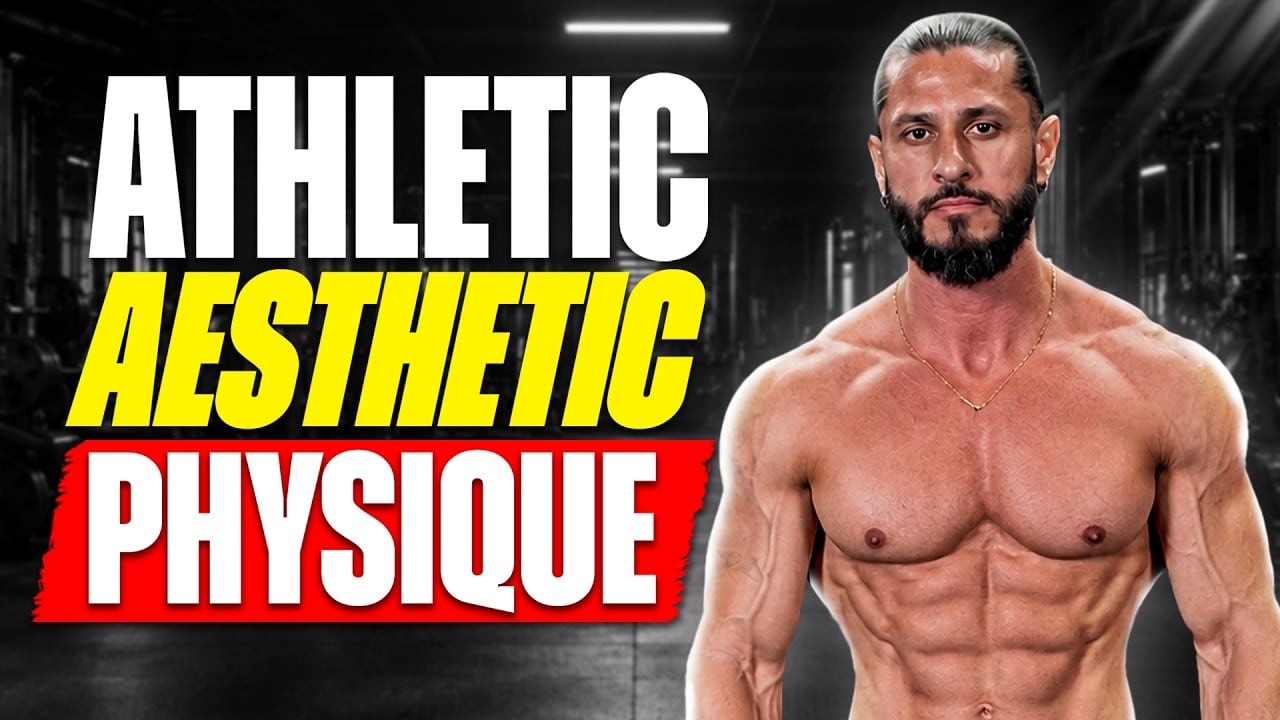
In a recent video on his channel dedicated to helping men over 40 build muscle, Gonzalez broke down seven essential exercises that cover every critical movement pattern needed to stay strong, lean, and athletic well into midlife and beyond.
These aren’t random movements—they’re strategic choices backed by nearly two decades of coaching experience and scientific evidence.
Jump to:
Why Bracing Comes First
Gonzalez starts with weighted dead bugs, which teach core bracing—a skill most guys never actually train.
Core bracing protects your spine while limbs move around it, forming a foundation for every other exercise on his list. Unlike crunches, which flex your spine under load, dead bugs teach stability without spinal movement.

If you want something simple that actually works, this is one of the most effective tools I’ve used to build strength, conditioning, and endurance without needing a full gym setup.
- Full-body training with one weight using swings, squats, and presses
- Solid cast iron build that feels stable and lasts for years
- Comfortable grip that makes high-rep workouts easier to handle
Lie on your back with knees bent at 90 degrees, holding a light plate or kettlebell straight above your chest. Slowly extend opposite arm and leg toward the floor simultaneously.
The moment your lower back arches off the ground, you’ve lost bracing—and that’s exactly what you’re training to eliminate. Once mastered, every other lift feels more stable, safer, and more effective.
Building Power Without Breaking Down
Power generation is foundational to athleticism, yet it’s also what men lose fastest after 40.
That’s where sled pushes and pulls come in. Both train hip extensors—the muscles responsible for explosive movement—without high-impact forces or hamstring strain that sprinting demands.
Sprinting and sled work both load the hips through the same hip extensor pattern, but sprinting adds high-impact ground contact and requires your hamstrings to tolerate near-maximal speed, a demand most men over 40 simply aren’t prepared for.
Load the sled heavy enough to challenge your legs, then drive through in short, powerful steps. Your core must stay braced while your upper body remains rigid through handles.
Aim for 20 to 40 yards per set, either pushing or pulling based on your setup.
If you want something simple that actually works, this is one of the most effective tools I’ve used to build strength, conditioning, and endurance without needing a full gym setup.
- Full-body training with one weight using swings, squats, and presses
- Solid cast iron build that feels stable and lasts for years
- Comfortable grip that makes high-rep workouts easier to handle
Pull-Ups for Shoulder Health
Pull-ups train lats, traps, rhomboids, and rotator cuff muscles to work together—a coordination pattern that starts breaking down after 40.
Gonzalez emphasizes grip selection matters significantly for long-term shoulder health. Research shows wide and reverse grip variations increase risk of shoulder impingement by irritating stabilizing tissues.
Neutral grip pull-ups naturally position your humerus in the scapular plane, creating optimal positioning with less stress on shoulder joints and scapula.
Beyond building a wider, thicker back, neutral grip variations protect shoulder health—keeping you moving well and pain-free long-term.
Single-Leg Squatting for Stability
Bulgarian split squats deliver same lower body muscle activation as back squats with significantly less spinal loading, according to research cited by Gonzalez.
Studies comparing bilateral squats to single-leg variations show substantially higher gluteus medius activation during unilateral work. This matters because gluteus medius stabilizes hips and pelvis—lose that stability, and gait, posture, and athletic power all decline.
If you want something simple that actually works, this is one of the most effective tools I’ve used to build strength, conditioning, and endurance without needing a full gym setup.
- Full-body training with one weight using swings, squats, and presses
- Solid cast iron build that feels stable and lasts for years
- Comfortable grip that makes high-rep workouts easier to handle
One critical detail: hold one dumbbell on the opposite side from your front leg instead of dumbbells in both hands.
That offset load forces obliques and gluteus medius to keep pelvis level throughout reps, adding anti-rotation training directly into squat mechanics with orthopedic benefits for hips.
Hip Hinge Mastery
Hip hinging underlies nearly every athletic movement—sprinting, jumping, lifting objects off the ground.
B-stance Romanian deadlifts (RDLs) prevent compensatory patterns by removing your stronger side from the equation. By placing one leg in a kickstand position, you can’t let your back take over instead of loading hips properly.
Every time you bend to pick something up, reach sideways, or catch your balance, you’re relying on single-leg hip control.
Training this pattern directly builds strength in deep hip muscles that protect lower backs and generate real power.
If you want something simple that actually works, this is one of the most effective tools I’ve used to build strength, conditioning, and endurance without needing a full gym setup.
- Full-body training with one weight using swings, squats, and presses
- Solid cast iron build that feels stable and lasts for years
- Comfortable grip that makes high-rep workouts easier to handle
Explosive Upper Body Work
Push-ups allow scapulae to protract, rotate, and wrap around rib cage naturally—how shoulder complexes are designed to function.
Research comparing loaded push-ups to bench pressing shows that when external load is matched, you get very similar pectoral and triceps activation. One controlled trial found nearly identical increases in chest and triceps muscle thickness when participants performed push-ups loaded to roughly 40% of bench press max.
Plyometric push-ups add power development on top of strength. Push explosively off the ground, then soften landings by bending elbows immediately on contact—same way you’d bend knees landing from a jump.
If you can’t get high off the ground, maintain explosive intent and reduce height. Even a few inches trains same power output with proper intent.
Loaded Carries for Real-World Strength
Farmer’s carries build grip strength, train core bracing under load while moving, and reinforce total-body tightness needed for almost every other lift.
One-arm carries make this exercise even more effective by adding lateral stability demands. Your core must resist torso tipping sideways toward loaded side on top of usual bracing requirements.
If you want something simple that actually works, this is one of the most effective tools I’ve used to build strength, conditioning, and endurance without needing a full gym setup.
- Full-body training with one weight using swings, squats, and presses
- Solid cast iron build that feels stable and lasts for years
- Comfortable grip that makes high-rep workouts easier to handle
This variation mirrors real life more accurately—groceries, kids, luggage, furniture moving—almost nothing gets carried evenly in both hands.
Building Athletic Bodies After 40
These seven exercises systematically address every movement pattern needed for real-world athleticism:
- Core stability through bracing patterns
- Hip power generation without excessive impact
- Shoulder health and upper body pulling strength
- Single-leg strength and lateral hip stability
- Hip hinge mechanics for safe lifting and power
- Upper body explosiveness with proper shoulder mechanics
- Loaded movement and anti-rotation core strength
Together, they build strength, power, and joint health in shoulders, hips, and lower back while simultaneously building muscle.
We’re not trying out for the NFL here. We’re just trying to stay strong, move well, and look great doing it.
Gonzalez points out that guys who are stronger, leaner, and more athletic at 45 than at 25 all train these same handful of movement patterns consistently.
Athleticism after 40 isn’t about chasing professional sports metrics—it’s about maintaining functional strength, movement quality, and physique through intelligent training that respects changing recovery needs while still challenging your body appropriately.