A viral anatomy post is making rounds online, and its numbers are staggering.
Inside every person: 206 bones, 600-plus muscles, and roughly 86 billion brain neurons.
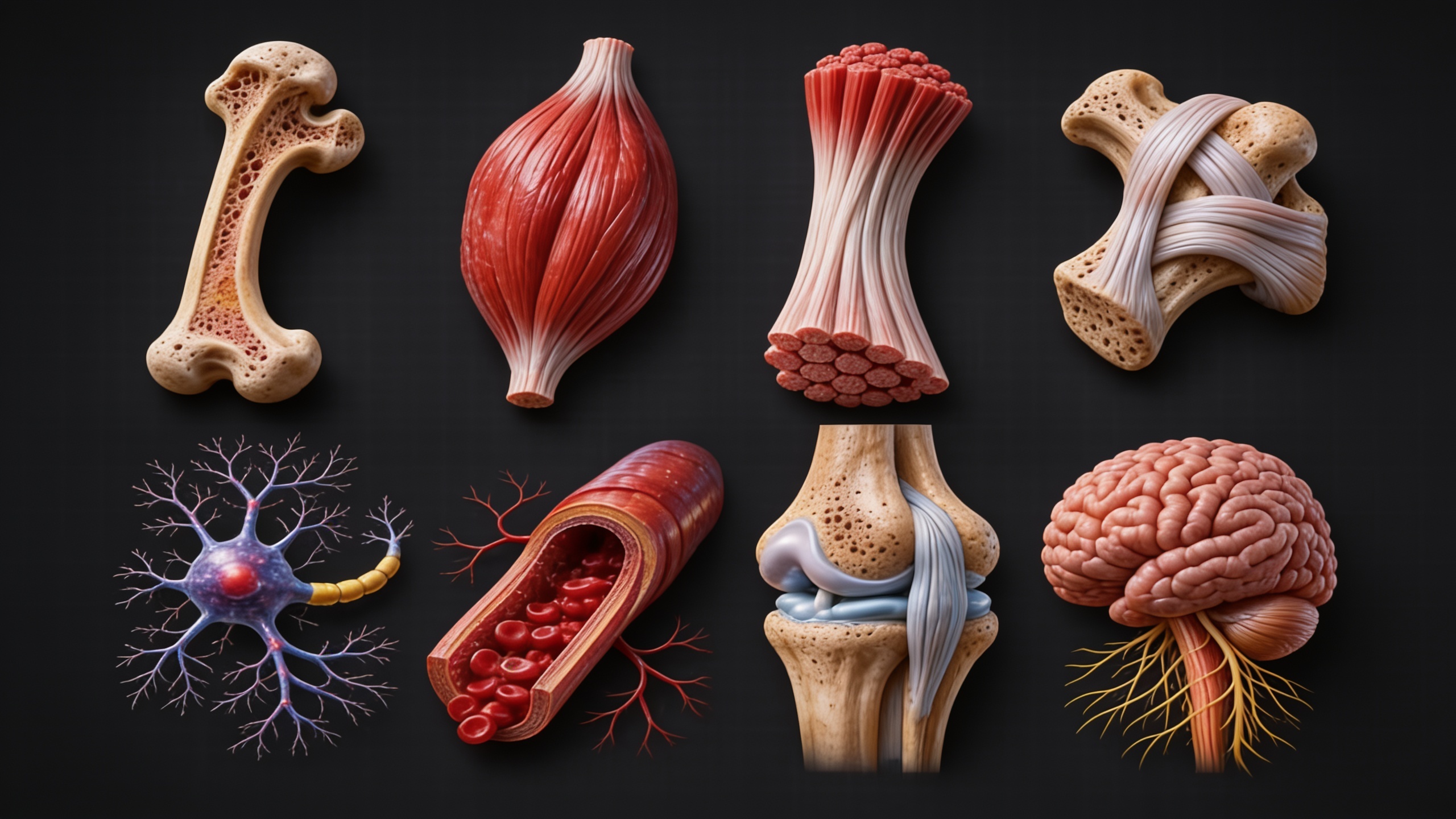
Working in concert, they power each step, heartbeat, and sensation.
One figure on that list carries a surprising backstory.
Another changes dramatically between birth and adulthood.
Ready to meet your internal machinery?

If you want something simple that actually works, this is one of the most effective tools I’ve used to build strength, conditioning, and endurance without needing a full gym setup.
- Full-body training with one weight using swings, squats, and presses
- Solid cast iron build that feels stable and lasts for years
- Comfortable grip that makes high-rep workouts easier to handle
Jump to:
- Three Numbers That Define Human Movement
- Why Babies Have More Bones Than Adults
- Muscles Do Far More Than Flex
- The Neuron Count Scientists Had to Correct
- Tendons vs. Ligaments: Commonly Confused, Clearly Different
- Two Nervous Systems, One Network
- When One System Falters, Others Follow
- Practical Ways to Support Your Body’s Hardware
Three Numbers That Define Human Movement
- 206 bones form the adult skeleton, supporting structure and shielding organs.
- 600+ muscles drive locomotion, posture, circulation, and digestion.
- 86 billion neurons relay electrochemical signals across the brain and beyond.
Scientists have studied this machinery for centuries, starting with 16th-century anatomist Andreas Vesalius. Modern neuroscience keeps refining the picture.
Why Babies Have More Bones Than Adults
Here is the twist: newborns arrive with roughly 270 to 300 bones. Adults settle at 206.
Nothing disappears. Separate pieces gradually fuse throughout childhood and adolescence.
Extremes of the Skeleton
- Longest bone: the femur, better known as the thigh bone
- Smallest bone: the stapes, tucked inside the middle ear
Muscles Do Far More Than Flex
Muscle tissue handles posture, keeps blood circulating through heart muscle, and moves food along the digestive tract. Movement is only one job on a long résumé.
Exact tallies vary. More than 600 named skeletal muscles is the standard figure, though some estimates exceed 650, depending on how anatomists divide and classify them.
- Largest muscle: gluteus maximus
- Smallest muscle: stapedius, another resident of the ear
The Neuron Count Scientists Had to Correct
For years, popular belief held that the brain contained 100 billion neurons. That tidy round number turned out to be off.
If you want something simple that actually works, this is one of the most effective tools I’ve used to build strength, conditioning, and endurance without needing a full gym setup.
- Full-body training with one weight using swings, squats, and presses
- Solid cast iron build that feels stable and lasts for years
- Comfortable grip that makes high-rep workouts easier to handle
A landmark 2009 study by neuroscientist Suzana Herculano-Houzel used isotropic fractionation, a method for counting brain cells more accurately than earlier estimates. Her result: approximately 86 billion neurons.
Worth remembering: 86 billion is itself an approximation, not a precise census of every individual brain.
Connections Matter More Than Cell Count
Neurons communicate across synapses. Estimates place the brain’s total at around 100 trillion synaptic connections, which is where true complexity lives.
That correction also reveals something bigger. Brain complexity is easy to misjudge, and popular science sometimes repeats numbers long after better data arrives.
Tendons vs. Ligaments: Commonly Confused, Clearly Different
- Tendons attach muscle to bone, transmitting contraction force to create motion.
- Ligaments link bones together, stabilizing joints.
Both consist mainly of collagen fibers; tendons rely chiefly on type I collagen. Both also receive limited blood supply.
Sparse circulation explains sluggish healing after a tendon or ligament injury. Patience is a medical reality here, not a cliché.
If you want something simple that actually works, this is one of the most effective tools I’ve used to build strength, conditioning, and endurance without needing a full gym setup.
- Full-body training with one weight using swings, squats, and presses
- Solid cast iron build that feels stable and lasts for years
- Comfortable grip that makes high-rep workouts easier to handle
Two Nervous Systems, One Network
Your nervous system splits into two divisions.
- Central nervous system: brain and spinal cord
- Peripheral nervous system: all remaining neural tissue, carrying sensory and motor signals to limbs and back
Everything from signing a birthday card to sprinting for a bus depends on bones, muscles, tendons, ligaments, and nerves functioning as one integrated unit.
When One System Falters, Others Follow
Interdependence cuts both ways. Damage to a nerve can leave muscles it serves weakened, eventually causing atrophy.
Anatomists and physiologists stress this cascading effect because trouble rarely stays confined to one tissue.
Practical Ways to Support Your Body’s Hardware
- Load gradually. Slowly increasing training demands gives slow-healing tendons and ligaments time to adapt.
- Respect recovery. Limited blood flow means rest days are part of the plan.
- Challenge your brain. Learning new skills engages neuroplasticity, the brain’s ability to rewire through experience.
- Stay active across decades. Bone density and skeletal health matter at every age, not only later in life.
- Seek early help for nerve symptoms. Numbness, tingling, or unexplained weakness deserve professional evaluation.
Understanding anatomy transforms how people approach injury prevention, rehabilitation, and performance. Knowing what each structure does makes smarter choices easier.