Punching power doesn’t come from big biceps or hours spent squeezing a hand gripper on your couch.
It starts at your feet, travels through your core, and ends at your fist—but only if every link in that chain can handle the load.
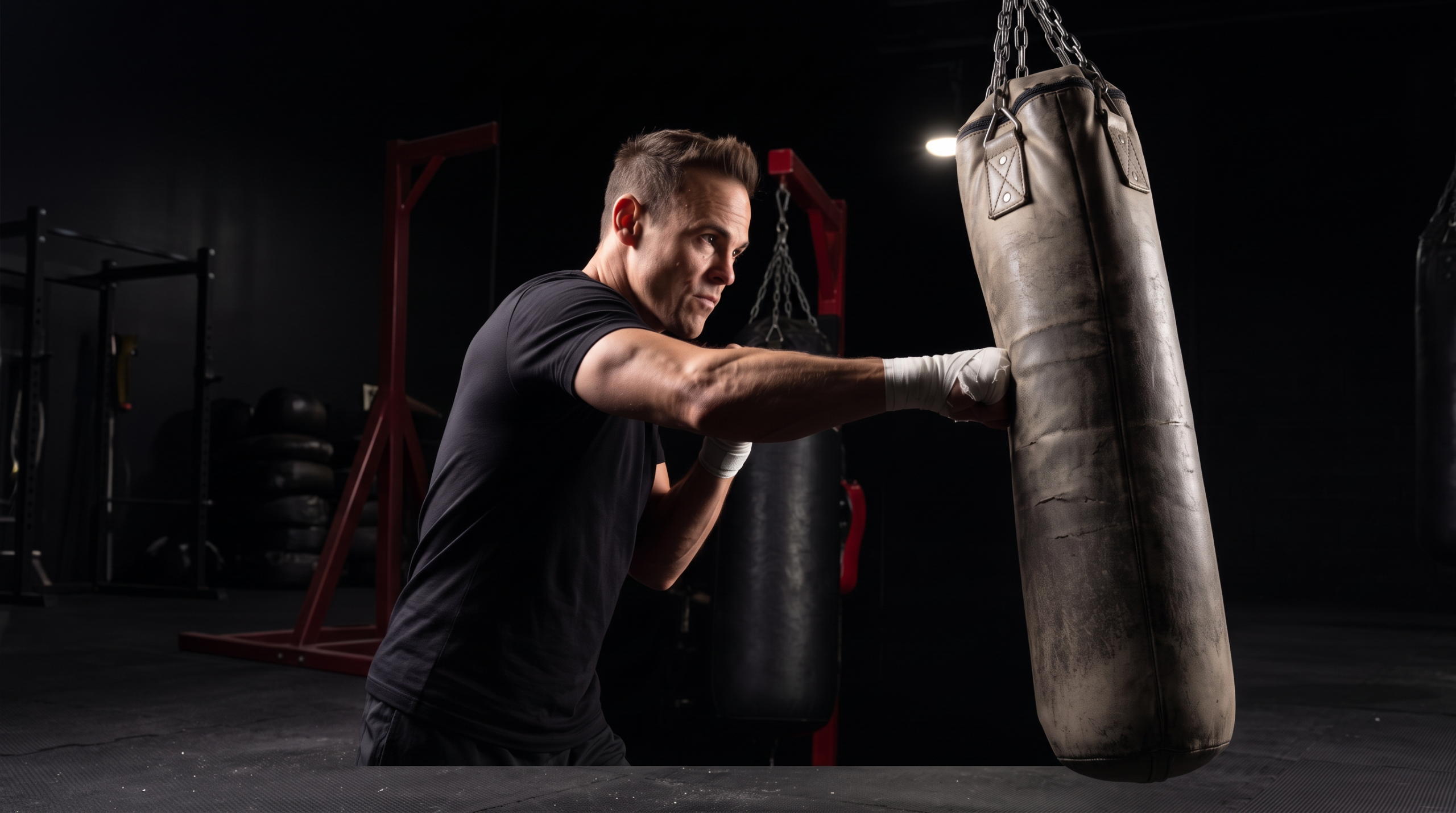
When your wrist or forearm is the weak point, all that force dies on contact, and you’re left with a sore hand and zero impact.
Strength coach and combat conditioning expert Jeff Cavaliere recently broke down seven at-home exercises designed to fix exactly that problem, no gym required.
Jump to:
- Why Your Wrist Is the Weakest Link
- Exercise 1: Knuckle Push-Ups
- Why a Closed Fist Isn’t Automatic
- Exercise 2: Isometric Wall Punch
- Exercise 3: Crushing Newspaper
- Exercise 4: Towel Hangs
- Exercise 5: Fingertip Support
- Exercise 6: Loaded Wrist Levers
- Exercise 7: Explosive Push-Ups and Shadow Boxing
- How to Build Your Week
- Warm Up or Pay Later
- The Progress Test
- Don’t Punch Walls
- Why This Matters Beyond Fighting
Why Your Wrist Is the Weakest Link
Most people think punching power lives in the shoulders or chest. It doesn’t.
Force is generated by your lower body and core, then transferred through your arm. Your hand is just the delivery system.
If your wrist folds or your forearm can’t maintain compression at the moment of contact, that energy has nowhere to go but back into your own joints.
When your wrist and forearm are the weak link in the chain, every bit of force your body just produced dies on contact, and you’re the one who pays for it, not whatever you hit.
The fix isn’t more bicep curls. It’s teaching your hand, wrist, and forearm to stay rigid under load and aligned under speed.
Exercise 1: Knuckle Push-Ups
This is where structure meets strength. Fold a towel or rug, make tight fists with your thumbs locked over your index and middle fingers, and lower yourself slowly.
Your weight should rest only on the first two knuckles—index and middle. Those are the bones built to take impact.
The pinky and ring finger? Not so much. Loading them is how most hand injuries happen.
If you drew a line out of those first two knuckles, it would run straight up the middle of your forearm, not the side of it.
Start with two sets of five reps. Lower for three seconds, touch your chest, press back up. If your wrist shakes or angles inward, you just found your weak point.
Keep your body rigid like a moving plank. No sagging hips, no flared elbows. Breathe out on the way up, brace your core on the way down.
When two sets of five feel easy, go to three sets of ten. Only then should you elevate your feet.
Why a Closed Fist Isn’t Automatic
A fist isn’t a solid block. It’s dozens of small bones held together by compression.
Without that squeeze, it’s just a bag of loose joints wrapped in skin. And here’s the kicker: the muscles that close your fingers aren’t even in your hand.
They’re in your forearm, connected to your fingers through long tendons that run through the wrist.
The muscles that close your fingers aren’t in your hand, they’re in your forearm. They reach your fingers through long tendons that run through the wrist.
That’s why bench pressing won’t give you knockout power. A weak forearm means a soft fist, no matter how much you can lift.
And soft force doesn’t transfer. Think of throwing a rock versus throwing a pillow at the same speed—one cracks the wall, the other bounces off.
Exercise 2: Isometric Wall Punch
Stand facing a wall, one foot forward, knees slightly bent. Set your closed fist against the wall with your arm nearly straight, first two knuckles making contact.
Now push like you’re trying to move the wall. Five seconds of maximum effort, six reps per side, ten seconds rest between.
Pay attention to two things: your back foot should be driving into the floor, and your obliques should harden. If all you feel is shoulder burn, you’re doing it wrong.
Rotate your hip toward the wall as you push, like you’re turning a doorknob with your whole body.
This drill teaches your nervous system to activate every link in the kinetic chain at once—hip, core, shoulder, wrist—so force flows instead of leaking.
Try the variation: bend your elbow to 90 degrees, keep it tight to your body, and push sideways like a frozen hook. Four reps per side. This angle exposes wrist instability that a straight punch hides.
Exercise 3: Crushing Newspaper
Lay a sheet of newspaper flat on a table. Using one hand only—no help, no pressing it into your body—crush that sheet into the smallest ball you can.
Then smooth it out and repeat. Five sheets per hand.
This old-school boxing drill trains something no gripper can: grip endurance through full range of motion.
Your hand goes from wide open to completely closed, finger by finger, hundreds of times. That’s what fails first when someone grabs your wrist and you need to rip free.
You’ll feel a deep burn on the inside of your forearm around the third sheet. That’s where the exercise starts counting.
No newspaper? Ring out a soaking wet towel. Twist until no more water comes out, then twist the other direction. Ten twists each way, two sets.
Exercise 4: Towel Hangs
Throw a towel over a pull-up bar and hold one end in each hand. No bar? Jam a thick towel over the top of a closed door and lean back, pulling down and away.
Hang or hold tension for 30 seconds, three sets, one minute rest.
The towel is thick, soft, and slippery, which forces your fingers to actually squeeze instead of just hooking on like they do with a bar.
You’ll feel your fingers start to peel open. Your only job is to decide they won’t.
This also loads your lats, shoulders, and shoulder blades—the structures that stabilize your arm during impact. An unstable shoulder delivers force crooked and dumps the rest onto your elbow.
Advanced variation: stack two hardcover books and hold them by the edge, pinched between your thumb and fingertips only. Nothing resting in your palm. Twenty seconds per side, three times.
This trains the pinch grip—the most neglected strength in the human hand, and the one that lets you clamp onto a wrist, fabric, or ledge where there’s nothing thick to wrap around.
Exercise 5: Fingertip Support
Start with a plank on your knees, hands resting on fingertips only, fingers slightly spread. Twenty seconds, three sets.
Progress to fingertip push-ups against a wall, then—weeks later—on the floor with knees down.
This trains your fingers to hold load in an open position, a different quality from closed-grip strength. It’s what protects your joints when your hand meets something at an angle you didn’t plan for.
The second a finger buckles, the set is over. There’s no reason to push it.
If you have joint pain in your fingers, stay on the wall version or skip this entirely and do extra rounds of newspaper crushing.
Exercise 6: Loaded Wrist Levers
Grab a hammer by the very end of the handle, or tie a water bottle to one end of a broomstick.
Rest your forearm on your thigh or a table, palm up, and let the weight fall slowly to the side until you feel the stretch on the inside of your wrist. Bring it back under control. Ten reps.
Flip your palm down and do ten in the other direction. Two sets per side.
The weight sits far from your hand, which multiplies the demand on the small muscles that control side-to-side wrist deviation—the ones that stop it from buckling laterally on contact.
A wrist that folds sideways is the single most common injury for people who start hitting a bag before they’ve earned the stability.
Add the wrist roller: tie a rope to a broomstick, hang a bottle or light backpack off the other end, and roll it up using only your wrists, arms out in front. Roll up, lower slowly, two or three rounds.
And do the one thing almost nobody does—train the extensors. Loop a rubber band around all five fingers and open your hand against resistance. Twenty reps, two sets.
Everything up to here closed the hand. If you only train closing, you build an imbalance that shows up months later as wrist and elbow pain.
Exercise 7: Explosive Push-Ups and Shadow Boxing
Flat hands on the floor, body rigid. Lower under control, then drive up hard enough that your hands leave the ground.
Four sets of three to five reps, 60 to 90 seconds of full rest. If you can do fifteen straight, you’re not being explosive—you’re doing conditioning.
This builds rate of force development—the ability to produce a lot of force in almost no time.
A punch lasts a fraction of a second. Nobody cares how much force you can grind out over three seconds under a barbell. What matters is the force you deliver in the first tenth.
Finish with shadow boxing: three rounds of two minutes. Treat every punch with three rules:
- The fist closes only in the last third of the trip, not before
- The hand comes back faster than it goes out, because a hand left hanging is a face left open
- Short, sharp breath out on every punch, and never lock the elbow all the way at full extension
Thirty punches with real intent beat 300 without.
Watch your feet. Your back foot has to pivot with your hip on every rear-hand punch, heel coming off the floor. If your foot stays planted, the punch is being born in your shoulder—and you just trained the exact flaw these drills exist to fix.
How to Build Your Week
Three non-consecutive days. Each day, pick one structure exercise, one grip exercise, and one speed exercise. Run the circuit in ten minutes.
- Day 1: Knuckle push-ups, newspaper crushing, explosive push-ups
- Day 2: Wall punch, towel hangs, shadow boxing
- Day 3: Fingertip support, wrist levers with extensors, explosive push-ups
Hands and forearms recover fast. Tendons don’t. If you get sharp, pinpoint pain that’s still there the next day, take two days off.
Burning during the work is training. Pain that stays is a message.
Warm Up or Pay Later
Before every session, spend one minute circling your wrists both directions, opening and closing your hands twenty times, and putting your palms flat on a wall with fingers pointing down for fifteen seconds.
The wrist is a small joint carrying big work. One minute of prep saves you weeks off.
The Progress Test
Write down three numbers today:
- How many seconds you hold the towel hang
- How many sheets of newspaper your weaker hand crushes before it fails
- How many knuckle push-ups you get before your wrist starts shaking
Repeat in four weeks. If all three went up, your structure actually changed.
Don’t Punch Walls
Seriously. Don’t punch walls, posts, or any hard surface bare-handed to “test your progress.”
You don’t build bone toughness that way. You build inflamed joints.
The whole point is that your hand can survive the force you produce, not that it becomes a demolition tool.
Why This Matters Beyond Fighting
Prepared hands aren’t only for hitting. They change how you carry, hold, shake hands, and set yourself.
A man who trusts his own structure moves differently, and that’s visible long before any confrontation exists.
Most of the time, it’s what keeps the confrontation from happening.
Start with two sets of five knuckle push-ups today. Keep that wrist locked. Track your numbers. Build the structure, and everything else follows.