Sam Sulek recently upgraded his car with a supercharger, transforming his ride from 400 to 700 horsepower—and the experience left him shaken enough to issue a public warning.
The popular fitness YouTuber used the harrowing test drive as a launching point for an unexpected lesson: never buy your teenager a high-performance vehicle.
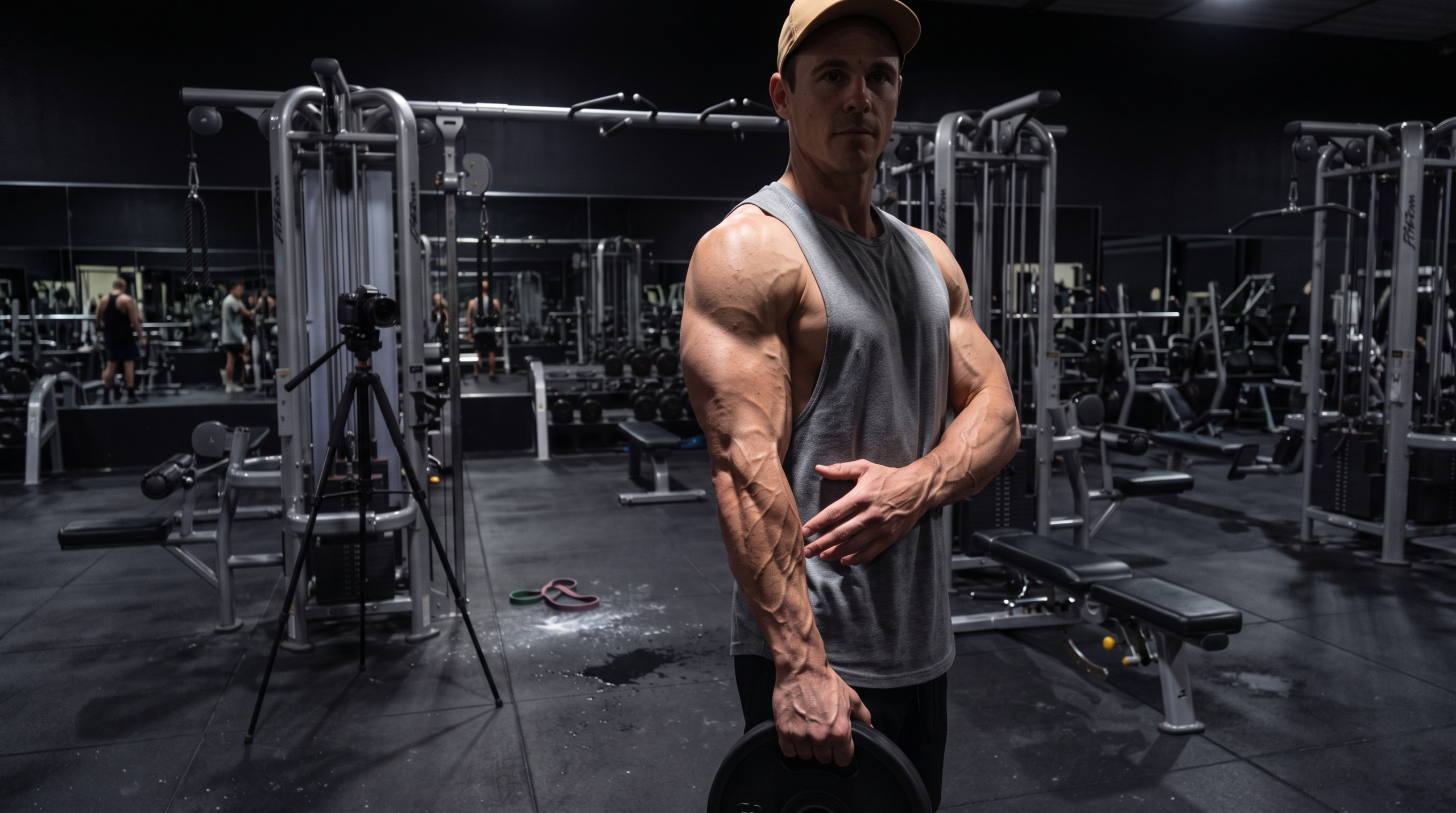
But the real meat of his latest video wasn’t about cars at all—it was a deep dive into one of the most overlooked muscle groups in bodybuilding.
Sulek walked viewers through his complete forearm training protocol, explaining why direct forearm work matters and how to build grip strength that actually shows.
Jump to:
- The Supercharger Wake-Up Call
- Audience Demographics and Training Updates
- Why Direct Forearm Training Actually Matters
- The Complete Forearm Protocol
- The Forearm Pump Phenomenon
- Practical Applications and Long-Term Benefits
- Programming Forearms Into Your Split
- At-Home Modifications
- The Bottom Line on Forearm Development
The Supercharger Wake-Up Call
After picking up his newly supercharged Mustang from the dealership, Sulek immediately noticed the difference. Service technicians who test-drove the car pulled him aside with stern warnings about the power increase.
Going from 400s to like 700s. That’s freaky. So, there’s definitely not going to be a headline Sam Sulek crashes his car.
The experience prompted him to reflect on teenage drivers and performance cars—a combination he now views as genuinely dangerous.
If I was 16 in something like this, I don’t know if I would even be here right now and probably freaking crash this thing. So don’t do that. Give him some Camry years first.
His advice? Start young drivers with something sensible and let them earn their way up to performance vehicles once they’ve developed real-world driving experience.
Audience Demographics and Training Updates
Sulek shared an interesting look at his viewership analytics, dispelling assumptions about his audience age. The largest chunk of viewers falls between 25 and 35 years old, with roughly 40% in that range.
On the training front, he announced hitting a new low weight of 233.5 pounds during his current cut. The milestone came alongside a training adjustment—moving from hitting legs twice per week to incorporating “wildcard” days when muscle groups need extra recovery time.
Why Direct Forearm Training Actually Matters
Sulek makes a compelling case against the “forearms get worked enough from back training” mentality. His philosophy centers on direct stimulus for every muscle group, including ones that get passive work elsewhere.
You’re definitely not going to really stimulate your forearms purely from your back training. I don’t want to work them passively. We’re not trying to work our chest or our triceps passively from a chest day. We’re hitting them directly.
Beyond aesthetics, he emphasizes the functional benefits: wrist stability, improved grip strength, and injury prevention during pressing movements.
Underdeveloped forearms create weak points in compound lifts. Guys with poor grip strength are the ones dumbbells slip from during heavy presses, sometimes with catastrophic results.
The Complete Forearm Protocol
Movement 1: Reverse Forearm Curls (Posterior Forearm)
Sulek starts every forearm session targeting the back side of the forearm—the extensor muscles that create those “fancy looking lines.”
Setup: Position one knee flat on a bench (foot elevated so the leg stays level, not sloped). Hold a light dumbbell—he uses 20 pounds, but recommends starting with 10 or even 5 pounds for beginners.
Execution: Perform slow, controlled curls focusing on the eccentric. No partial reps, no assisted reps past failure. Just burn out the muscle with clean repetitions.
Volume: Six sets, roughly 20 reps per set until substantial reps become impossible.
I’m not sitting here doing partials, you know? I’m not doing assisted reps past failure for the backside of my forearm. I’m just sitting here burning it out.
Movement 2: Heavy Dumbbell Forearm Curls (Flexor Focus)
The meat-and-potatoes movement. Sulek jumps to 80-pound dumbbells for this one, though he strongly cautions against going too heavy too fast.
Setup: Same bench position as reverse curls.
Execution: Maximum reps per set, starting with the weaker arm (left, in his case) to ensure balanced development. The rotating weight creates intense grip demand.
Volume: Four to five sets to complete muscular failure.
Do not underestimate your strength, but also at the same time ease into it and don’t hurt yourself. If you’ve never done this before, don’t go as heavy as you’ve ever freaking gone.
A side benefit? This movement fast-tracks callus development. The rotating metal against skin creates the friction necessary for building those telltale lifter’s hands.
Movement 3: Cable Forearm Curls (Finishing Movement)
After heavy compound work, Sulek switches to cables for controlled, squeeze-focused reps.
Weight: 80 pounds on the cable stack
Execution: Lighter than the dumbbell curls with emphasis on peak contraction and controlled negatives.
Volume: Three sets minimum
This finisher leaves forearms completely engorged. Sulek notes the pump becomes so extreme it actually reduces hand dexterity temporarily.
The Forearm Pump Phenomenon
Sulek draws an interesting parallel to rock climbing—one of the few non-lifting activities where “the pump” is a well-known phenomenon.
Rock climbers experience forearm pumps during extended climbs, particularly during crimping and pinching movements. Unlike bodybuilders who chase the pump, climbers actively avoid it because blood engorgement reduces grip strength and climbing performance.
You can only climb for so long and grab on all this for so long before your forearms get freaking pumped. And then these guys have to take a break.
After his forearm session, Sulek demonstrates the extreme pump, showing visibly swollen muscle bellies and multiple vascular branches running the length of his forearms.
Practical Applications and Long-Term Benefits
Beyond gym performance, developed forearms impact daily life in subtle ways. Sulek mentions wardrobe challenges—long-sleeve shirts that fit the torso often become compression sleeves around developed forearms.
But the visibility factor matters most. Forearms are the most visible muscle group in everyday settings, showing whether you’re wearing long or short sleeves.
Somebody who’s got developed forearms, when they hold a weight, it’s just a bundle of freaking cables. It just makes you look freaking sweet.
His recommendation for athletes or lifters considering a rest day? Skip the full rest and hit forearms instead. The muscle group recovers quickly and can handle frequent training without interfering with other lifts.
Programming Forearms Into Your Split
Sulek programs forearm work as a “wildcard” day—fitting it in when primary muscle groups need extra recovery. His current split runs: legs, chest, back, arms, then wildcard.
The complete session takes roughly 30-40 minutes including all sets:
- Reverse forearm curls: 6 sets × 20 reps (20 lb dumbbell)
- Heavy dumbbell forearm curls: 5 sets × max reps (80 lb dumbbells)
- Cable forearm curls: 3 sets × controlled reps (80 lbs)
Following the forearm work, he completes 45 minutes of cardio to support his current fat-loss phase.
At-Home Modifications
The beauty of forearm training? It’s completely accessible with minimal equipment. Sulek emphasizes this workout translates perfectly to home training.
All you need:
- One heavy dumbbell (60-80+ pounds depending on strength level)
- One light dumbbell (10-20 pounds)
- A sturdy chair or bench
The cable work can be substituted with additional dumbbell sets or resistance bands if cables aren’t available.
The Bottom Line on Forearm Development
Sulek’s approach centers on one principle: direct work produces direct results. Relying on back training and heavy pulls won’t maximize forearm development the way dedicated, isolated work will.
The functional carryover extends beyond aesthetics—improved wrist stability, enhanced grip strength, and reduced injury risk during heavy pressing all stem from dedicated forearm training.
For lifters who’ve neglected forearms or assumed compound movements provided enough stimulus, Sulek’s protocol offers a straightforward template: three movements, moderate volume, emphasis on both flexors and extensors.
And if you’re questioning whether forearms deserve their own training day, Sulek has a simple challenge: try his three-movement protocol once. The pump alone will answer the question.