Building an impressive physique doesn’t happen overnight.
That’s the reality fitness influencer Sven wants people to understand.
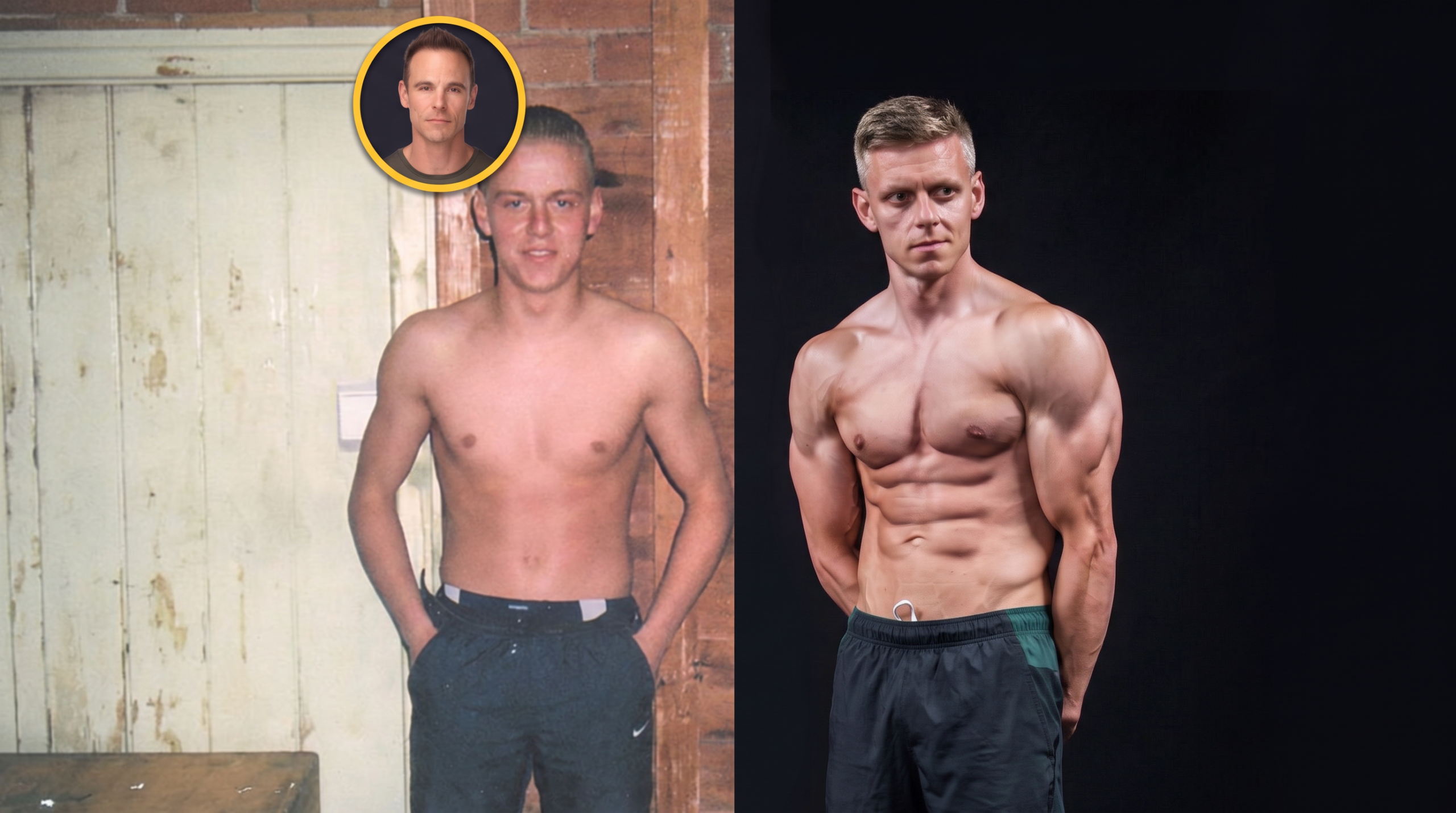
In a recent YouTube video, the calisthenics athlete shared his 15-year body transformation journey, revealing the patience, consistency, and strategic training required to develop a strong, functional physique naturally.
His approach challenges the quick-fix promises flooding social media—and offers a refreshingly honest roadmap for anyone committed to long-term results.
Jump to:
- The Long Game: 15 Years of Consistent Training
- Beyond Bodybuilding: The Calisthenics Approach
- Understanding Newbie Gains and Progress Plateaus
- The Genetics Factor Nobody Wants to Discuss
- Essential Elements of Effective Training Programming
- The Goldilocks Zone: Not Too Much, Not Too Little
- Hypertrophy-Focused Training Principles
- Nutrition Fundamentals for Muscle Growth
- The Bigger Picture: Sustainable Fitness
The Long Game: 15 Years of Consistent Training
Sven’s transformation spans over a decade and a half, beginning when he was just 18 years old with basic training experience from doing push-ups and pull-ups since age 12.
There are 15 years of training, 15 years of experience and 15 years of consistency.
This extended timeline isn’t an anomaly—it’s actually the norm for natural lifters seeking sustainable muscle development.
While the fitness industry loves showcasing dramatic 12-week transformations, Sven emphasizes that building a genuinely impressive physique requires years, not weeks or months. This is especially true for hardgainers and those training without performance-enhancing drugs.
His message carries particular weight for younger lifters who might feel discouraged by slow initial progress or overwhelmed by unrealistic expectations set by highly edited social media content.
Beyond Bodybuilding: The Calisthenics Approach
Unlike traditional bodybuilders focused solely on hypertrophy, Sven follows what he calls an “all-around approach” that balances multiple fitness goals simultaneously.
His training philosophy prioritizes three core objectives: performing calisthenics skills, maintaining mobility, and building an aesthetic physique.
This methodology differs significantly from strict bodybuilding protocols that isolate muscle groups through repetitive exercises.
My training doesn’t follow a strict bodybuilding approach. I do calisthenics and vary my training so that I’m able to do skills, stay mobile and maintain a good physique.
Calisthenics training emphasizes functional strength developed through bodyweight movements like pull-ups, dips, muscle-ups, and advanced skills such as front levers and planches.
The variety inherent in this approach not only keeps training mentally engaging but may also provide a more balanced stimulus for overall athletic development.
Understanding Newbie Gains and Progress Plateaus
Sven addresses a critical concept that every lifter should understand: the trajectory of muscle growth changes dramatically over time.
During the first year of consistent training, beginners experience what’s commonly called “newbie gains”—a period of rapid muscle development as the body adapts to novel training stimuli.
This accelerated growth doesn’t last forever. As training age increases, progress naturally slows because the body becomes more efficient and adapted to exercise stress.
However, Sven points out a counterbalancing factor: accumulated experience allows lifters to train more effectively over time.
The developing mind-muscle connection, refined exercise selection, and deeper understanding of personal recovery needs can help push through plateaus that would otherwise stall progress.
The more time passes by, the more experience you get. This means that you will learn to train more effectively. The feeling for your muscles and how you should train them gets better with every year.
The Genetics Factor Nobody Wants to Discuss
Sven tackles one of fitness culture’s most uncomfortable truths: genetics significantly influence training outcomes.
Some individuals respond rapidly to resistance training, building muscle mass seemingly effortlessly, while others struggle despite consistent effort.
Rather than using genetics as an excuse, Sven encourages a mindset shift—focusing on personal potential rather than comparison with others.
To stay motivated you shouldn’t compare yourself to others directly. Do the best you can do and make the most out of your potential.
This perspective proves particularly valuable in an era of highly curated social media fitness content, where comparison often breeds discouragement.
Genetic factors affecting muscle growth include muscle fiber type distribution, hormonal profiles, muscle insertion points, and recovery capacity—all largely outside individual control.
Essential Elements of Effective Training Programming
According to Sven, many people waste time with ineffective programming that fails to produce optimal results.
He outlines several critical components that separate productive training from spinning wheels:
- Appropriate resistance selection: Choosing the right weight or exercise progression to match your current strength level
- Strategic rest periods: Timing recovery between sets according to rep ranges and exercise difficulty
- Optimal training volume: Balancing total reps, sets, and exercises to stimulate growth without overtraining
- Proper training frequency: Determining how often to train each week for maximum recovery and adaptation
- Progressive challenge: Pushing boundaries without destroying the body’s ability to recover
Perhaps most importantly, Sven emphasizes that muscles grow during rest periods, not during workouts themselves.
This counterintuitive principle leads many enthusiastic lifters astray—they train too frequently or intensely, never allowing adequate recovery for adaptation to occur.
The Goldilocks Zone: Not Too Much, Not Too Little
Sven identifies a common pattern: trainees typically fall into one of two extremes.
Either they’re highly motivated and train every day at maximum intensity, or they struggle with consistency and train irregularly.
Neither approach works long-term.
The first group risks overtraining, accumulated fatigue, and eventual burnout or injury. The second group never provides sufficient stimulus for meaningful adaptation.
In my experience most people are either doing too little or too much. Both ways will not work in the long term and you have to find the sweet spot between those two.
Finding this “sweet spot” requires honest self-assessment and willingness to adjust based on recovery markers like sleep quality, performance trends, and subjective energy levels.
What works varies individually—some thrive on four training sessions weekly, while others need five or six, depending on intensity, volume, and life stress factors.
Hypertrophy-Focused Training Principles
For those specifically targeting maximum muscle growth, Sven recommends periods of hypertrophy-focused training within an otherwise varied program.
While he acknowledges general principles for building muscle effectively, he’s clear that no single “secret routine” exists that works indefinitely for everyone.
Hypertrophy training typically involves moderate-to-high rep ranges (roughly 6-15 repetitions per set), multiple sets per exercise, shorter rest periods compared to strength training, and sufficient weekly volume for each muscle group.
The specific implementation within calisthenics requires thoughtful exercise selection and progression schemes since external load manipulation isn’t always possible.
Techniques like tempo manipulation, pause reps, partial reps, and strategic exercise variation become particularly valuable for bodyweight training protocols.
Nutrition Fundamentals for Muscle Growth
Sven outlines four foundational nutritional principles supporting muscle development:
Hydration Matters
He recommends consuming 2-3 liters of water daily to support training performance, recovery, and overall metabolic function.
Caloric Surplus for Growth
Building muscle requires energy beyond maintenance needs. Sven suggests a modest surplus of 300-500 calories above total daily energy expenditure.
Larger surpluses typically result in disproportionate fat gain relative to muscle growth—a common mistake among eager bulkers.
Macronutrient Balance
For protein, Sven targets 2 grams per kilogram of body weight daily, which aligns with common recommendations for active individuals seeking muscle growth.
Regarding fats and carbohydrates, he takes a flexible approach—some people thrive on high-carb, low-fat diets, while others perform better with the opposite ratio.
Individual experimentation proves essential here.
Food Quality and Micronutrients
Sven emphasizes foods with high nutritional density while limiting highly processed options.
He mentions potentially supplementing zinc, omega-3 fatty acids, vitamin D3 (paired with K2), and vitamin B12 for those following plant-based diets—though he cautions that excessive supplementation can backfire.
Whole-food sources generally provide better nutrient bioavailability and synergistic compounds that isolated supplements can’t replicate.
The Bigger Picture: Sustainable Fitness
What distinguishes Sven’s approach from typical transformation content is the emphasis on sustainability over dramatic short-term results.
His 15-year journey reflects consistent effort rather than extreme measures—a philosophy that produces bodies capable of not just looking impressive but also performing functional movements and maintaining health long-term.
This perspective challenges the quick-fix mentality dominating fitness marketing, where aggressive cuts, extreme training volumes, and unsustainable protocols promise rapid transformations that rarely last.
Sven’s balanced approach—integrating skill work, mobility training, and aesthetic goals—creates a more resilient, well-rounded athlete rather than someone who simply looks fit in photos.
For those beginning their own fitness journey or feeling discouraged by slow progress, Sven’s story offers valuable perspective: meaningful transformation takes time, consistency beats intensity, and the best program balances challenge with recovery.
Rather than chasing viral 8-week transformations, focusing on sustainable habits and incremental improvements ultimately delivers superior long-term results—and a physique you can actually maintain.