Seven months ago, Wyatt Anderson couldn’t move a single muscle in his body.
Last Sunday, the 17-year-old from Louisville, Kentucky crossed the finish line of the Bank of America Chicago Marathon in just under four hours.
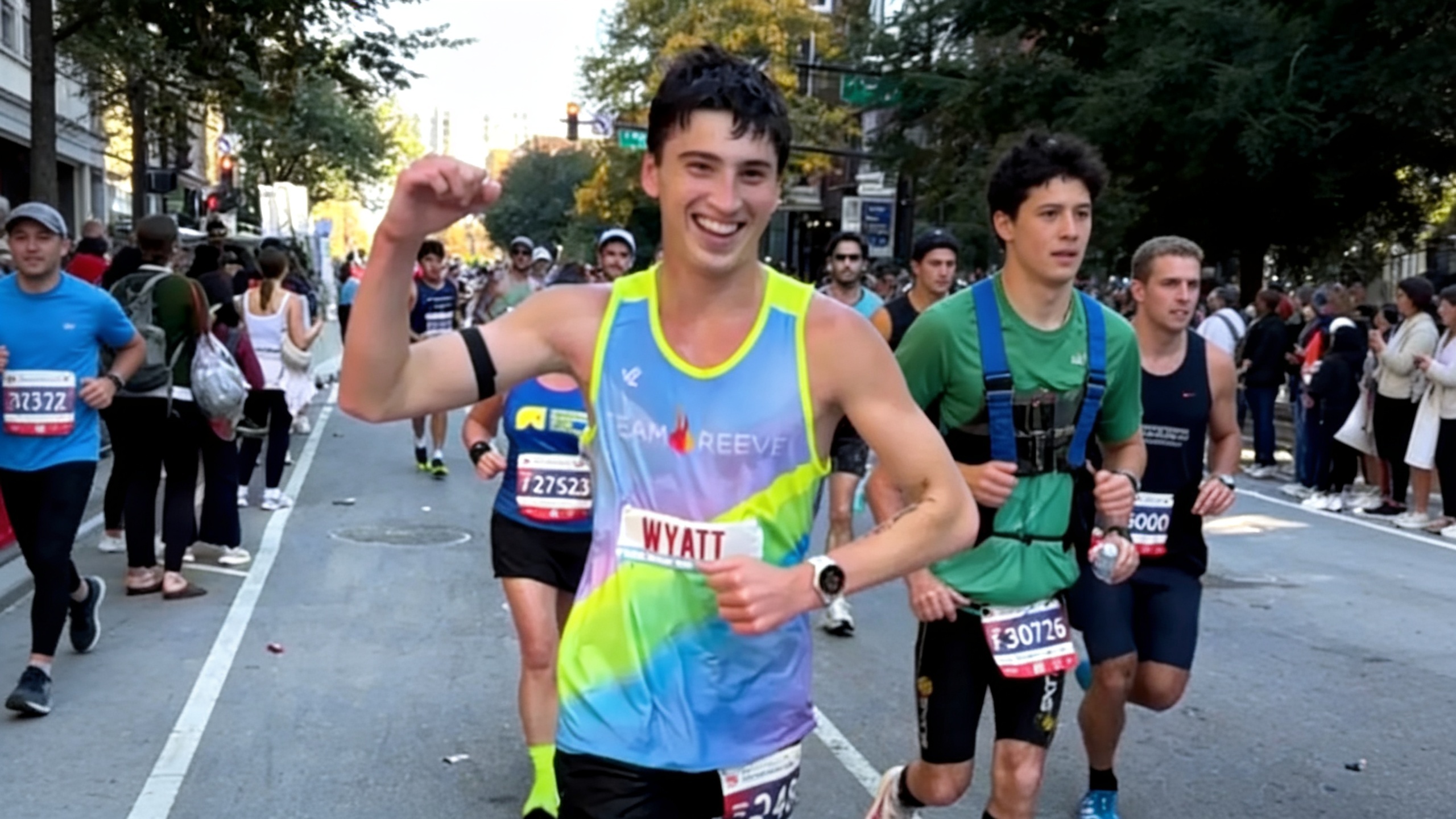
His journey from complete paralysis to running 26.2 miles is one of the most remarkable recovery stories in recent memory—and it’s raising important questions about what’s possible when determination meets modern rehabilitation.
Along the way, Anderson and his brother Jack raised more than $24,000 for spinal cord injury research, turning personal tragedy into hope for thousands of others living with paralysis.
Jump to:
- The Injury That Changed Everything
- The Long Road to Walking Again
- From Paralyzed to Marathon Ready in Seven Months
- A Finish Time That Defied All Expectations
- Raising Awareness and Funds for Spinal Cord Research
- What Makes This Recovery So Remarkable
- A Message of Hope for Others Facing Paralysis
- What Comes Next
The Injury That Changed Everything
In November 2025, Anderson was playing basketball with friends at the Jewish Community Center in Louisville when disaster struck.
He tripped during the game and ran headfirst into a wall. The impact fractured his spine and left him immediately paralyzed from the neck down.
I blacked out briefly and could not move any limb on my body.
For a high school junior who had been active and healthy just moments before, the sudden inability to move was terrifying. Anderson underwent spinal fusion surgery—a procedure that joins two or more vertebrae together to stabilize the spine—to repair the damage.
What followed was a grueling month at Frazier Rehab Institute in Louisville, where Anderson began the painstaking process of relearning basic movements most people take for granted.
The Long Road to Walking Again
After his initial month of inpatient rehabilitation, Anderson continued with six additional weeks of outpatient physical therapy.
The uncertainty was constant. Anderson has spoken openly about wondering whether he would ever walk again or return to anything resembling his previous life.
But during his darkest days in rehab, his physical therapist shared a story that would change everything.
She told him about a man who had completed 50 marathons in 50 states in a single year—while using a wheelchair.
That story became the spark Anderson needed. If someone in a wheelchair could accomplish something so extraordinary, what could he do once he learned to walk again?
He set himself an audacious goal: complete a marathon within one year of his injury.
From Paralyzed to Marathon Ready in Seven Months
Anderson didn’t just want to finish a marathon. He wanted to run one of the most prestigious races in the world.
The Bank of America Chicago Marathon is one of the six Abbott World Marathon Majors—the Boston Marathon, London Marathon, Berlin Marathon, Chicago Marathon, New York City Marathon, and Tokyo Marathon. It typically draws over 40,000 finishers and is known for its fast, flat course.
For someone who had been completely paralyzed just months earlier, entering this race was almost unthinkable.
But Anderson committed to training while still attending St. Xavier High School and managing his ongoing recovery.
Race Day: Running for More Than Himself
On October 12, 2026, Anderson lined up at the starting line with his brother Jack by his side.
Jack would run every single step of the 26.2 miles alongside his younger brother, serving as both support partner and witness to one of the most inspiring athletic achievements imaginable.
The brothers weren’t just running for personal accomplishment. They had turned the marathon into a fundraising campaign for the Christopher and Dana Reeve Foundation, a nonprofit organization dedicated to funding research to cure spinal cord injuries.
The foundation also works to improve quality of life for the approximately 300,000 Americans currently living with spinal cord injuries—people facing the same uncertainty and challenges Anderson had just overcome.
A Finish Time That Defied All Expectations
Anderson didn’t just complete the marathon. He finished in 3 hours, 56 minutes, and 28 seconds.
For context, that’s a sub-four-hour marathon—a milestone many experienced runners train years to achieve. Anderson accomplished it as a first-time marathoner who couldn’t walk just seven months earlier.
His pace averaged around nine minutes per mile for the entire 26.2-mile distance, a remarkable feat of endurance and determination.
The story quickly captured national attention, with ABC News first reporting on Anderson’s achievement. Outlets including WAVE 3 Louisville, Yahoo Life, and the New York Post soon picked up the inspiring narrative.
Raising Awareness and Funds for Spinal Cord Research
Beyond the personal triumph, Anderson’s marathon raised more than $24,000 for the Christopher and Dana Reeve Foundation.
Founded by actor Christopher Reeve after his own paralyzing horse-riding accident in 1995, the foundation has become one of the leading organizations funding research into spinal cord injury treatments and potential cures.
The foundation also provides resources and support for people living with paralysis and their families—offering quality-of-life grants, peer support programs, and information about the latest treatment options.
Anderson’s fundraising effort demonstrates how peer-to-peer campaigns can generate substantial support for medical research while raising awareness about conditions that affect hundreds of thousands of Americans.
What Makes This Recovery So Remarkable
Spinal cord injuries vary dramatically in severity and outcome. Some patients regain function relatively quickly, while others face permanent paralysis.
Anderson’s recovery—from complete paralysis to running a marathon in seven months—represents an exceptional outcome that rehabilitation specialists would consider highly unusual.
Several factors likely contributed to his remarkable progress:
- Immediate medical intervention: Quick access to surgery and rehabilitation services
- Youth and overall health: Anderson was a healthy, active teenager when injured
- Type of injury: His paralysis was temporary, suggesting incomplete spinal cord damage
- Intensive rehabilitation: Months of dedicated physical therapy and training
- Psychological factors: Strong motivation and goal-setting during recovery
Spinal fusion surgery stabilizes damaged vertebrae but doesn’t directly repair spinal cord tissue. The fact that Anderson regained full function suggests his spinal cord itself sustained less permanent damage than initially feared.
The Power of Goal-Setting in Medical Recovery
Anderson’s story highlights something rehabilitation specialists have long understood: meaningful goals can dramatically impact recovery outcomes.
Rather than simply working toward vague milestones like “walk again” or “get stronger,” Anderson set a specific, measurable, time-bound goal that gave purpose to every difficult therapy session.
When physical therapy hurt, when training felt impossible, when doubt crept in, he had a clear target: cross the Chicago Marathon finish line within one year of his injury.
That kind of concrete goal-setting can provide the psychological fuel needed to push through the grueling process of neurological rehabilitation.
A Message of Hope for Others Facing Paralysis
Anderson’s achievement has resonated far beyond the running community.
For the 300,000 Americans living with spinal cord injuries and their families, stories like his offer something precious: hope that recovery might be possible, even when doctors can’t promise outcomes.
It’s important to note that not every spinal cord injury patient will experience Anderson’s level of recovery. Permanent paralysis remains a reality for many, and medical professionals emphasize that each case is unique.
But Anderson’s journey demonstrates what’s possible when cutting-edge medical intervention, intensive rehabilitation, and extraordinary personal determination align.
His decision to funnel that hope into fundraising for research that might help others shows maturity well beyond his 17 years.
What Comes Next
Anderson is now back at St. Xavier High School, presumably continuing his senior year with a new perspective on what truly matters.
The teenager who couldn’t move his limbs in November has become an inspiration to thousands, his story shared across national media and social platforms.
Whether Anderson continues marathon running or pursues other challenges, he’s already accomplished something most people never will: turning a life-threatening injury into an opportunity to help others.
His finish time of 3:56:28 will stand in the Chicago Marathon record books. But more importantly, his story will continue inspiring people facing their own seemingly impossible challenges—in rehabilitation centers, hospital beds, and anywhere else hope feels out of reach.
Sometimes the most powerful medicine isn’t found in a prescription or procedure. Sometimes it’s found in a story about someone who refused to accept limitations, set an audacious goal, and worked relentlessly until they crossed the finish line.