In a recent YouTube video, Paolo from Pro Physique tackled a question nearly every dieter eventually asks.
Why does lower-waist fat refuse to budge, even after months of grueling effort?
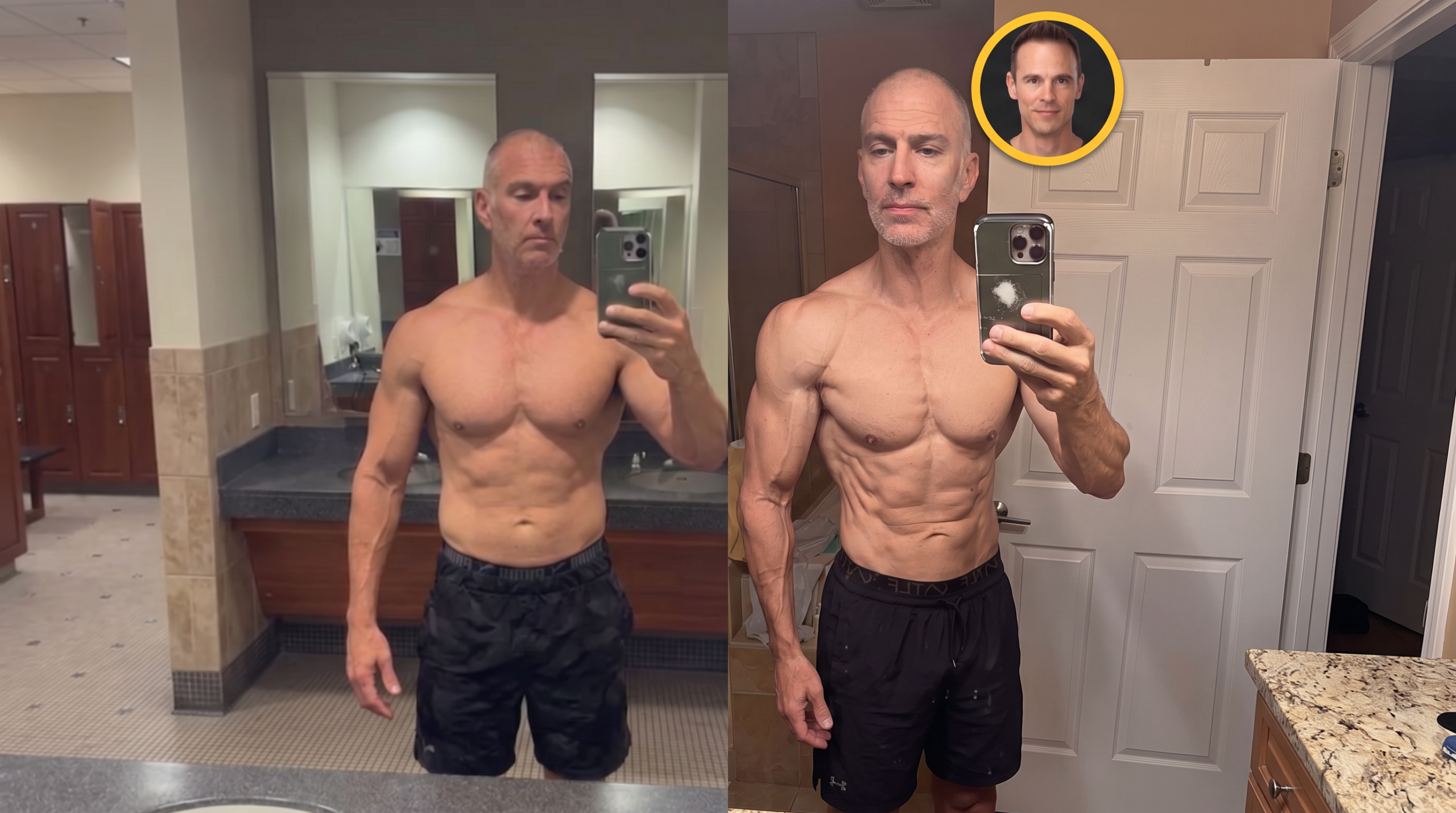
One viewer trained seven days weekly, logged an hour on the Stairmaster, and ate 1,500 calories, yet stubborn fat stayed put.
Paolo’s answer probably isn’t what you’d expect.
Hint: it involves eating more, not less.
Keep reading for the exact plan he recommends.

If you want something simple that actually works, this is one of the most effective tools I’ve used to build strength, conditioning, and endurance without needing a full gym setup.
- Full-body training with one weight using swings, squats, and presses
- Solid cast iron build that feels stable and lasts for years
- Comfortable grip that makes high-rep workouts easier to handle
Jump to:
Why Lower-Waist Fat Leaves Last
Genetics largely dictate the order in which fat disappears. Paolo says guys usually see arms, chest, legs, and face lean out first.
Ultimately, body fat comes off our body in a pattern that’s, you know, going to be predetermined by our genetics.
But, for most guys, it’s going to be the lower back, lower abdomen.
Worth noting: fat can’t be targeted with specific exercises. Overall fat loss is the only route, so that final stretch demands patience.
Too Much Output, Too Little Fuel
Take a closer look at the viewer’s numbers.
- Progress: down from 190 to 182 pounds, with roughly one inch lost off the waist
- Training: seven days weekly, plus an hour on the Stairmaster
- Diet: 1,500 calories, high protein, nearly zero carbs, mostly veggies
Paolo sees a mismatch. At 182 pounds, his rule of thumb puts a floor near 1,820 calories.
You should be at 10 times your body weight in calories at a bare minimum to be supporting all that you’re doing, right?
That multiplier is Paolo’s personal guideline, not a universal standard. Individual needs vary with age, height, muscle mass, and activity.
Still, seven days of training plus an hour of cardio on 1,500 calories leaves little margin for recovery.
If you want something simple that actually works, this is one of the most effective tools I’ve used to build strength, conditioning, and endurance without needing a full gym setup.
- Full-body training with one weight using swings, squats, and presses
- Solid cast iron build that feels stable and lasts for years
- Comfortable grip that makes high-rep workouts easier to handle
Paolo’s Case for Carbs
Paolo’s prescription: add high-carb days. He insists carbs have been unfairly demonized.
Carbohydrates are fat burning fuel. I’ve been saying this for years. Carbohydrates are not the enemy.
Strictly speaking, carbs don’t melt fat on their own. A calorie deficit still drives fat loss, but adequate carbs can power harder training and better recovery, which helps preserve that deficit.
Paolo lists several other roles for carbs:
- Muscle building: supports training output and fullness
- Brain function: converted into glucose, which the brain uses
- Energy balance: helps prevent the body from conserving energy
If you don’t have energy coming in, your body will start to conserve the energy.
He also links long stretches of low carbs to mental haze.
So, if you’re low carb for a long time, you’ll often get brain fog.
Responses differ from person to person. Some dieters feel sharp on very low carbs, while others feel sluggish.
The Actionable Plan
Paolo’s fix for this viewer is refreshingly simple.
If you want something simple that actually works, this is one of the most effective tools I’ve used to build strength, conditioning, and endurance without needing a full gym setup.
- Full-body training with one weight using swings, squats, and presses
- Solid cast iron build that feels stable and lasts for years
- Comfortable grip that makes high-rep workouts easier to handle
One day a week, I want you to bump your calories up to 1,800. That’s right. That is an extra 300 calories. I want all 300 of those calories to come from carbohydrates.
- Keep baseline intake at 1,500 on regular days.
- Add 300 calories on one day, entirely from carbs.
- Do the math: carbs deliver 4 calories per gram, so that’s 75 grams.
- Scale up to once or twice weekly if you feel good.
Paolo admits this is a compromise. His ideal looks different.
And if I was being honest, I would have you at at least 1,800 calories every single day.
His promise: better workouts, better mood, and fuller-looking muscles.
Water Weight Isn’t Fat Loss
Eight pounds down sounds impressive. But what exactly was lost?
If you just pull out carbohydrates from your diet, if anyone does that, they’re going to flatten out.
Stored carbs hold water. Slash them, and the scale drops quickly while muscles look softer.
Once you lose that hydration, you flatten out and you’ll lose a few pounds of water weight. That’s not body fat.
Paolo adds a fair disclaimer: without photos, he can’t say that’s what happened here.
Pick Carbs That Won’t Sabotage Your Macros
Not every carb source behaves identically. Donuts, for instance, hide plenty of fat.
If you want something simple that actually works, this is one of the most effective tools I’ve used to build strength, conditioning, and endurance without needing a full gym setup.
- Full-body training with one weight using swings, squats, and presses
- Solid cast iron build that feels stable and lasts for years
- Comfortable grip that makes high-rep workouts easier to handle
Fat is 9 calories per gram. So, if you’re not accounting for the fats in your carbohydrates, you’re more than likely going to overeat.
His preferred options are pasta, rice, and potatoes, which are nearly pure carbohydrate. Calorie surprises from hidden fat stay minimal.
I can get some very high carbohydrate, very low-fat foods that are very easy to transport and makes it easy for me to hit my macros.
That approach, including sugar and processed foods, suits Paolo’s macro-tracking style. Most nutrition guidance still favors mostly whole foods for fiber and micronutrients.
Practical tip: weigh and log everything, fats included, so those extra carb calories don’t quietly balloon.