Old sports photos from the mid-20th century often carry a mystique—an almost cinematic quality.
A moody, bluish haze lingers in the background, subtly veiling the crowd, adding depth and drama to every shot.
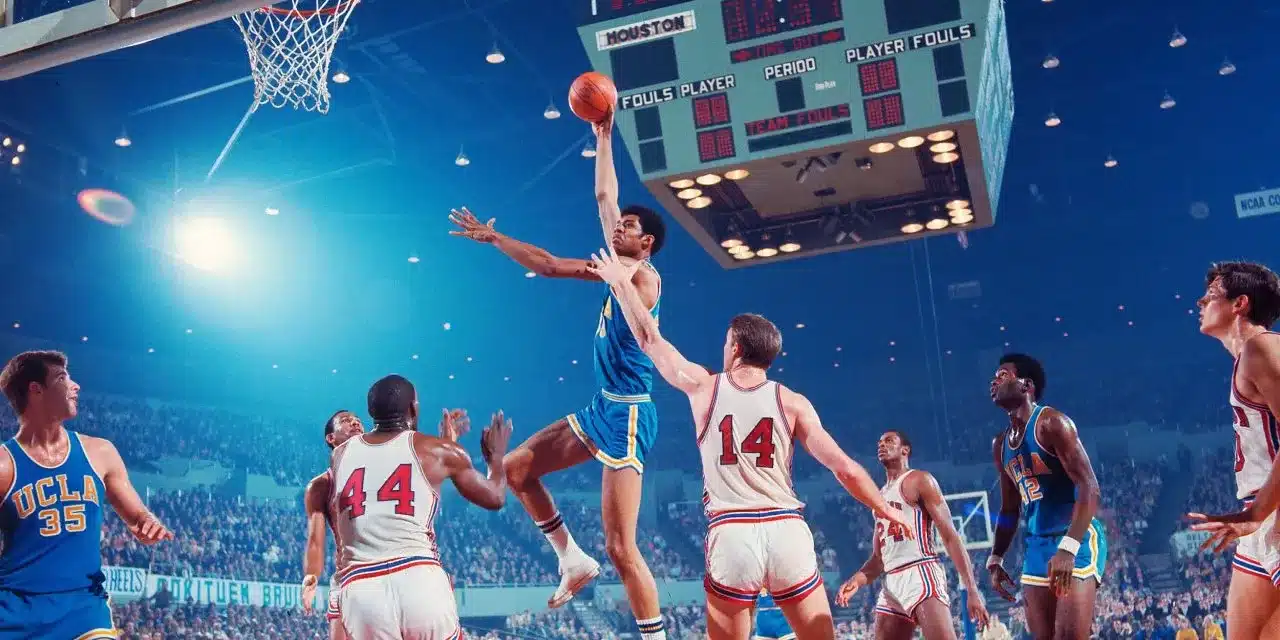
But what looks like an artistic flourish or a deliberate photographic choice was actually caused by something far less romantic: cigarette smoke.
Jump to:
Cigarettes, Stadium Lights, and a Perfect Storm
Back in the day, smoking wasn’t just allowed inside sports arenas—it was a cultural norm. Fans lit up cigarettes and cigars by the thousands during games, especially in packed indoor venues like basketball gyms and boxing arenas.
Over time, smoke would build up, especially in buildings with limited ventilation. When stadium lights or photographers’ flashbulbs hit the suspended particles in the air, the result was a glowing, bluish-gray haze. It wasn’t just visible in person—it showed up dramatically in photos and on TV broadcasts.
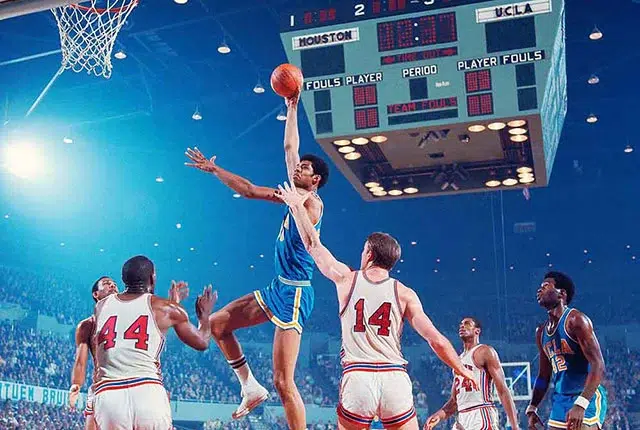
Photographer Rich Clarkson’s famous 1968 shot of Kareem Abdul-Jabbar (then Lew Alcindor) in the NCAA Final Four captures this perfectly. The photo’s dreamy atmosphere is as much a byproduct of secondhand smoke as it is of his expert use of a Hasselblad camera.
Why the Haze Looked Blue
The blue tint in old sports photos was not intentional. It was the result of light scattering through the layers of smoke and the color sensitivity of film emulsions used at the time.
Smoke particles reflect and diffuse light, and under the harsh overhead lamps of basketball courts or boxing rings, this effect created a foggy glow. Older camera films often had cooler tones, which exaggerated the blue hue. Together, these elements gave vintage sports photography its distinct feel.
Neil Leifer’s classic boxing photos—especially of Muhammad Ali—exemplify this same effect. The ringside smoke added a ghostly ambiance, creating a dramatic frame for the intense moments in the ring.

When Health Took Precedence Over Atmosphere
As the dangers of smoking and secondhand smoke became more widely understood, laws began to change. California’s 1976 Indoor Clean Air Act was one of the first regulations to ban smoking in enclosed public spaces. Similar laws spread across the U.S. in the following decades.
By the 1980s and 1990s, smoking was no longer permitted in most arenas. As a result, the air cleared, quite literally. Photos taken during games became crisper, cleaner, and more technically perfect—but something was lost in the atmosphere.
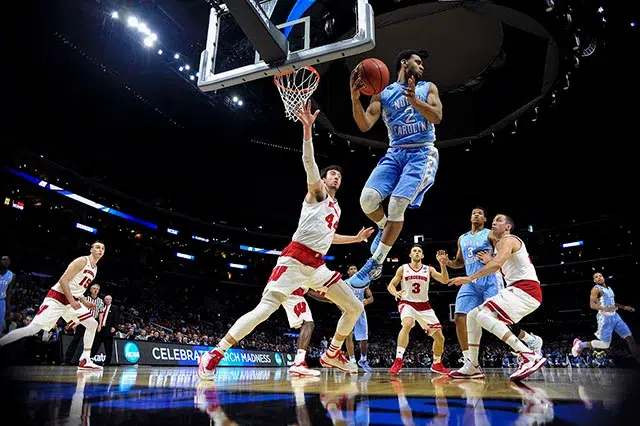
Robert Hanashiro of USA Today captured this shift well. His modern shots from venues like the Staples Center and UCLA’s Pauley Pavilion use more controlled lighting focused solely on the court, keeping the crowd in relative darkness. The effect is dramatic, even cinematic—but it lacks the smoky mystique of earlier eras.
A Touch of Nostalgia, Carefully Recreated
Interestingly, some arena designers and team owners have tried to recreate that nostalgic ambiance. In 2006, Dr. Jerry Buss, then-owner of the Los Angeles Lakers, requested lighting adjustments in the Staples Center to bring back a more “classic” look. By dimming the crowd areas and highlighting the court, they aimed to mimic the vintage feel—minus the actual smoke.
While it’s not quite the same, the attempt shows just how powerful that old look has become in the collective memory of sports fans and photographers alike.
What We Lost—and Gained
Today’s sports photography benefits from advanced camera technology, better lighting, and clearer air. Modern photos are technically superior in almost every way. Yet many still long for the vintage charm of those smoky, sepia-tinged shots.
The visual aesthetic of the blue haze may have faded, but in exchange, arenas are healthier for everyone—players, fans, and workers alike. It’s a clear case where nostalgia must take a backseat to public health.
Still, those old photos remain as time capsules, reminding us of a very different era in sports history—when the air was thicker, the visuals moodier, and every flashbulb caught a cloud of smoke frozen in time.