It’s not just nostalgia or sponsorships—some of the world’s top endurance athletes turn to Coca-Cola mid-race.
But can a carbonated soft drink really rival purpose-built sports drinks like Gatorade or Tailwind? The answer is more nuanced than you might think.
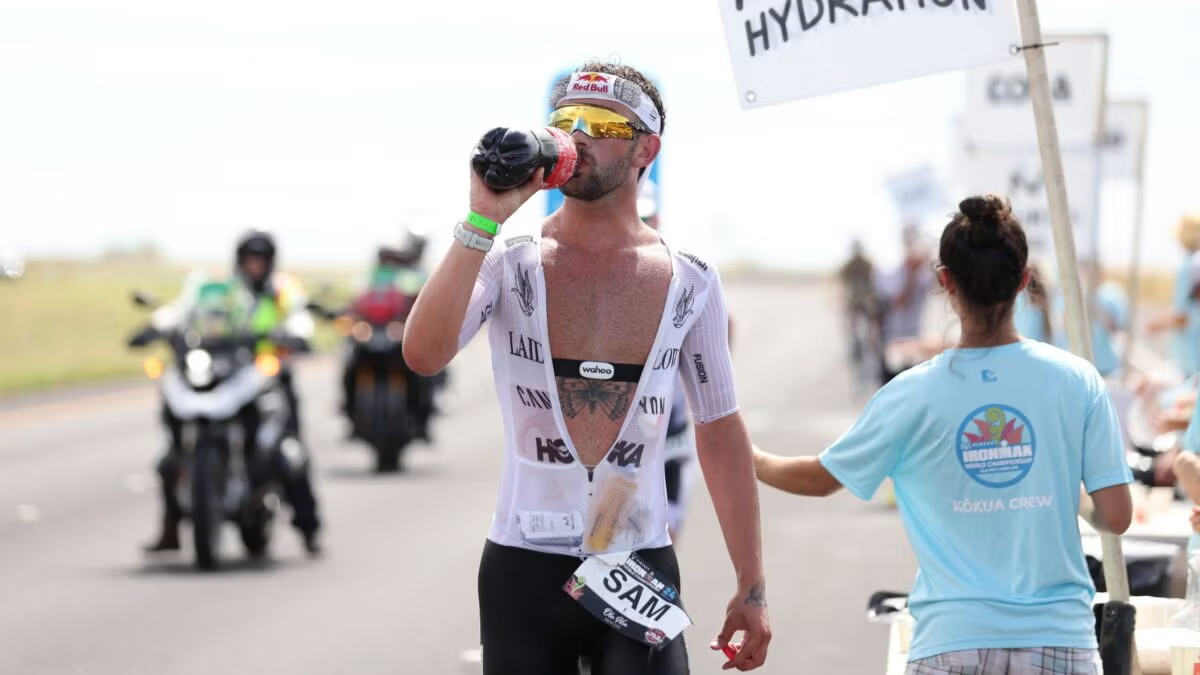
From scientific studies to elite athlete habits, here’s what you need to know before adding Coke to your fueling strategy.
Jump to:
- Coca-Cola: Fast Sugar, Caffeine—and a Bit of Folklore
- Elite Endurance Athletes Are On Board
- How It Compares: Coke vs. Isotonic Sports Drinks
- The Right Time to Use Coke
- Fizzy or Flat? That’s Up to You
- Science Backs Its Strategic Use
- But Let’s Be Real—Coke Has Its Drawbacks
- Practical Guidelines for Runners
- Healthier Alternatives with Similar Benefits
- Bottom Line: Coke Can Work—But Only If You Work With It
Coca-Cola: Fast Sugar, Caffeine—and a Bit of Folklore
Coca-Cola’s modern formulation is simple: carbonated water, sugar, flavorings, phosphoric acid, coloring, and caffeine. While its original 19th-century recipe included coca leaves and kola nuts, today’s Coke offers 10–11% sugar and about 10–12 mg of caffeine per 100 ml.
That’s a potent combo during the final grueling stages of endurance races. The sugar provides immediate carbohydrates for quick energy. The caffeine enhances alertness and delays fatigue. And its consistent taste and global availability make it a reliable choice—especially when local options vary.
Elite Endurance Athletes Are On Board
From Tour de France cyclists to Olympic marathoners, elite athletes have long used Coke as a strategic race-day tool.
“Nearly 90% of Tour riders use Coke during competition,” pro cyclist Ted King shared.
Olympic gold medalist Frank Shorter famously drank flat Coca-Cola during the 1972 Olympic marathon, and ultrarunners like Kilian Jornet and Camille Herron have also turned to Coke mid-race.
Triathlon champion Chris McCormack went so far as to call it “the best sports drink in the world” after a crucial performance turnaround thanks to Coke during the Ironman World Championships.
How It Compares: Coke vs. Isotonic Sports Drinks
Coke wasn’t designed for athletes, and this shows in its nutrient profile:
Coca-Cola:
- ~11% sugar (high for hydration)
- No meaningful electrolytes
- Contains caffeine (stimulant)
- Carbonated (potential GI issues)
Isotonic Sports Drinks:
- 6–8% carbohydrate concentration
- Electrolytes like sodium and potassium
- Often caffeine-free (or optional)
- Designed to enhance hydration and fuel delivery
“Coke’s high sugar concentration can slow gastric emptying and delay hydration,” explains a sports dietitian from DietitianApproved.com. That’s why some athletes dilute it with water or mix it with electrolyte-rich drinks like Gatorade.
The Right Time to Use Coke
Coke isn’t ideal before or early in a race. The phosphoric acid may irritate your stomach, and the high sugar concentration can backfire by drawing water into your gut—a recipe for cramps or bloating.
Instead, the sweet spot is late in the race, when muscle glycogen is depleted, and mental fatigue hits hard.
The sugar-caffeine punch can boost energy and morale just when it’s most needed.
But don’t just wing it.
“Test everything in training,” emphasizes veteran marathoner Hal Higdon. “Don’t wait until race day to see how your stomach handles it.”
Fizzy or Flat? That’s Up to You
Carbonation is a personal preference. Some athletes, like ultramarathoner Konstantin Santalov, drink Coke icy cold and fully carbonated—even in extreme heat.
Others “de-gas” their Coke to avoid bloating. Research from Washington University found that carbonation slightly delays gastric emptying, but doesn’t significantly impair performance—as long as the drink is tolerated well.
Cyclists in the study who drank carbonated, carbohydrate-rich beverages saw an 8% boost in power output during the final stage of their workout.
But runners, due to the jostling motion of the sport, may be more prone to discomfort from bubbles.
Science Backs Its Strategic Use
A landmark study at Ball State University showed that cola with higher caffeine levels (150 mg) increased free fatty acids in the blood by 22%, potentially improving endurance by sparing glycogen.
Caffeine also triggers the release of epinephrine and norepinephrine, hormones that enhance muscle contraction and increase glucose availability—exactly what fatigued muscles need.
A study from the University of Guelph found that runners who took caffeine tablets before exercise extended their endurance from 26 minutes to 41 minutes at 85% VO2 max—a massive 57% increase.
While Coke has less caffeine than performance supplements, its moderate dose may still provide a benefit, especially in caffeine-sensitive individuals.
But Let’s Be Real—Coke Has Its Drawbacks
- Zero electrolytes: You’ll still need a separate source for sodium and potassium.
- High sugar: A 330ml can has ~35g of sugar—great for quick energy, but excessive for casual sipping.
- Acidity and dental impact: Coke’s pH and sugar content can erode tooth enamel, especially with frequent use.
- Potential GI distress: Carbonation and acidity can cause bloating or nausea in sensitive individuals.
People with diabetes, hypertension, or kidney issues should consult a healthcare provider before using Coke in sports contexts.
Practical Guidelines for Runners
If you’re considering Coke, here’s how to do it safely:
- Test in training: Start with small amounts late in your long runs or rides.
- Go flat if sensitive: Pour it out the night before to remove carbonation.
- Pair with electrolytes: Coke + salt tablets = risk of diarrhea. Use an isotonic drink instead.
- Use strategically: Don’t rely on Coke for the entire race. It’s a tool, not a plan.
- Hydrate with water too: Coke alone won’t meet your fluid needs.
Healthier Alternatives with Similar Benefits
Want the energy and caffeine without the downsides?
Try these:
- Sweet tea: Moderate caffeine, less sugar, easy to sip.
- Homemade fruit drinks: Mix fruit juice with water and a pinch of salt.
- Runner’s jellies or gels: Portable and tailored for endurance fueling.
- Coffee or matcha shots: Simple caffeine sources without added sugar.
Bottom Line: Coke Can Work—But Only If You Work With It
Coca-Cola may seem like a surprising sports nutrition choice, but the evidence shows it can enhance endurance performance in specific scenarios. Its blend of sugar and caffeine delivers a late-race boost when energy reserves are low and mental focus is fading.
Still, it’s not a substitute for balanced hydration or a full race-day nutrition strategy.
If used sparingly, tested in training, and paired with electrolytes and water, Coke can be a helpful—and even enjoyable—addition to your race toolkit.
Just remember: nothing new on race day. Whether it’s Coke, caffeine tabs, or gels, success comes down to preparation.