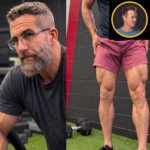
In a recent episode of The Diary of a CEO, Columbia University mitochondria researcher Dr. Martin Picard made a claim that sounds almost too good to be true.
Gray hair, he says, can sometimes turn dark again.

Stranger still, his lab links that reversal to how your body spends a limited daily energy budget.
Stress, sugar, alcohol, even a bout of flu: each one draws from the same account.
So what decides whether that energy goes toward staying young or just surviving?
Keep reading for the answer, plus habits that may tilt the balance in your favor.
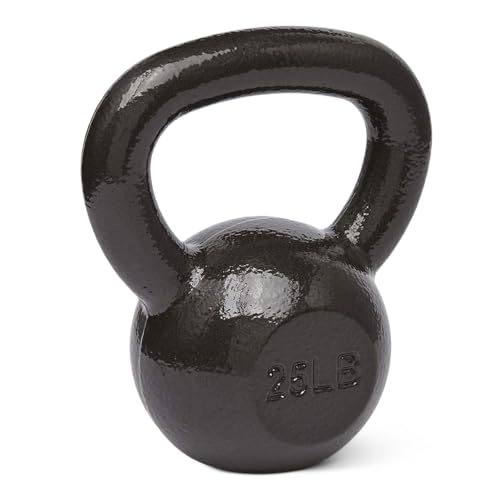
If you want something simple that actually works, this is one of the most effective tools I’ve used to build strength, conditioning, and endurance without needing a full gym setup.
- Full-body training with one weight using swings, squats, and presses
- Solid cast iron build that feels stable and lasts for years
- Comfortable grip that makes high-rep workouts easier to handle
Jump to:
Gray Hair Can Reverse, and Picard Has the Strands to Prove It
Picard compares a single hair to tree rings. Each segment records what was happening in your body when that stretch grew.
His team asked volunteers to mail in two-colored hairs, dark then white or white then dark. Samples arrived in Ziploc bags from several people.
This is incontrovertible evidence that graying of hair is reversible and it can be pretty fast.
One strand regained color in about a week. Picard himself found five reversing hairs, and the timing matched a week-long cycling camp where all he did was bike, eat, and sleep.
Here comes a twist: white hairs contained more mitochondria, not fewer. Struggling cells, Picard explains, scramble to compensate and waste energy doing so.
A Window of Opportunity, Not a Miracle Cure
Picard’s mathematical model suggests a threshold. A follicle near the line can swing back after a vacation or fasting, but one far past it cannot.
If you have a full head of gray hair and you’re 70 years old, you’re not going to regain your color.
Worth noting: findings rest on a limited set of volunteer strands. Treat them as an intriguing proof of concept, not a gray-hair remedy.
If you want something simple that actually works, this is one of the most effective tools I’ve used to build strength, conditioning, and endurance without needing a full gym setup.
- Full-body training with one weight using swings, squats, and presses
- Solid cast iron build that feels stable and lasts for years
- Comfortable grip that makes high-rep workouts easier to handle
The Three Rules of Your Energy Budget
Picard says three principles govern how energy works in the body:
- You are the energy flowing through your body. Stop that flow and you become a cadaver.
- Your budget is fixed. Eating more will not buy extra.
- Life requires resistance. Challenge forces adaptation.
Mitochondria, roughly 1,000 per cell by his count, act as little resistors. They convert food and oxygen into usable charge, heat, and signals.
Why Hair Color Loses the Priority Contest
Picard borrows Maslow’s pyramid. Safety and food come first; self-actualization comes last.
Your body works similarly, with growth, maintenance, and repair sitting near the bottom. Hair pigment ranks very low when your brain perceives a threat.
Is the proper allocation of energy. So, if you don’t waste energy stressing out about the future and the past, and you can spend more time in the moment not being overly reactive to things, then more of that precious energy can go towards anti-aging.
Think presidents entering office with dark hair and leaving gray. Premier League managers fit the pattern too, at least as an anecdote.
What Worrying Actually Costs
Picard’s students exposed cells in a dish to a stress hormone. Energy expenditure jumped by 60 percent.
If you want something simple that actually works, this is one of the most effective tools I’ve used to build strength, conditioning, and endurance without needing a full gym setup.
- Full-body training with one weight using swings, squats, and presses
- Solid cast iron build that feels stable and lasts for years
- Comfortable grip that makes high-rep workouts easier to handle
I don’t know about you, but cells in a dish.
That caveat matters. Whole bodies buffer such responses, so the real-world increase is smaller, though Picard still expects it to be meaningful.
It’s not the stress that burns us down, it’s the response to stress.
His suggestion: notice your reaction. Somatic awareness, the kind taught in mindfulness and meditation, lets you interrupt the chain from bad email to racing heart to drained battery.
How to Become a More Efficient Energy Machine
You cannot add to the budget. You can, however, lower what daily life costs.
1. Exercise, Then Recover
Hard workouts spike resistance in muscle. Gains arrive afterward, when cells prepare for next time.
You can double the amount of mitochondria you have in your muscles.
Picard says that is what going from couch potato to marathon training can do. The feeling of “more energy” is really energy flowing more smoothly.
2. Stop Overloading the System
Picard thinks excess food, particularly sugar, raises “energy pressure” and promotes inflammation, which he describes as overheating.
If you want something simple that actually works, this is one of the most effective tools I’ve used to build strength, conditioning, and endurance without needing a full gym setup.
- Full-body training with one weight using swings, squats, and presses
- Solid cast iron build that feels stable and lasts for years
- Comfortable grip that makes high-rep workouts easier to handle
I think most of us overeat. That’s a good general assumption to make. You’re probably overeating.
- Shorten your eating window. His severe example: 2 p.m. to 6 p.m., built around dinner. That suits some people; it is an aggressive choice rather than a universal rule.
- Question hunger. Boredom, sadness, and rewarding salty-sweet foods can all masquerade as it.
- Skip the “breakfast is essential” dogma. Picard now sees his old cereal bowl as a source of lousy, low-energy mornings. Individual responses to meal timing vary widely.
3. Remember That Toxins and Infections Cost Energy
Alcohol supplies calories, yet your liver burns energy clearing it. Picard says drinking raises metabolic rate in lab rooms where energy burn is measured minute by minute.
Infection works similarly. During a New Year’s flu, his resting heart rate hit about 110 while he felt completely drained.
My immune system is in full-blown defense mode.
Sickness behaviors like withdrawing and staying in bed double as energy-saving strategies.
Bolder Claims: Diabetes, Cancer, and Alzheimer’s
Picard extends his framework well beyond hair. He calls diabetes “fundamentally” a disease of energy resistance, with insulin resistance acting as protection when cells face too much glucose.
On cancer, he points to the Warburg effect, where tumor cells ferment glucose even when oxygen is available. He favors an emerging view that altered metabolism can drive cancer rather than merely accompany it.
Treat these ideas as a developing hypothesis. Mainstream cancer research still centers heavily on genetic mutations, and Picard himself says explanations remain incomplete.
If you want something simple that actually works, this is one of the most effective tools I’ve used to build strength, conditioning, and endurance without needing a full gym setup.
- Full-body training with one weight using swings, squats, and presses
- Solid cast iron build that feels stable and lasts for years
- Comfortable grip that makes high-rep workouts easier to handle
Rethinking the Alzheimer’s Plaque Story
Picard argues amyloid plaques are not the true driver, since some people carry heavy deposits with normal cognition and others have dementia without them. Many researchers still debate this question.
My hunch is that Alzheimer’s and dementia more generally is a disorder of energy.
Note the word “hunch.” Picard describes brain regions first burning more energy while coping, then going hypometabolic as symptoms appear.
He also highlights ketones, which reach brain mitochondria through a shorter path than glucose. Fascinating, though far from settled.
Your Energy-Saving Cheat Sheet
- Move hard, then rest. Recovery builds more mitochondria.
- Eat only what you need. Overeating is the bigger risk.
- Narrow your eating window if overeating is your habit.
- Notice stress reactions before they cascade.
- Respect recovery when infection or alcohol is draining your reserves.
The big idea: aging may depend less on how much energy you have than on where it goes.