In a recent YouTube video, Dr. Brad Stanfield unpacked a Danish trial that could change how people think about heart disease.
Arterial plaque was long viewed as a one-way street.
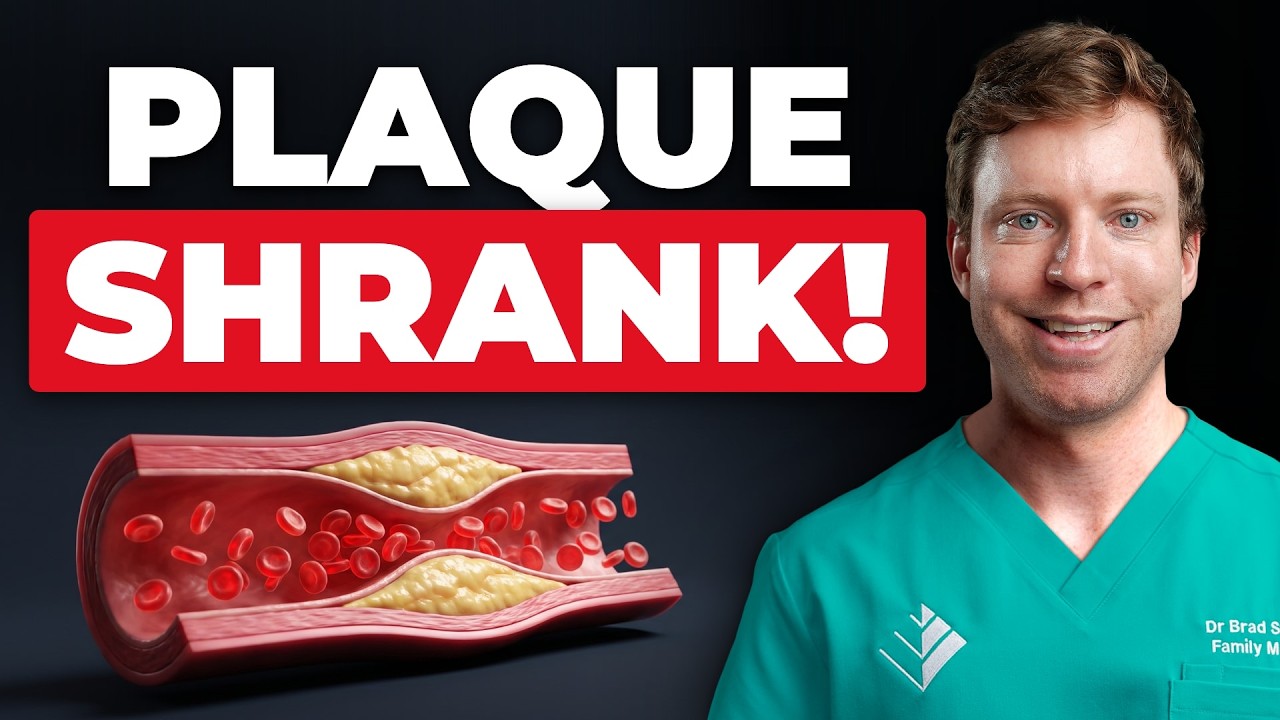
Could it actually shrink?
Early results say yes, at least partly.
But the strategy matters, and so do the caveats.
Below, what the trial found and how Stanfield applies it with patients.

If you want something simple that actually works, this is one of the most effective tools I’ve used to build strength, conditioning, and endurance without needing a full gym setup.
- Full-body training with one weight using swings, squats, and presses
- Solid cast iron build that feels stable and lasts for years
- Comfortable grip that makes high-rep workouts easier to handle
Jump to:
Plaque Was Never Supposed to Shrink
For decades, the best-case scenario was slowing plaque down or stabilizing it. Calcium would settle on top of soft deposits, making a rupture less likely.
Drastic reductions? Mostly speculation.
Not just stop new plaque from forming, but actually take some of that plaque away that’s already in our blood vessels.
That is how Stanfield describes the new findings. But it takes a specific strategy.
Why Plaque Appears Even in “Healthy” People
High blood sugar, poor insulin sensitivity, inflammation and high blood pressure all pour fuel on the fire. Yet controlling them does not guarantee a clean bill of arterial health.
Stanfield points to the PESA study, which scanned middle-aged Spanish bank employees who did not smoke and had normal weight, blood pressure and blood sugar. Half had plaque somewhere, and about a third of those with ideal numbers did too.
Here is the twist. Higher LDL meant higher odds.
If you want something simple that actually works, this is one of the most effective tools I’ve used to build strength, conditioning, and endurance without needing a full gym setup.
- Full-body training with one weight using swings, squats, and presses
- Solid cast iron build that feels stable and lasts for years
- Comfortable grip that makes high-rep workouts easier to handle
- LDL of 60 to 70 mg/dL: about one in 10 people had plaque
- LDL of 150 to 160 mg/dL: nearly two in three had plaque
Genetic studies, where people are born with lifelong low LDL, plus trials that actively lower it, back this up. Stanfield says LDL and apoB, a count of cholesterol-carrying particles, are causal risk factors for heart disease.
Blood pressure and insulin sensitivity still matter. ApoB just belongs on the list too.
Inside the Danish Trial
Researchers recruited 104 people with newly diagnosed artery narrowing, none on long-term statins. Participants were randomly split into two groups.
- Group one: atorvastatin 40 mg, a standard dose
- Group two: rosuvastatin 40 mg plus ezetimibe 10 mg, which blocks gut absorption of cholesterol
CT angiograms at baseline, 9 months and 18 months tracked changes using identical scanner settings. LDL dropped from roughly 120 to 70 mg/dL on atorvastatin, and to 42 mg/dL on the combination.
The Numbers That Grabbed Attention
- Total plaque: down about 14% on atorvastatin, down about 21% on the combination
- Soft, non-calcified plaque: down 20% versus 28%
- Calcified plaque: up by about half in both groups
Much of the combination group’s drop appeared by the 9-month scan. Soft plaque is the vulnerable kind that can break away and trigger heart attacks, so that shrinkage matters most.
The lower the LDL cholesterol, the greater the plaque regression.
Stanfield attributes this line to the study’s lead author. For perspective, he notes a 2006 ultrasound trial of about 350 people took two years on rosuvastatin 40 mg to trim plaque by roughly 7 to 8%.
If you want something simple that actually works, this is one of the most effective tools I’ve used to build strength, conditioning, and endurance without needing a full gym setup.
- Full-body training with one weight using swings, squats, and presses
- Solid cast iron build that feels stable and lasts for years
- Comfortable grip that makes high-rep workouts easier to handle
Why a Calcium Score Can Rise on a Statin
Calcified plaque rising sounds alarming. Stanfield says it is not.
It lays down calcium on top of that vulnerable soft plaque so that it’s less likely to rupture.
A coronary artery calcium score may therefore look worse shortly after starting a statin, even as heart attack risk falls.
Can This Trial Be Trusted?
Stanfield is upfront here, and the picture is more nuanced than the headline.
- Small sample: only 104 people took part
- Plaque was not the main question: the primary goal was improved blood flow, which did not reach statistical significance. Flow improved slightly in both groups with no real difference between them
- Exploratory results: the authors themselves say the plaque findings should be treated that way
- Not double-blind: participants knew their tablets, though the scan reader did not know group assignments
- Measurement noise: repeat scans an hour apart differed by up to 90 cubic millimeters out of a typical 260 for one person
Across a group, that noise mostly averages out, and the gap between treatments held. For any individual, a single reading going up or down says little.
Overall though, I’m confident that the plaque shrank in both groups, and that is the really exciting part. I’m less sure exactly how much the extra combination therapy added though.
The 21% versus 14% gap also depends on how plaque is measured. Total plaque showed it; other measures were less clear.
Funding and Side Effects
Funding came from the Novo Nordisk Foundation, a Danish charity that had no role in the analysis. Both drugs are off-patent, and Stanfield says each costs under $10 a month through Cost Plus Drugs.
If you want something simple that actually works, this is one of the most effective tools I’ve used to build strength, conditioning, and endurance without needing a full gym setup.
- Full-body training with one weight using swings, squats, and presses
- Solid cast iron build that feels stable and lasts for years
- Comfortable grip that makes high-rep workouts easier to handle
One in five participants had treatment adjusted, mostly for muscle aches or raised liver enzymes. Only two stopped their statin altogether.
Does Lowering Cholesterol Starve the Body?
Nearly every cell makes its own cholesterol. Blood holds only a tiny fraction of the body’s total, so lowering it does not deprive tissues.
What about memory and hormones? Stanfield cites a 1,200-person trial on very strong cholesterol-lowering drugs that found no memory effect, and another showing no change in sex or adrenal hormones even at very low LDL.
What Stanfield Does in Clinic
For most patients, the target is apoB below 50, alongside diet and exercise.
- Start: rosuvastatin 5 mg
- Add if needed: ezetimibe 10 mg
- If statins are not tolerated (about 1 to 2% of people): switch to PCSK9 inhibitors, which help the liver pull more LDL from blood without statin-style muscle effects
Why not the 40 mg used in Denmark? Diminishing returns.
Rosuvastatin 5 mg on its own, it lowers LDL cholesterol by about 45%. But if we go all the way up to 40 mg, it only gets you to about 63%.
In a trial of 3,780 people with heart disease, moderate-dose rosuvastatin plus ezetimibe prevented heart attacks and strokes as well as higher doses, with fewer people stopping or cutting back.
If you want something simple that actually works, this is one of the most effective tools I’ve used to build strength, conditioning, and endurance without needing a full gym setup.
- Full-body training with one weight using swings, squats, and presses
- Solid cast iron build that feels stable and lasts for years
- Comfortable grip that makes high-rep workouts easier to handle
A separate randomized trial of over 3,000 people with heart disease also supports aiming lower. Major cardiovascular events hit 6.6% with an LDL target under 55, versus 9.7% with a target near 70, over three years.
Wait for a Scan to Show Plaque?
Stanfield says waiting misses the boat. Real prevention means acting before plaque starts.
He does use scans for people reluctant to begin treatment, since seeing calcium in their own arteries can be the nudge needed.
The Bottom Line
Plaque is not necessarily a one-way street. Aiming for low apoB, and starting early, offers the best shot at shrinking soft plaque.
We want to aim for low apoB, and we want to start early. If we do this, then we can truly end coronary artery heart disease.
Treatment decisions are personal, so cholesterol targets and medications belong in a conversation with a doctor.