Fasting has long been discussed as a potential tool against cancer, but clinical evidence has remained frustratingly sparse.
Multi-day fasts are difficult to sustain, making research challenging and real-world application nearly impossible for most people.
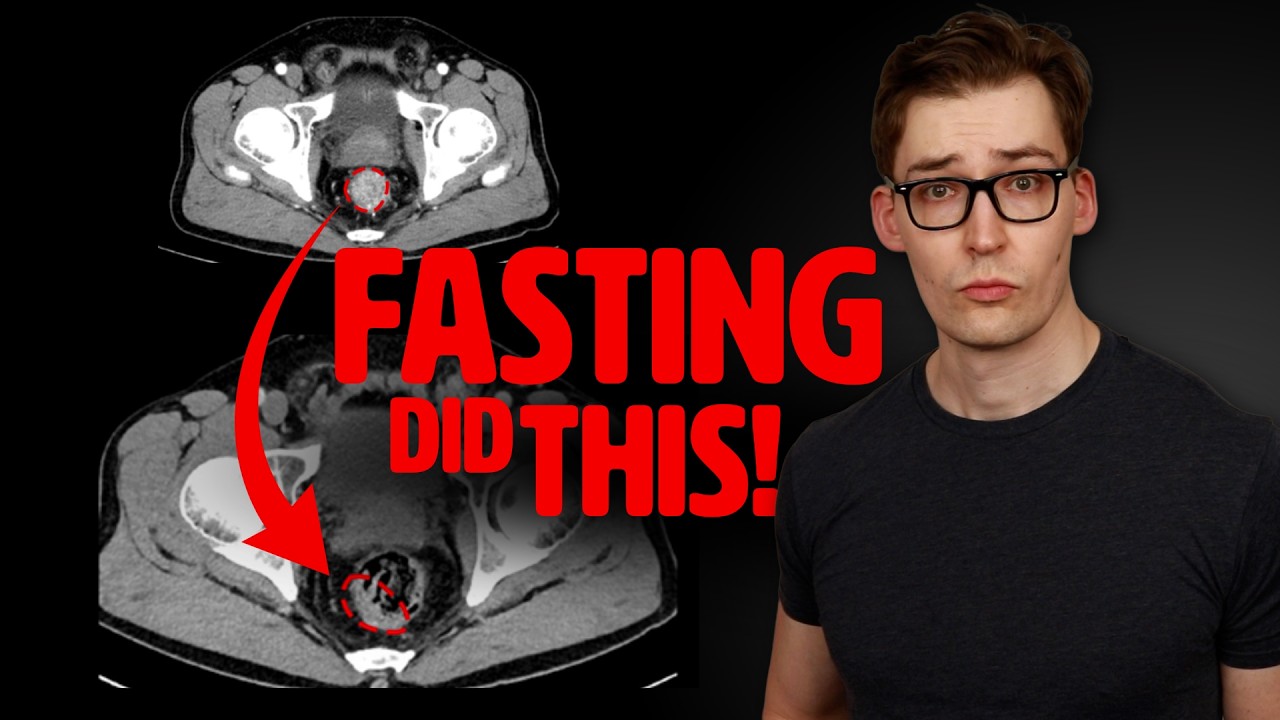
But a groundbreaking new study suggests that shorter, more manageable fasting windows—specifically 16 hours—may deliver powerful anti-cancer effects when paired with immunotherapy.
Using both animal models and human clinical trials, researchers documented actual tumor regression in cancer patients practicing intermittent fasting.
Jump to:
- Intermittent Fasting Transforms Immune Response
- Why Mouse Studies Actually Matter Here
- Sixteen Hours: The Critical Threshold
- Visual Evidence: Tumors Shrinking on CT Scans
- Fasting Plus Immunotherapy: A Powerful Combination
- Context Matters: Cancer Type and Stage
- Beyond Weight Loss: Fasting’s Metabolic Impact
- Immune Cell Exhaustion: How Fasting Helps
- Practical Implementation: What Sixteen Hours Looks Like
- What Makes TEFF Cells So Special
- The Road Ahead: Larger Clinical Trials Needed
Intermittent Fasting Transforms Immune Response
Recent research examined how intermittent fasting affects immune cells in both mice and humans, with striking results.
When participants fasted for 16 hours, their immune cells showed dramatically increased anti-cancer signatures—proteins and cellular behaviors consistent with aggressive tumor-fighting activity. Simultaneously, proteins that inhibit anti-cancer behavior decreased significantly.
Perhaps most remarkably, fasting promoted production of specialized immune cells called TEFF, or effector T-cells. These are among the most powerful anti-cancer cells in the human immune arsenal—essentially the delta force of cancer-fighting immunity.
Imaging studies revealed clusters of cells with identical gene expression patterns unique to fasted participants. Control groups who didn’t fast were missing these critical cell populations entirely.
Why Mouse Studies Actually Matter Here
Skepticism about animal research is completely justified—after all, mice aren’t simply tiny humans.
A mouse fasting for several hours doesn’t necessarily mirror what happens when humans do the same. That’s why researchers conducted parallel experiments in both species.
When comparing cancer-related molecules between fasted and unfasted states, researchers discovered remarkably similar patterns between mice and humans at the 16-hour mark. Both species showed comparable shifts in these molecular profiles when moving from unfasted to 12-hour fasts, then more dramatic changes at 16 hours.
This doesn’t prove complete equivalence between species, but it provides meaningful evidence that fasting affects cancer-related pathways similarly across mammals.
Sixteen Hours: The Critical Threshold
The study’s focus on 16-hour fasting windows wasn’t arbitrary.
Data showed that 16 hours of fasting triggered production of cancer-fighting molecules not produced during shorter fasting periods. Twelve-hour fasts showed some effects, but 16 hours appeared to cross a biological threshold.
Importantly, these findings weren’t limited to mice—they were confirmed in humans with colorectal cancer. Intermittent fasting affected both immune system function and cancer-related molecule production in actual cancer patients.
Visual Evidence: Tumors Shrinking on CT Scans
The most compelling evidence came from CT scan comparisons.
Patients practicing 16-hour intermittent fasting showed visible tumor reduction in imaging studies. Red circles identifying cancer locations revealed smaller masses in fasting patients compared to baseline scans.
Non-fasting patients experienced no such changes.
When measured across small groups of colorectal cancer patients, those not fasting experienced zero average change in tumor size. Fasting patients, however, showed statistically significant reductions.
Fasting Plus Immunotherapy: A Powerful Combination
The research demonstrated that 16-hour intermittent fasting combined with immunotherapy produced tumor regression not observed in identical scenarios without fasting.
This synergy makes biological sense. Immunotherapy harnesses the body’s immune system to fight cancer, while fasting appears to prime that same immune system for enhanced anti-tumor activity.
Together, they create conditions where cancer cells face a coordinated, intensified immune assault.
Context Matters: Cancer Type and Stage
These findings shouldn’t be interpreted as a universal cancer cure.
Results will vary based on numerous factors:
- Cancer type – Different malignancies respond differently to metabolic interventions
- Disease stage – Early versus advanced cancer may show varying responses
- Individual patient factors – Overall health, nutritional status, and concurrent treatments all matter
- Treatment protocols – Fasting effects may differ depending on which immunotherapy is used
This research represents early clinical evidence, not established standard of care.
Beyond Weight Loss: Fasting’s Metabolic Impact
Intermittent fasting has been primarily marketed as a weight loss strategy.
But this study joins growing evidence that fasting triggers profound metabolic shifts extending far beyond calorie restriction. Changes in immune cell populations, cancer-related molecule production, and cellular gene expression suggest fasting fundamentally alters how bodies respond to disease.
These aren’t merely side effects of eating less—they’re distinct biological responses to extended periods without food intake.
Immune Cell Exhaustion: How Fasting Helps
Cancer cells employ sophisticated strategies to evade immune detection and destruction.
One mechanism involves causing immune cell exhaustion—a state where T-cells and other cancer-fighting cells become functionally impaired. They recognize cancer but can’t effectively attack it.
Fasting appears to reduce markers of immune exhaustion, essentially reinvigorating tired immune cells and restoring their tumor-fighting capacity.
Practical Implementation: What Sixteen Hours Looks Like
A 16-hour fast is surprisingly manageable for most people.
If someone finishes dinner at 7 PM, they wouldn’t eat again until 11 AM the next day—essentially skipping breakfast. Sleep accounts for roughly half the fasting window, making adherence far easier than multi-day protocols.
This accessibility is crucial. Cancer patients often struggle with treatment side effects and energy levels. Demanding extended fasts become impossible to sustain.
A 16-hour window offers meaningful metabolic benefits without requiring superhuman willpower or potentially dangerous prolonged food restriction.
What Makes TEFF Cells So Special
Effector T-cells deserve particular attention.
These specialized immune cells directly kill cancer cells through multiple mechanisms. They release toxic molecules that puncture tumor cell membranes, trigger cancer cell suicide pathways, and recruit additional immune reinforcements.
Fasting’s ability to increase TEFF cell populations represents a significant finding. More soldiers on the battlefield means better odds of winning the war against malignant cells.
The Road Ahead: Larger Clinical Trials Needed
While exciting, this research included relatively small patient groups.
Larger, randomized controlled trials across multiple cancer types are essential before fasting becomes standard clinical practice. Questions remain about optimal fasting duration, frequency, which cancers respond best, and how fasting interacts with different treatment protocols.
Still, this study represents something rare: actual clinical evidence that intermittent fasting affects cancer progression in humans, not just theoretical benefits extrapolated from petri dishes.
For patients and practitioners frustrated by the lack of simple, accessible interventions with real anti-cancer potential, 16-hour intermittent fasting offers a scientifically-supported option worthy of serious consideration and further investigation.