Boosting testosterone naturally seems like an elusive goal for many men, especially those who’ve struggled with weight and metabolic issues.
But one health coach’s journey from 400 to over 1,020 ng/dL proves it’s entirely possible—without TRT or peptides.
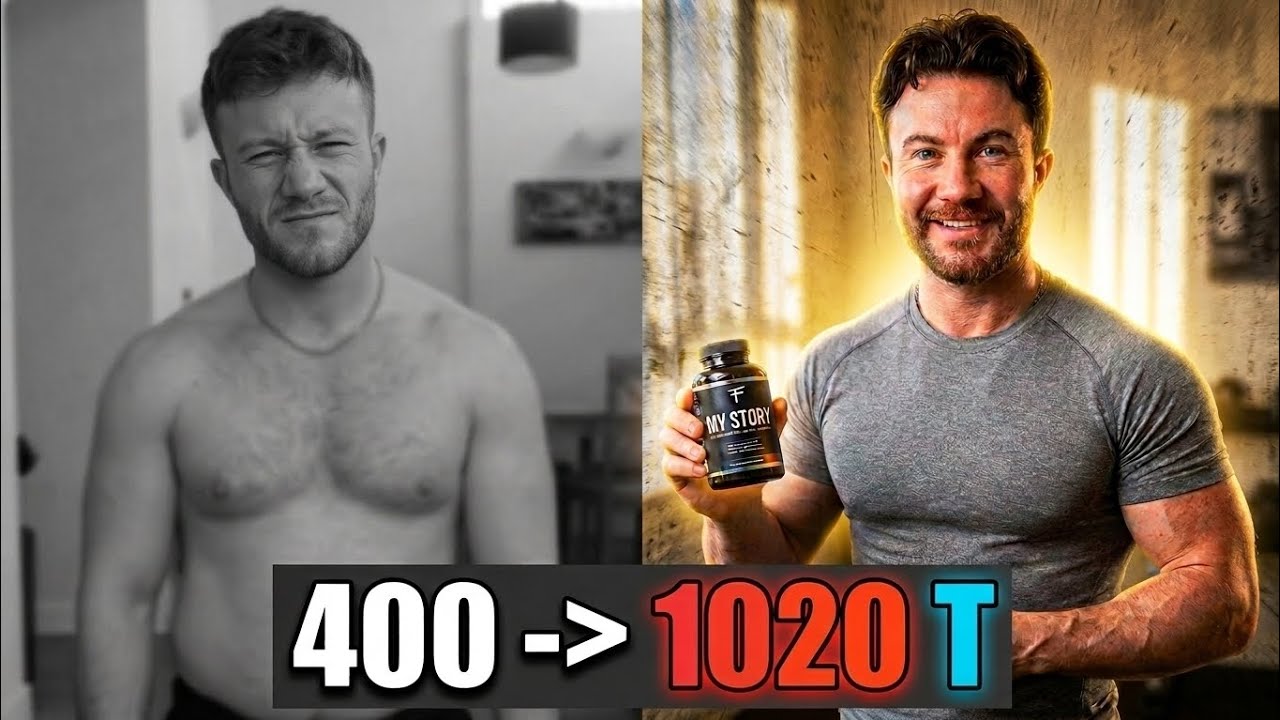
His transformation at age 30, coming from a background of being overweight with low testosterone, offers a relatable roadmap for men facing similar challenges.
After analyzing thousands of blood work panels and experiencing both ends of the spectrum himself, he’s identified six critical factors that made all the difference.
Jump to:
The Foundation: Eliminating Beer and Cutting Body Fat
The first two factors were straightforward but powerful: cutting out beer and reducing body fat percentage.
I’m a Brit, you know, I used to drink a lot of beer. Cutting out beer obviously allowed me to get leaner. There’s a lot of phytoestrogens in there. Just a load of empty calories.
Beer consumption was disrupting his sleep quality and recovery capacity, making muscle gain nearly impossible when drinking two to three times weekly. Eliminating alcohol led to rapid improvements in multiple health markers.
Reducing body fat below 15% became the second priority. He admits to previously sitting at 19-20% body fat, emphasizing he hadn’t been in peak condition his entire life.
This reduction brought cascading benefits: improved blood sugar control, better HbA1c levels, optimized fasted glucose, and favorable changes in estradiol and SHBG (sex hormone-binding globulin). Liver function improved significantly once alcohol was removed.
The Caloric Deficit Debate: Not All Deficits Are Created Equal
Many experts claim any caloric deficit produces identical results, but lived experience tells a different story.
He compared two approaches: eating four meals daily with carbohydrates versus extended fasting (18-19 hours) combined with zero-carb ketosis. Both create deficits, but the physiological impact differs dramatically.
This calorie deficit is going to stress your body out twice as much as this calorie deficit will, I promise you. Maybe not in the first few days or the first couple of weeks, but it will over time.
Extended fasting with ketosis eventually elevates cortisol and stress hormones. For men training intensely, prolactin may also climb, destroying muscle tissue in the process.
Why Breaking Your Fast Early Matters
Even a modest 200-calorie breakfast containing 20-30 grams of protein, cholesterol, zinc, magnesium, and B6 substantially lowers cortisol levels.
Those nutrients give your body building blocks during training-intensive periods. Over weeks and months, that extra protein serving becomes a game changer for muscle gain.
More frequent cholesterol and micronutrient servings throughout the day support higher testosterone production while keeping cortisol suppressed.
For obese individuals or those with type 2 diabetes and elevated HbA1c, intermittent fasting and keto can serve as useful short-term tools—perhaps for a couple months. However, maintaining these approaches indefinitely creates chronic stress that undermines testosterone optimization.
Mindset Shift: Asking the Right Questions
Factor four represents perhaps the most overlooked element: proper problem-framing.
Too many men immediately ask what supplement or pill will fix their specific issue. This approach fundamentally misses the point.
There is no pill that’s going to fix all your problems, and even if it does, it’s temporary, and then there’ll be something else. There’s usually some root cause that you want to address.
Consider poor circulation as an example. Instead of searching for supplements first, the solution involves doing more cardio—which requires effort many aren’t willing to invest.
After establishing consistent cardiovascular exercise, comprehensive blood work reveals potential deficiencies in iron, selenium, or thyroid function.
What NOT to Take
Supplements like L-citrulline and beetroot can support nitric oxide production and improve circulation, but addressing lifestyle factors proves equally critical.
Reducing or eliminating caffeine and nicotine—both vasoconstricting substances—significantly improves blood flow. While controversial, backing off stimulants when seeking optimal circulation makes physiological sense.
Lowering Prolactin: The 1,000 ng/dL Breakthrough
Elevated prolactin represented the final barrier preventing breakthrough past 900 ng/dL testosterone.
While P5P (active vitamin B6) and vitamin E supplementation helped reduce prolactin levels, lifestyle modifications proved essential.
Training six days weekly while working seven days created chronic stress that elevated prolactin. Strategic rest days from both training and work reduced stress hormones effectively.
Lowering my prolactin was the one thing that seemed to push me over 1,000.
Men with exceptional work ethic often overtrain and overwork simultaneously, creating a hormonal environment hostile to testosterone production.
This combination frequently disrupts mineral balance, causing issues like elevated zinc, depleted copper, or borderline-low levels of other essential minerals.
Dietary Cholesterol Variety: The Missing Link
Factor six—diversifying cholesterol sources—provided significant testosterone increases earlier in his optimization journey.
For extended periods, eggs every morning served as his foundation. Notably, he consumed coffee with food rather than on an empty stomach.
Drinking excessive caffeine while fasted spikes stress hormones unnaturally high and damages gut health over time. The acidic environment compromises gut lining integrity, reducing nutrient absorption and potentially causing iron deficiency.
Expanding Beyond Eggs
As body composition improved, blood sugar regulation became a focus. He needed more carbohydrates to support intense training demands.
His breakfast evolved to high-protein skyr yogurt with fruit, while eggs moved to later meals on a less frequent basis.
He incorporated organ meats semi-regularly:
- Lamb hearts
- Lamb liver
- Beef liver
- Chicken liver
- Kidneys
These nutrient-dense foods provide extraordinary cholesterol content alongside micronutrients that support testosterone synthesis.
The cholesterol and the micros are just ridiculous. And yeah, it’s a really a big factor getting that variety of cholesterol sources.
When designing meal plans for clients, he now asks whether they’re serious about reaching 1,000 ng/dL—willing to eat organ meats—or prefer convenience-focused approaches with less testosterone-boosting potential.
While organ meats remain optional for many, some form of dietary cholesterol intake is non-negotiable. Eggs represent the minimum requirement.
Real Experience, Real Results
Unlike coaches who’ve never experienced low testosterone themselves, his journey from overweight with 400 ng/dL to lean with over 1,020 ng/dL provides credibility rooted in personal struggle.
Analyzing thousands of client blood panels while navigating his own transformation revealed patterns invisible to those who’ve only studied testosterone theoretically.
His six-factor approach combines foundational changes—eliminating alcohol, reducing body fat—with nuanced interventions around meal timing, stress management, prolactin reduction, and cholesterol diversification.
Testosterone optimization thrives when stress hormones remain low, nutrient intake stays consistent throughout the day, and lifestyle factors support rather than undermine hormonal health.
The journey requires patience, comprehensive blood work monitoring, and willingness to address root causes rather than searching for quick-fix supplements.