David Harbour just gave fans a masterclass in body transformation honesty—and it’s the antidote to toxic fitness culture everyone needs to hear.
In a recent “Don’t Read The Comments” video, the Stranger Things star opened up about his dramatic weight fluctuations for various roles, revealing the extreme methods he used and why he refuses to chase perpetual six-pack abs.
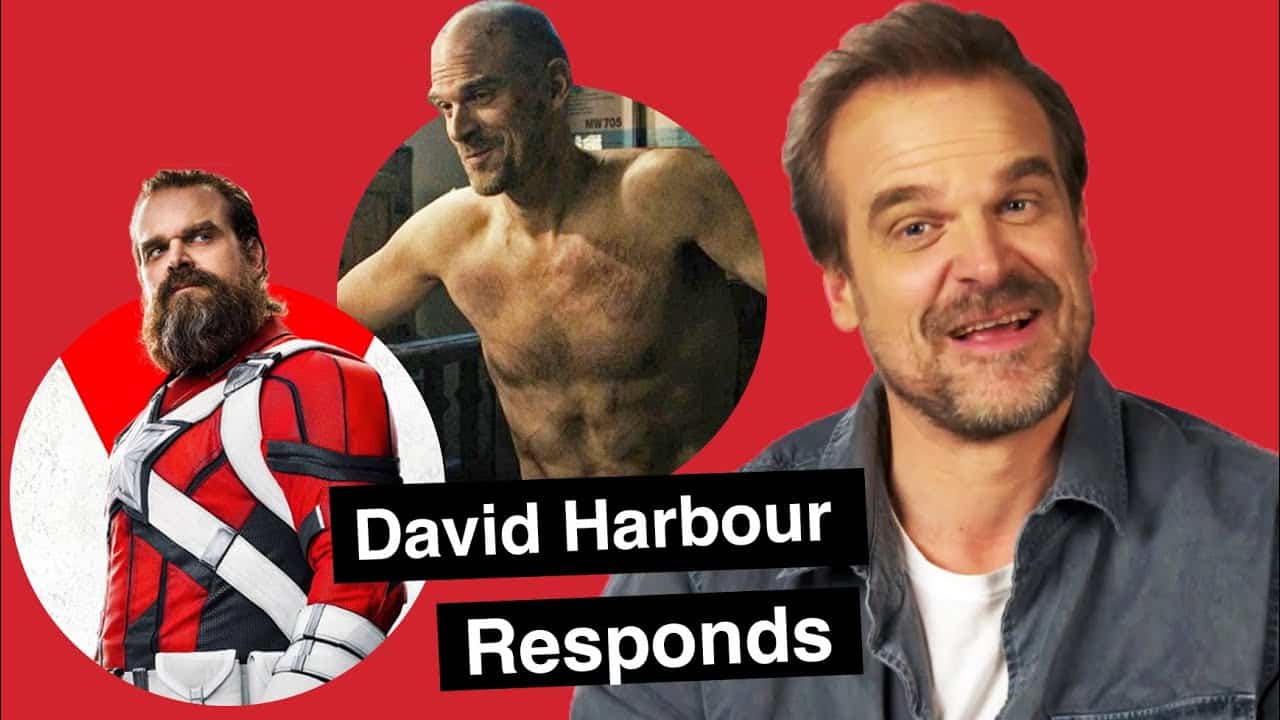
His candid take on intermittent fasting, anxiety management through running, and embracing being a “thick man” offers a refreshing perspective in an industry obsessed with perfection.
Here’s everything Harbour shared about his fitness journey, mental health struggles, and why he believes everyone deserves a candy bar now and then.
Jump to:
The Extreme Weight Loss: 75 Pounds Through Intermittent Fasting
Harbour’s body transformation for Stranger Things season four was nothing short of dramatic.
I started out in season three and when I was doing Black Widow at 265, 270, and then I got down to 195, 190 through a ton of like intermittent fasting and then I did a lot of like Pilates to maintain my strength and flexibility.
That’s a staggering 75-pound weight loss achieved primarily through aggressive intermittent fasting protocols.
But Harbour didn’t sugarcoat the reality of what that entailed.
What His Fasting Protocol Actually Looked Like
When fans asked about his approach, Harbour was brutally honest about the difficulty.
It doesn’t take balls, it takes like a lot of like not walking over to the fridge. It was a lot of like eat for a little bit of time and then you don’t eat for a lot of time.
He acknowledged the initial struggle was intense, describing persistent hunger that eventually became manageable as his body adapted.
In the beginning it was really really hard and it always feels like hunger but you start to understand that your body can sustain without it. You don’t get that panicky like I gotta eat I’m not gonna be able to fall asleep.
His matter-of-fact assessment? “Hunger is just unpleasant.”
While intermittent fasting has shown benefits for weight loss and metabolic health in research, Harbour’s experience highlights both its effectiveness and difficulty when taken to extremes for rapid transformation.
Why He Refuses To Maintain Six-Pack Abs Year-Round
Perhaps most refreshing was Harbour’s complete rejection of perpetual leanness as a lifestyle goal.
When responding to comments about his physique fluctuations, he didn’t apologize or make excuses—he celebrated his choice.
I like being a thick man. I’m bigger now and I’ll go back and forth. I like living your life. These people that constantly have a six-pack, it’s like insane, like you don’t get to eat a candy bar or whatever and relax.
His philosophy centers on balance and actually enjoying life between professional demands.
Everybody like have a candy bar every now and again.
Harbour currently maintains around 230-235 pounds, a weight he describes as comfortable and sustainable for him.
He even admitted he believes he’d naturally sit closer to 300 pounds without occasional fasting interventions, demonstrating remarkable self-awareness about his body’s tendencies.
The Mental Health Cost of Extreme Leanness
Harbour’s resistance to maintaining stage-ready conditioning isn’t just about candy bars—it’s about quality of life.
Research consistently shows that maintaining extremely low body fat percentages requires constant vigilance, restrictive eating, and significant mental energy that many find unsustainable long-term.
For actors who transform for roles, the yo-yo effect becomes part of the job description rather than a health ideal.
Running Through Pandemic Anxiety: His Mental Health Breakthrough
Beyond weight management, Harbour shared a vulnerable story about battling anxiety during the pandemic that led to an unexpected fitness discovery.
When returning to work around crowds, he experienced concerning symptoms that created a vicious cycle.
I was having a place where I felt like I was getting short of breath and that made me feel like I actually had COVID and then I was going to infect everybody else and that made me have more shortage of breath, so it was just this constant cycle of anxiety.
Rather than meditation or traditional approaches, his physical therapist prescribed something simpler yet profoundly effective.
The 45-Minute Low Heart Rate Exercise Protocol
The prescription was specific: 45 minutes of low heart rate cardio daily.
All you have to do is do 45 minutes of low heart rate exercise and I did find that after I ran for 35 to 45 minutes a day every day very slow—it looks like walking—that my heart rate got level and my breathing got level.
The results came quickly but required consistency.
After about two weeks I had like no breathing problems.
This approach aligns with substantial research showing regular aerobic exercise significantly reduces anxiety symptoms, often matching or exceeding pharmaceutical interventions for mild to moderate anxiety disorders.
Low-intensity steady-state cardio specifically activates the parasympathetic nervous system, promoting relaxation responses that directly counter anxiety’s physiological manifestations.
Practical Takeaways From Harbour’s Fitness Philosophy
Harbour’s experiences offer several evidence-backed lessons for anyone navigating fitness and body image pressures.
Key Principles To Consider
- Extreme transformations work but aren’t sustainable: Harbour achieves dramatic results when roles demand it, then intentionally returns to a more comfortable baseline
- Intermittent fasting requires mental preparation: Understanding that hunger is “just unpleasant” rather than dangerous helps maintain protocols during difficult periods
- Low-intensity cardio treats anxiety effectively: Daily 45-minute sessions at conversational pace provided measurable relief within two weeks
- Body weight will naturally fluctuate: Fighting against your body’s set point requires constant effort that may not be worth the psychological cost
- Occasional restriction beats constant deprivation: Harbour uses intermittent approaches (skipping breakfast occasionally) rather than perpetual restriction
What This Means For Regular People
Harbour’s honesty challenges the filtered, always-optimized version of fitness that dominates social media.
His willingness to discuss the unpleasantness of extreme dieting, the benefits of accepting a higher comfortable weight, and the mental health power of simple daily movement creates permission for more sustainable approaches.
Rather than chasing perpetual perfection, his model suggests cycling between periods of focused effort (when necessary) and relaxed maintenance that prioritizes life enjoyment.
For anxiety sufferers specifically, his experience validates low-intensity movement as legitimate treatment—not requiring gym memberships, complicated programs, or extreme intensity, just consistent daily practice at manageable effort levels.
The Bottom Line
David Harbour’s fitness journey demolishes the myth that actors maintain their on-screen physiques year-round through effortless genetics or secret shortcuts.
His 75-pound transformation required aggressive intermittent fasting and Pilates—effective but admittedly difficult.
More importantly, he chose not to maintain that physique once filming wrapped, instead embracing a “thick man” identity at 230-235 pounds that allows for candy bars and actual life enjoyment.
His anxiety breakthrough through simple daily running offers hope for those struggling with pandemic-related mental health challenges, demonstrating that 45 minutes of low-intensity movement can provide clinically significant relief within weeks.
Perhaps most valuable is Harbour’s implicit message: fitness should serve your life, not consume it.
Transformation when necessary, relaxation when possible, and movement for mental health—that’s a philosophy anyone can actually live with.