Weight loss advice floods every corner of social media, but much of it contradicts itself.
One week, influencers preach intuitive eating and balance. The next, they’re promoting aggressive calorie restriction.
For women carrying extra weight, this whiplash of messaging creates confusion—and keeps them stuck in a frustrating cycle of trying and failing.
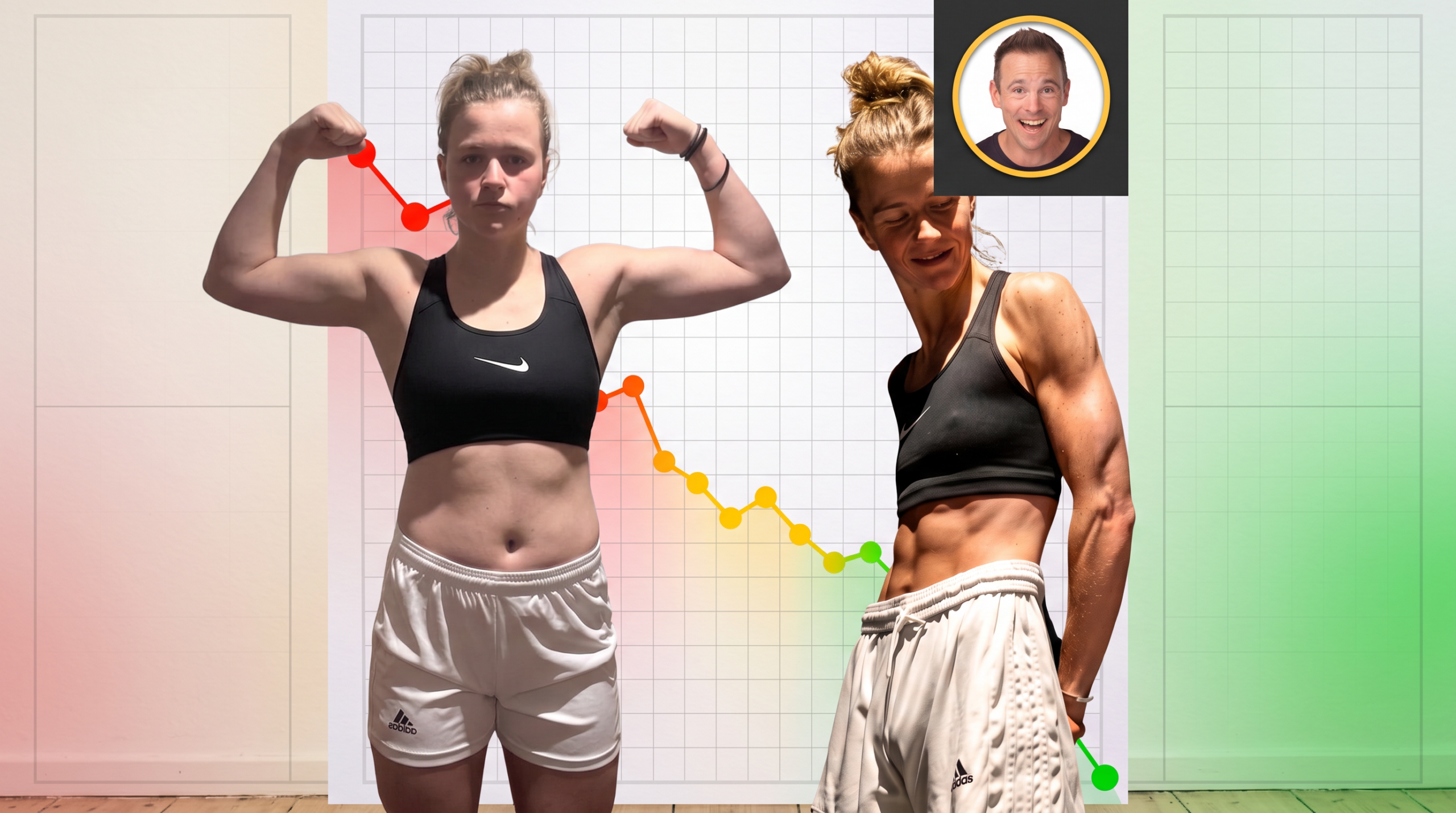
A fitness coach who lost 40 pounds and kept it off recently shared her perspective on why mainstream weight loss advice fails so many women, and her take challenges some deeply held beliefs about what it really takes to succeed.
Jump to:
- The Pendulum Problem: From Extreme Restriction to “Just Be Balanced”
- Why “Balanced” Advice Isn’t One-Size-Fits-All
- Discomfort Isn’t a Warning Sign—It’s the Admission Price
- The Calorie Tracking Debate: Restrictive or Realistic?
- Kind Coaching Versus Nice Coaching
- Two Phases: Intensity for Fat Loss, Consistency for Maintenance
- You’ve Already Proven You Can Tolerate More Than You Think
- The Bottom Line: Intensity First, Balance Later
The Pendulum Problem: From Extreme Restriction to “Just Be Balanced”
In her early attempts, she followed the playbook most dieters know by heart: ultra-low-calorie diets and meal replacement shakes.
Weight dropped quickly. Then it came roaring back, bringing obsession, rebound weight gain, and a wrecked relationship with food.
I lost weight quickly, but I rebounded harder, I felt wrecked, and I was just so obsessed with food, with my weight, with the scales. It was a horrible place to be living in my head.
Then came the wellness revolution. Online influencers began preaching self-love, intuitive eating, and abandoning all restriction.
Just eat what you fancy. Stop tracking. Embrace balance.
She tried that approach too—and stayed 40 pounds heavier than she wanted to be.
I believed it and I tried to be balanced. I wasn’t saying no to anything, I didn’t track, I stopped weighing in, and I remained 40 lb heavier than I wanted to be.
Her insight? Balanced eating works beautifully for maintenance, but not when you’re already overweight because of too much flexibility.
Telling someone who’s been saying “yes” too often to simply eat intuitively is like handing car keys to someone who never learned to brake.
Why “Balanced” Advice Isn’t One-Size-Fits-All
Context matters enormously in weight loss, yet generic advice ignores it.
A woman maintaining her goal weight can afford spontaneity, indulgence, and intuitive choices because her baseline habits are already tight.
But a woman carrying significant excess weight likely got there because her default patterns leaned too permissive.
Borrowing maintenance behaviors during a fat-loss phase is a mismatch—like wearing flip-flops to a snowstorm because someone in California said they were comfortable.
Discomfort Isn’t a Warning Sign—It’s the Admission Price
Modern wellness culture treats discomfort as something dangerous, a red flag signaling you should stop immediately.
But weight loss done properly is inherently uncomfortable, and that’s not a flaw—it’s a feature.
Discomfort is treated like a sign to stop trying. For me, it isn’t. It’s a sign that you are actually on the right path.
A calorie deficit means consuming less energy than your body burns. That creates hunger, cravings, and the urge to eat when you’re not physically hungry.
Feeling those sensations doesn’t mean something is wrong. It means the process is working.
Yet most people bail out at the first flicker of difficulty because they’ve been told discomfort equals damage.
Learning to Sit With Hunger and Cravings
Tolerating hunger between meals, saying no to mid-afternoon snacks, and resisting emotional eating urges are all skills—not signs of deprivation.
She still uses a free emotional eating flowchart to navigate moments when she finds herself scanning the fridge despite having just eaten.
Even now, 40 lb lighter, there are moments where I just check what’s in the fridge. I’m perusing the cupboards looking for food, despite already having eaten.
These urges don’t vanish with weight loss. What changes is your ability to manage them.
Reframing What Your “No” Really Means
One mindset shift that helped her: stop fixating on what you’re refusing and start recognizing what you’re choosing instead.
- Saying no to the 3 p.m. biscuit is saying yes to seeing progress on the scale tomorrow.
- Meal prepping on Sunday is saying yes to an easier, calmer week ahead.
- Forcing yourself to exercise when you don’t feel like it is saying yes to a stronger, more resilient body.
Every moment of restraint is a vote for the person you’re becoming.
The Calorie Tracking Debate: Restrictive or Realistic?
She once resisted calorie tracking, viewing it as obsessive and unnatural.
Then a coach reframed it for her in a way that stuck.
Sure, calorie tracking might not be natural, but it’s also not natural to have food marketed to you on every single device screen, street sign you look at. It’s also not natural to be sat down for 10 hours a day, but look at your job. And it’s also not natural to have so much ultra-processed food readily available that tastes so good.
Tracking isn’t restriction—it’s awareness in an environment engineered to encourage overconsumption.
Ultra-processed foods are designed by scientists to hit your bliss point, triggering cravings and overriding natural satiety signals.
Tracking gives you a fighting chance to navigate that reality, especially at the start.
Kind Coaching Versus Nice Coaching
Early in her coaching career, she tried to be nice—lowering targets when clients struggled, letting them off the hook, encouraging them to “try again tomorrow.”
Results were painfully slow or nonexistent.
She realized nice isn’t the same as kind.
Nice is letting someone off the hook. Nice is telling them just to start again tomorrow and try a bit harder tomorrow. Kind is saying, ‘I know this feels hard right now, but it’s not as hard as hating the body that you’re in.’
Kind coaching holds up a mirror. It challenges clients to see they’re more capable than they believe.
Clients who got results were the ones she didn’t let wiggle out of commitments—even when it made conversations uncomfortable.
Two Phases: Intensity for Fat Loss, Consistency for Maintenance
Weight loss and maintenance require completely different strategies, yet people constantly confuse them.
Active fat loss demands intensity: tight structure, disciplined tracking, saying no more often than feels natural.
Maintenance thrives on consistency: holding onto results with key habits in place, but allowing far more flexibility and spontaneity.
She used to watch slim women enjoy burgers with fries and wonder how they “got away with it.”
Now she understands: they were in the consistency phase, and she was supposed to be in the intensity phase.
Her Recent New York Trip: A Maintenance Example
On a recent trip to New York, she indulged fully—Magnolia Bakery banana pudding, Joe’s Pizza, bagels, American candy bars.
She came home within about two pounds of her maintenance weight.
How? Because her “most of the time” is rock-solid.
I could tell you how many steps I did yesterday, how much protein I ate, how much fiber I consumed. And I could also tell you my meals I’ve got planned in for the next few days.
Even during indulgent meals, she kept portions reasonable, maintained high daily step counts, and exercised every day.
That’s what makes flexibility possible—not luck or metabolism, but rigorous baseline habits.
If You’re Carrying 30+ Pounds of Excess Fat, You’re in a Different Season
If you’re significantly overweight, your “most of the time” has likely been too flexible, too permissive.
You can’t borrow someone else’s maintenance behavior while you’re still in your fat-loss phase.
Accept that you’re in a season requiring more nos, more structure, and more discomfort.
Done properly, this isn’t forever. But skipping this phase guarantees staying stuck.
You’ve Already Proven You Can Tolerate More Than You Think
Discomfort with food—hunger, cravings, urges to binge—feels overwhelming because it’s unfamiliar.
But you’ve trained yourself to tolerate discomfort in other areas repeatedly.
Think about your job. Your first day felt impossibly hard. Tasks that once seemed insurmountable now feel automatic.
Or think about training for a 10K. Your first run was brutal. Your final training session felt manageable.
Tolerance for discomfort is a muscle. It strengthens with practice.
Hunger tolerance, urge management, and saying no all improve with repetition—just like running, learning software, or any other skill.
You have to put the reps in the mental gym.
The Bottom Line: Intensity First, Balance Later
Sustainable weight loss isn’t about finding the perfect balance from day one.
It’s about recognizing which phase you’re in and matching your behavior to that reality.
If you’re carrying excess weight, you need intensity: structure, tracking, discipline, and yes—discomfort.
Once you’ve reached your goal, then you can ease into maintenance mode with more flexibility, spontaneity, and treats.
Trying to live in maintenance mode while still needing fat loss keeps you spinning your wheels indefinitely.
The good news? Discomfort is temporary. Results, when earned properly, last.