
A medical doctor and natural bodybuilder is challenging how people think about weight loss medications like Ozempic, Mounjaro, and Retatrutide.
Dr. Michael Diamonds says these aren’t really “weight loss drugs” at all—they simply control appetite while your body decides what tissue to shed.
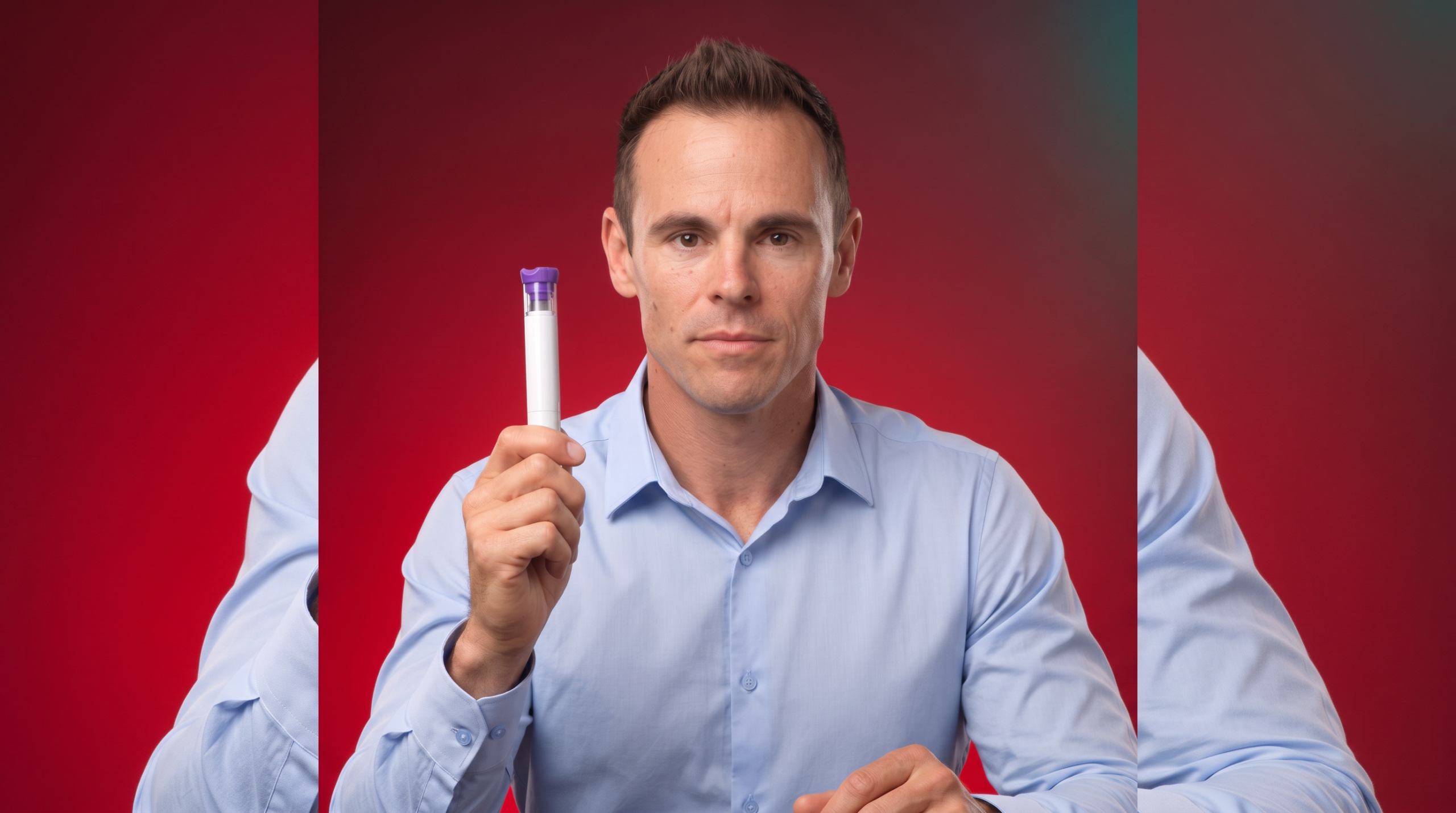
And without the right approach, a dangerous amount of that loss comes from muscle, not just fat.
In a detailed breakdown, Diamonds explains what these medications actually do, who should consider them, and the exact protocol he uses to help clients preserve muscle mass while losing weight—whether they’re on the drugs or coming off them.
Jump to:
The Real Mechanism Behind GLP-1 Drugs
GLP-1 is a hormone naturally produced in your gut after eating. It signals fullness to your brain, slows digestion, and tells your body to burn fat instead of storing it.
It also prompts insulin release when blood sugar rises, which is why these medications originated as diabetes treatments.
Ozempic—and its weight loss formulation Wegovy—contains a lab-made version of this hormone that stays elevated for weeks instead of appearing in short bursts like nature intended. Research shows people without diabetes lost roughly 15% of their body weight over 18 months on Ozempic, compared to about 2.5% in placebo groups.
Mounjaro, marketed as Zepbound for weight loss, adds a second hormone called GIP to the mix. This “double agonist” helped people lose approximately 21% of their body weight at the highest doses.
The Triple Agonist Everyone’s Talking About
Retatrutide takes the combination further by adding glucagon, a third hormone that tells your liver to release stored sugar and burn accumulated fat. It also increases metabolic rate slightly, meaning you burn more calories even at rest.
In mid-stage trials, people lost about 24% of their body weight in 48 weeks. Scans showed over 80% of fat loss came from the liver. Phase three press releases suggest roughly 28% weight loss at 80 weeks—for a 220-pound person, that’s about 60 pounds.
A drug that takes 60 lb off of a man who isn’t lifting and takes more than a quarter of your muscle mass, 15 lb of muscle that you’re not getting back, that’s dangerous.
But Diamonds warns there’s a catch: nothing in biology is free.
The Price Your Body Pays
In the same trials showing dramatic weight loss, resting heart rate increased with dosage. Gastrointestinal side effects—already notorious with Ozempic—worsen depending on how much you take.
Diamonds’ biggest concern about Retatrutide specifically? It isn’t FDA-approved yet. The earliest filing is expected in 2027.
Anything sold under that name right now—vials at med spas, research kits—carries a “research use only” label and isn’t regulated. Nobody is checking quality or purity.
If anyone does offer you Retatrutide today, I would say no, cuz it’s not approved yet. We don’t know what it’s going to do to your body in a year from now, 5 years from now, 10 years from now.
Diamonds points out another troubling issue: if serious health problems emerge years down the line, it will be nearly impossible to link them to unapproved medication taken today.
What Actually Comes Off Your Body
Here’s where Diamonds’ central argument hits hardest: the drug decides how much you eat, but your body decides what tissue you lose.
Research scanning bodies before and after Mounjaro found about a quarter of weight loss was lean tissue—muscle mass. When researchers scanned people on diet alone without medication, they lost the same proportion.
The drug wasn’t deciding what came off. It never told the body to preserve muscle.
Body Composition Changes on GLP-1 Medications
Scans of people on Ozempic showed fat decreased by about 12% and lean tissue—muscle, bone, and organs—dropped roughly 10%. That means four in every ten pounds lost was muscle or near-muscle tissue.
Mounjaro performed slightly better at three pounds of fat for every one pound of muscle, but that’s still a quarter of total loss coming from lean mass.
When you’re losing weight without lifting and without hitting your protein, you’re sending the signal to your body because you have abundance of muscle that hey, you can just take the energy from the muscle instead.
The result? You lose weight but shrink your metabolic engine in the process. Your metabolism slows, and you’re left weaker.
Diamonds calls muscle “the elixir of life”—essential for strength in your 50s, 60s, and 70s to pick up grandchildren, carry groceries, and avoid chronic back pain. Research shows men naturally lose about 5% of muscle every decade starting in their 30s, with strength declining two to five times faster.
A 220-pound man losing 35 pounds on these medications without lifting or adequate protein could lose 9 to 14 pounds of muscle—more than a decade of muscle loss in one year.
The visible impact is stark: faces lose fullness and appear older, shirts hang loose, eyes look droopy. Diamonds recommends a DEXA scan because the scale won’t reveal exactly what you’re losing.
What Happens When You Stop
Diamonds hears the same story from clients repeatedly: the weight comes right back, and then some.
One of his clients, Dr. Gregory, a 61-year-old veterinarian with 32 years on the job, described his experience with Wegovy (the same drug as Ozempic under a different name).
So, I started taking Wegovy and it came off really quick. But, there was a few side effects. First of all, you don’t want to eat anything. You have kind of GI problems. And like I said, it got awful expensive. It kind of felt like a crutch.
Research confirms this pattern. People who lost 17% of body weight on Ozempic regained about two-thirds of it within a year after their last shot. Those who lost 20% on Mounjaro and switched to placebo regained roughly 14% in a year, while people who stayed on the medication kept losing.
Across studies, approximately 60% of weight comes back within a year of stopping.
One Study That Changed The Outcome
Danish researchers put people on an older, weaker version of GLP-1 medication for a year. Half followed a structured training program.
Everyone stopped the drug, then researchers followed them for another year. The people who trained were 11 pounds lighter a year after stopping than those who only took medication.
The study was small—fewer than 200 people—and used an outdated drug formulation, but the principle held.
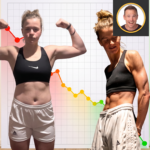
Dr. Gregory became living proof. He weaned off Wegovy slowly while following Diamonds’ training and nutrition plan. Instead of regaining weight, he went from 180 pounds to the low 150s after stopping the drug—and stayed there.
We gave him an insurance policy and then we gave him more profit.
Diamonds emphasizes the 12 weeks before you stop are the most important. Train at least three times weekly and gradually increase protein intake. Talk to your doctor about weaning off slowly—never stop abruptly and start lifting in the same month.
Who Should Actually Consider These Medications
Diamonds positions himself outside both camps—neither the “miracle drug” crowd nor the “it’s cheating” purists.
As both a medical doctor and pro-natural bodybuilder, he personally prefers not taking exogenous substances. But he acknowledges there are situations where GLP-1 medications make medical sense.
When The Research Supports Use
For people with obesity who already have heart disease or previous heart attack or stroke, research showed those on Ozempic had 20% fewer heart attacks, strokes, and cardiac deaths over three years compared to placebo.
Most participants averaged 62 years old. When researchers analyzed whether weight loss alone explained the benefit, only about a third could be attributed to waist reduction.
For that demographic, Diamonds says this is a cardiac medication that happens to lower weight. The conversation belongs with a cardiologist, not after another year of failed attempts.
If you have high BMI, obesity, sleep apnea, type 2 diabetes, or fatty liver disease, have the conversation with your doctor. But do 12 weeks of Diamonds’ protocol in tandem.
Who Shouldn’t Take These Drugs
Diamonds is clear about who should avoid GLP-1 medications:
- People with normal or low BMI looking for an easy route
- Anyone who hasn’t tried hitting basic protein targets first
- Those who’ve never attempted foundational training and nutrition
- Individuals with family history of thyroid cancer or other cancers
- Anyone considering unapproved sources or non-medical providers
You never fix the underlying issue. Take 12 weeks of improving the basics. Do the basics before you decide to put something foreign in your body that you’re going to get off of at some point.
The Muscle First Rule: A 12-Week Protocol
Whether you’re considering GLP-1 medications, currently taking them, or planning to come off, Diamonds prescribes the same foundational approach: the Muscle First Rule.
Three core components define the protocol:
- 12 weeks – the minimum time your body needs to show it can move in the right direction
- Three lifting sessions per week – research in adults over 65 who dieted showed lifters lost half the muscle of cardio-only groups and increased strength by 18% while losing weight
- One gram of protein per pound of body weight – what Diamonds calls “thriving, not surviving”
Practical Application For A 220-Pound Person
Target goal weight: 185 pounds. Hit 185 grams of protein daily at minimum.
Spread across four meals, that’s roughly 45-50 grams per meal. Diamonds provides a simple formula he calls “26810 = 50”:
- 2 scoops of whey protein
- 6 ounces of cooked chicken or turkey breast
- 8 ounces of lean ground beef (sirloin or tenderloin)
- 10 ounces of white fish
Any of these portions delivers approximately 50 grams of protein.
Additional Protocol Elements
Calorie calculation: Multiply body weight by 13 to estimate your deficit target.
Daily steps: Minimum 8,000; work toward 12,000-15,000.
Sleep: At least 7 hours nightly to optimize hormone production—lowering ghrelin (hunger hormone) while increasing growth hormone and testosterone.
Tracking: Weigh daily to monitor trends.
Diamonds emphasizes the fundamental truth again: the drug only controls appetite; you control what tissue you lose.
The drug decides how much you eat, but you decide what you lose exactly. If you’re going to lose the muscle or the fat, then you need to pay a price for that.
The Real Success Story
Dr. Gregory’s transformation illustrates the protocol in action. At 61, after starting at 180 pounds on Wegovy with no appetite and mounting side effects, he worked with Diamonds to rebuild his metabolic foundation.
The approach: refill the metabolic “sponge” through progressive training, slowly increase food intake, and wean off medication gradually with medical supervision.
Result? Gregory dropped to the low 150s after stopping Wegovy and maintained that weight—the opposite of typical rebound.
Diamonds’ mother followed a similar path, losing 40 pounds without medication by applying the same principles.
The core message is consistent: it was never about lacking willpower. People were simply given half the instructions.
GLP-1 medications can be powerful tools in specific medical contexts, particularly for cardiac patients with obesity. But without concurrent muscle preservation through resistance training and adequate protein, users risk accelerating the natural muscle loss that comes with aging—potentially losing a decade’s worth of lean mass in a single year.
For anyone on these medications or considering them, the prescription is clear: defend your muscle tissue as aggressively as you pursue fat loss. Train three times weekly. Hit your protein target. Give your body 12 weeks to show what it can do.
And if you’re planning to stop, make those final 12 weeks count most of all.