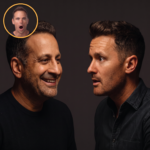
Two people born in the same year could be aging at radically different speeds—biologically speaking.
According to Dr. William Li, a Harvard-trained physician-scientist and president of the Angiogenesis Foundation, DNA methylation patterns can reveal that one person’s body is a full decade older—or younger—than another’s, even if they share the same birthday.
The gap between how old you are and how old your cells act might be wider than you think.
And the exciting part? Lifestyle factors like diet and exercise appear to influence which direction that gap goes.
Jump to:
The Science Behind Biological Age
Chronological age is simple—it’s the number of years since birth. Biological age, however, measures how well or poorly your body is functioning at the cellular level.
Scientists measure biological age using epigenetic clocks, tools that analyze DNA methylation patterns. DNA methylation involves adding chemical methyl groups to specific sites on DNA strands, particularly at locations called CpG sites. These patterns shift predictably as we age, making them reliable biomarkers.

If you want something simple that actually works, this is one of the most effective tools I’ve used to build strength, conditioning, and endurance without needing a full gym setup.
- Full-body training with one weight using swings, squats, and presses
- Solid cast iron build that feels stable and lasts for years
- Comfortable grip that makes high-rep workouts easier to handle
In 2013, biostatistician Steve Horvath at UCLA published landmark research introducing the first widely used epigenetic clock. His model examined methylation patterns at 353 genomic sites to estimate biological age with remarkable accuracy.
What Horvath discovered was striking: biological age and chronological age don’t always match. Some people’s cells age faster than their birthdays suggest. Others seem to be aging in slow motion.
How Much Can Biological Age Differ?
Research shows that individuals born in the same year can have biological ages differing by a decade or more.
This phenomenon is called “age acceleration.” Positive age acceleration means someone is biologically older than their chronological age—their cells show more wear and tear. Negative age acceleration is the opposite: biological age lags behind calendar years.
Newer epigenetic clocks have improved on Horvath’s original model. PhenoAge, developed by researcher Morgan Levine, and GrimAge are better predictors of healthspan and mortality risk. They incorporate additional biomarkers beyond methylation patterns, offering sharper insights into disease vulnerability.
What Drives Biological Aging?
Genetics play a role, but lifestyle factors appear to have substantial influence over how quickly cells accumulate damage.
If you want something simple that actually works, this is one of the most effective tools I’ve used to build strength, conditioning, and endurance without needing a full gym setup.
- Full-body training with one weight using swings, squats, and presses
- Solid cast iron build that feels stable and lasts for years
- Comfortable grip that makes high-rep workouts easier to handle
Several interventional studies have examined modifiable behaviors. Diet, exercise, sleep quality, and stress management all show measurable effects on biological age acceleration.
One of the most compelling studies came in 2023. Published in Nature Aging, the CALERIE trial follow-up found that caloric restriction in healthy adults slowed biological aging by approximately 2-3% over two years. Participants reduced calorie intake by about 12%, and three different epigenetic clocks confirmed the deceleration.
Lifestyle Factors Linked to Slower Aging
Research has identified several behaviors associated with reduced biological age acceleration:
- Regular physical activity: Both aerobic exercise and resistance training show protective effects
- Mediterranean-style diets: Rich in vegetables, fruits, whole grains, fish, and olive oil
- Non-smoking status: Smoking dramatically accelerates biological aging
- Lower chronic stress: Elevated cortisol and prolonged psychological stress correlate with faster cellular aging
- Adequate sleep: Poor sleep quality and duration are linked to age acceleration
Plant-rich eating patterns appear particularly beneficial. Dr. Li, author of the bestselling book Eat to Beat Disease, has long advocated that food can activate natural defense systems against illness.
Can We Actually Reverse Biological Age?
Small, preliminary studies suggest the possibility—but caution is warranted.
The TRIIM trial, for example, tested a combination of growth hormone, DHEA, and metformin in a handful of participants. Results showed apparent reductions in biological age, but the study was tiny and lacked rigorous controls.
If you want something simple that actually works, this is one of the most effective tools I’ve used to build strength, conditioning, and endurance without needing a full gym setup.
- Full-body training with one weight using swings, squats, and presses
- Solid cast iron build that feels stable and lasts for years
- Comfortable grip that makes high-rep workouts easier to handle
Other research explores longevity drugs like metformin, rapamycin, and senolytics—compounds that clear senescent “zombie” cells. Early findings are intriguing, yet most remain far from clinical application.
Scientists emphasize that epigenetic clocks, while valuable research tools, are not yet validated biomarkers for individual health decisions. The longevity field is advancing rapidly, but much consumer-facing science outpaces clinical evidence.
The Rise of Direct-to-Consumer Biological Age Testing
Companies like TruDiagnostic and Elysium Health now offer biological age testing directly to consumers. For a few hundred dollars, customers receive reports estimating their epigenetic age.
These services have democratized access to cutting-edge science. However, experts caution that interpreting results requires nuance. A single test provides limited actionable information without understanding broader health context.
More importantly, changing biological age requires sustained lifestyle modifications—not just measurement.
What This Means for Health-Conscious Adults
Dr. Li’s claim about decade-long gaps in biological age rests on solid scientific footing. Epigenetic research has consistently demonstrated that chronological age tells only part of the story.
If you want something simple that actually works, this is one of the most effective tools I’ve used to build strength, conditioning, and endurance without needing a full gym setup.
- Full-body training with one weight using swings, squats, and presses
- Solid cast iron build that feels stable and lasts for years
- Comfortable grip that makes high-rep workouts easier to handle
The practical takeaway? Aging isn’t entirely predetermined. Daily choices around food, movement, sleep, and stress management accumulate into measurable cellular effects.
Mediterranean eating patterns, regular exercise, and caloric moderation show the strongest evidence for slowing biological aging. These aren’t exotic interventions requiring expensive supplements or pharmaceutical cocktails—they’re accessible lifestyle strategies.
That said, biological age testing remains largely a research tool. Most people don’t need a methylation analysis to benefit from proven health behaviors. Focus on fundamentals: eat mostly whole foods, move consistently, prioritize sleep, manage stress, and avoid smoking.
The field of longevity science is evolving rapidly. Within years, personalized interventions based on epigenetic profiles may become routine. For now, the message is both simple and profound: how you live shapes how you age, down to the molecular level.
Dr. Li regularly shares science-backed health optimization strategies through his Grand Rounds Masterclass series and continues exploring how nutrition intersects with longevity research. His work emphasizes that prevention—not just treatment—should anchor modern medicine.
Biological aging research offers hope without hype: meaningful change comes from sustained, evidence-based habits rather than quick fixes.
If you want something simple that actually works, this is one of the most effective tools I’ve used to build strength, conditioning, and endurance without needing a full gym setup.
- Full-body training with one weight using swings, squats, and presses
- Solid cast iron build that feels stable and lasts for years
- Comfortable grip that makes high-rep workouts easier to handle