Blood sugar spikes above 140 mg/dL silently damage arterial walls, setting the stage for heart attacks and strokes years before symptoms appear.
But there’s a surprisingly simple solution that doesn’t require insulin or medication.
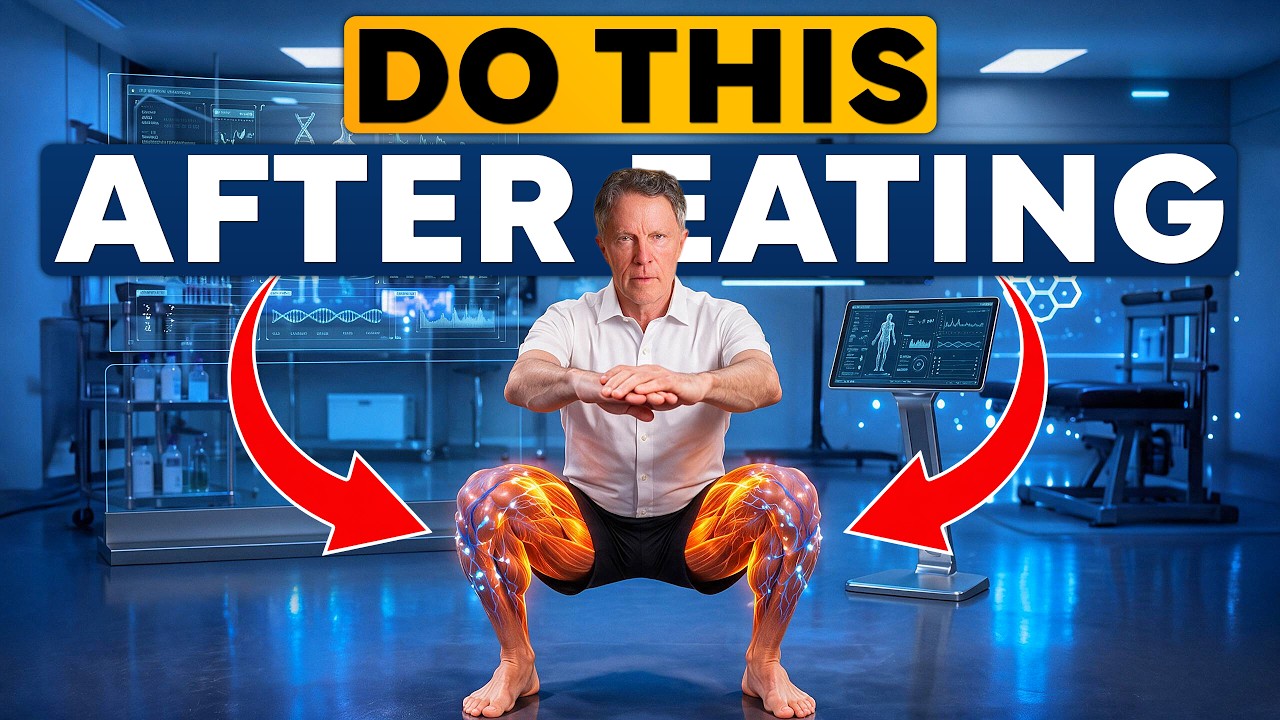
In a recent video, preventive health expert Dr. Ford Brewer revealed four specific exercises that pull sugar from the bloodstream in minutes—with one technique reducing blood glucose levels by an astonishing 52% in research studies.
The best part? You can start right now, even while sitting down.
Jump to:
- Why Muscles Matter More Than Most Doctors Realize
- Exercise #1: Step-Ups (3 Minutes to 18% Reduction)
- Exercise #2: Post-Meal Walking (The Window Everyone Misses)
- Exercise #3: Bodyweight Squats (21% Reduction in Under 60 Seconds)
- Exercise #4: The Soleus Push-Up (52% Reduction While Sitting)
- The Other Half of the Equation
- Taking Action Starting Today
Why Muscles Matter More Than Most Doctors Realize
Most people assume controlling blood sugar requires pharmaceutical intervention. The reality is far different.
When muscles contract, they activate GLUT4 receptors that pull glucose directly from the bloodstream—without needing insulin. This makes skeletal muscle the body’s largest “safety valve” against insulin resistance, prediabetes, and metabolic disease.

If you want something simple that actually works, this is one of the most effective tools I’ve used to build strength, conditioning, and endurance without needing a full gym setup.
- Full-body training with one weight using swings, squats, and presses
- Solid cast iron build that feels stable and lasts for years
- Comfortable grip that makes high-rep workouts easier to handle
Your muscles are the biggest safety valve you have against insulin resistance, prediabetes, full-blown diabetes, metabolic disease. They work. The muscles work as a sugar sink in your body.
In many individuals, muscles extract more glucose from blood than pancreatic insulin and receptors combined. Yet this critical mechanism remains underutilized and under-discussed in clinical settings.
Exercise #1: Step-Ups (3 Minutes to 18% Reduction)
Climbing engages the body’s largest muscle groups—quadriceps and glutes—with significantly greater intensity than walking on flat surfaces. Greater workload translates to faster glucose uptake.
Research demonstrates that just three minutes of stair climbing after meals reduces blood sugar spikes by approximately 18%. Even a single minute produces measurable effects.
How to Execute Step-Ups Correctly
Timing is everything. Don’t perform this exercise fasted in the morning. Instead, wait 45 minutes after eating—precisely when glucose floods the bloodstream and muscles can intercept it most effectively.
- Use stairs, a sturdy box, or even the bottom step of a porch
- Maintain a brisk pace that feels slightly challenging
- Plant the entire foot on each step
- Stand fully upright at the top of each repetition
- Continue for three minutes
No gym membership required. No hour-long workout. For most people, not even enough exertion to break a sweat—just targeted muscle activation at the optimal moment.
Exercise #2: Post-Meal Walking (The Window Everyone Misses)
Walking after meals sounds obvious. But nearly everyone gets the execution wrong.
If you want something simple that actually works, this is one of the most effective tools I’ve used to build strength, conditioning, and endurance without needing a full gym setup.
- Full-body training with one weight using swings, squats, and presses
- Solid cast iron build that feels stable and lasts for years
- Comfortable grip that makes high-rep workouts easier to handle
The critical variable isn’t duration—it’s immediacy. Blood glucose typically peaks 30-45 minutes after finishing a meal. If muscles are already active during this climb, they extract sugar before levels reach their highest point.
Wait an hour, and the opportunity vanishes—even with longer walking duration.
A 2025 study found that a 10-minute walk started immediately after eating limited peak glucose to 164 mg/dL versus 182 mg/dL without movement. That’s an 18-point difference from just 10 minutes of properly timed activity.
The Protocol That Works
The second you finish your last bite, get up. Don’t sit down, don’t turn on the TV, and don’t reach for your phone. Get up and walk.
Maintain a brisk pace—as if running slightly behind schedule. Not a leisurely stroll. Ten minutes represents the minimum threshold; longer durations produce superior results.
Destination is irrelevant. Around the block, through hallways, to the mailbox and back. Dr. Brewer notes some patients simply circuit their kitchen island or create indoor pathways they walk repeatedly for 15-20 minutes.
Exercise #3: Bodyweight Squats (21% Reduction in Under 60 Seconds)
What about extended sitting periods—at desks, in recliners, during television watching—when glucose stagnates in circulation with nowhere to go?
If you want something simple that actually works, this is one of the most effective tools I’ve used to build strength, conditioning, and endurance without needing a full gym setup.
- Full-body training with one weight using swings, squats, and presses
- Solid cast iron build that feels stable and lasts for years
- Comfortable grip that makes high-rep workouts easier to handle
Bodyweight squats may represent the most time-efficient intervention of all four exercises.
Squats activate the body’s largest muscle groups at higher intensity than walking or stair climbing. Greater intensity means accelerated glucose extraction. Research shows that just 10 squats performed every 45 minutes—requiring less than 60 seconds—reduces post-meal glucose spikes by 21%.
That’s roughly double the effect of a 30-minute walk.
The Counterintuitive Key: Slower Is Better
When researchers compared slow versus fast squats, slower repetitions proved superior. The mechanism? Time under tension (TUT)—the duration muscles actively work during both lowering and raising phases.
It’s not about speed, it’s about time under tension. How long the muscle’s working on the way down and the way up. That’s why isometric exercises can be so effective.
Stand with feet shoulder-width apart. Lower until thighs reach approximately parallel with the floor (or as low as comfortable). Rise back up with control. No bouncing. No rushing. Ten repetitions.
Critical implementation detail: Squats work best in small, frequent doses rather than single extended sets. Every 30-45 minutes of sitting, stand and perform 10 slow squats. This keeps muscles continuously extracting glucose throughout the day.
If you want something simple that actually works, this is one of the most effective tools I’ve used to build strength, conditioning, and endurance without needing a full gym setup.
- Full-body training with one weight using swings, squats, and presses
- Solid cast iron build that feels stable and lasts for years
- Comfortable grip that makes high-rep workouts easier to handle
Exercise #4: The Soleus Push-Up (52% Reduction While Sitting)
For individuals with knee issues, mobility limitations, or circumstances requiring prolonged sitting (driving, desk work, dining out), there’s an exercise with perhaps the most impressive research backing.
The soleus push-up targets a small, deep calf muscle with extraordinary endurance characteristics. Unlike most muscles that fatigue quickly, the soleus is built for sustained activation—running directly on blood glucose and fat for hours without exhaustion.
The Critical Positioning Most People Get Wrong
Improper form recruits the wrong muscle, dramatically reducing effectiveness.
Sit with feet flat on the floor, knees bent at approximately 90 degrees. Position the ball of the foot slightly below knee level—this angle is what isolates the soleus rather than the larger gastrocnemius above it.
Perform a steady, rhythmic heel raise and lower—approximately 60 repetitions per minute. Maintain this for at least 10 minutes while reading, watching television, or working at a desk.
The research results are remarkable: In the original study, this technique reduced blood sugar rise by 52% and decreased insulin requirements by 60% over three continuous hours—with zero standing, sweating, cramping, or gym equipment.
If you want something simple that actually works, this is one of the most effective tools I’ve used to build strength, conditioning, and endurance without needing a full gym setup.
- Full-body training with one weight using swings, squats, and presses
- Solid cast iron build that feels stable and lasts for years
- Comfortable grip that makes high-rep workouts easier to handle
It’s the exercise your doctor almost certainly hasn’t mentioned.
The Other Half of the Equation
These four exercises provide powerful tools for pulling glucose from circulation rapidly. But movement represents only half the strategy.
The magnitude of blood sugar spikes is largely determined before any muscle contracts—by what’s consumed at meals. Fighting elevated glucose after it occurs is reactive. Preventing dramatic spikes in the first place is proactive.
Dr. Brewer emphasizes that while these exercises begin lowering blood sugar immediately, they cannot reveal what years of glucose spikes have already done inside arterial walls—whether plaque has accumulated, whether it’s the unstable type that precipitates heart attacks.
You can’t fix what you don’t measure. And the tests that show it are almost never the ones your doctor is already running.
Taking Action Starting Today
Four evidence-based exercises can dramatically reduce blood glucose levels:
- Step-ups for three minutes, 45 minutes after meals
- Brisk walking for 10+ minutes immediately after eating
- Bodyweight squats (10 repetitions) every 30-45 minutes throughout the day
- Soleus push-ups for 10+ minutes while seated
Each technique activates specific muscle groups at optimal times to intercept glucose before it damages arterial walls. Combined with strategic nutritional choices, these interventions provide a comprehensive approach to metabolic health.
The evidence is clear. Muscles function as the body’s most powerful glucose disposal system—one that operates independently of pharmaceutical intervention and produces measurable results within minutes.
If you want something simple that actually works, this is one of the most effective tools I’ve used to build strength, conditioning, and endurance without needing a full gym setup.
- Full-body training with one weight using swings, squats, and presses
- Solid cast iron build that feels stable and lasts for years
- Comfortable grip that makes high-rep workouts easier to handle