A doctor and bodybuilder claims two ingredients already sitting in most kitchen cupboards can trigger the same hormone that weight-loss drugs like Ozempic target—naturally.
Dr. Michael Diamonds, an MD, scientist, and pro-natural bodybuilder, has created what he calls “the velvet rope”—a simple pudding made from whey protein and psyllium husk that takes just three minutes to prepare.
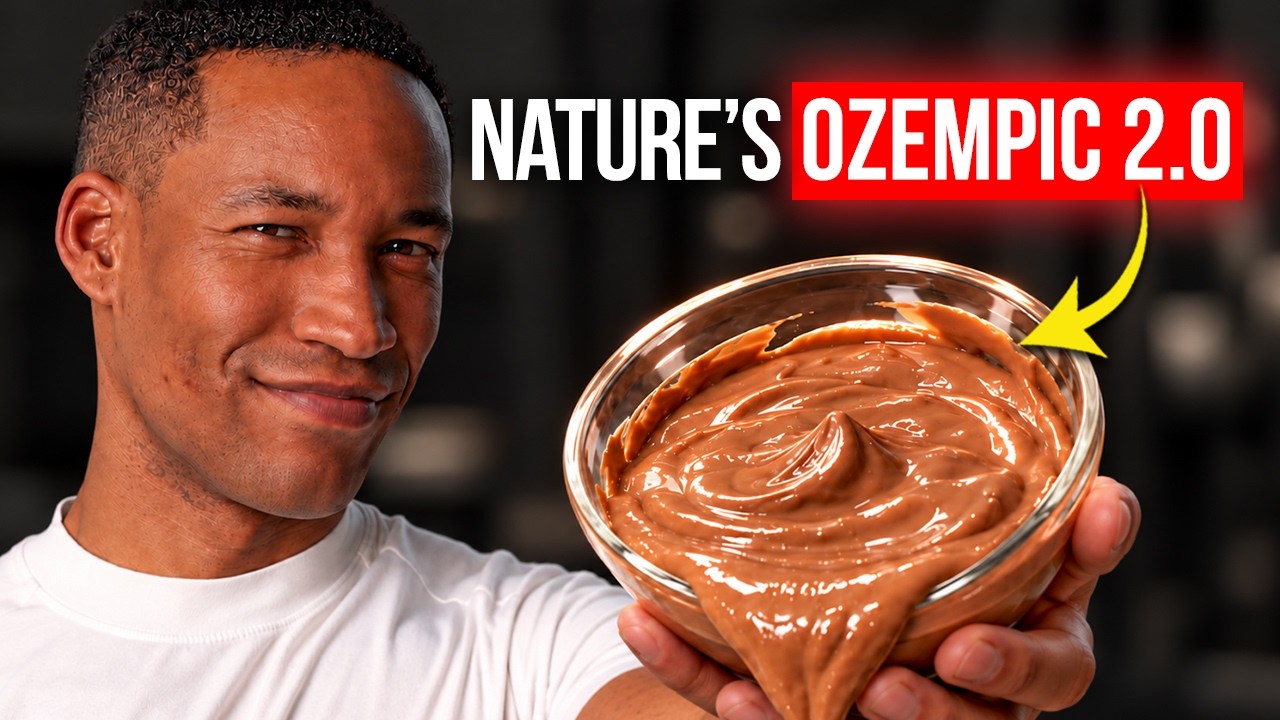
He says eating it ten minutes before meals can trigger GLP-1, reduce blood sugar spikes, and help control appetite without injections.
But does the science actually support these claims, or is this just another social media shortcut that oversells results?
Jump to:
- The “Velvet Rope” Recipe
- How Whey Protein Acts as the “Doorman”
- Psyllium Husk: The “Velvet Rope”
- Combining Whey and Psyllium: Does It Work Better Together?
- How Does This Compare to Ozempic?
- Important Safety Considerations
- What If You Don’t Have Psyllium?
- Who Benefits Most?
- The Bigger Picture: Protein for Fat Loss
- Is This a “Natural Ozempic”?
- The Bottom Line
The “Velvet Rope” Recipe
Dr. Diamonds recommends starting with about 5 ounces of warm water—roughly two-thirds of a cup.
Whisk in half a scoop of whey protein, aiming for around 15 grams of protein total. Then add one tablespoon of psyllium husk and keep stirring as it thickens into a pudding consistency.
He suggests adding flavor with cinnamon or vanilla extract, then letting it sit for two to five minutes until it reaches the right texture.
This is a pudding. And it’s made from two things that’s probably sitting in your kitchen cupboard right now. Takes 3 minutes to make. It’s easy to eat with just a spoon. And you have this 10 minutes before your meal.
Each serving contains roughly 100 calories, 15 grams of protein, five grams of carbohydrates, and four grams of fiber.
Dr. Diamonds emphasizes drinking a full 8-ounce glass of water after each pudding because psyllium absorbs liquid and needs water to move through the digestive system properly.
How Whey Protein Acts as the “Doorman”
Dr. Diamonds uses an extended metaphor comparing carbohydrates to books entering a library, insulin to a librarian organizing them, and whey protein to a security guard controlling the flow.
The core claim rests on whey protein’s ability to stimulate GLP-1 (glucagon-like peptide-1), the same hormone mimicked by weight-loss drugs like Ozempic and Wegovy.
Research does support that whey protein triggers GLP-1 release. One Newcastle University study gave 24 men 15 grams of whey protein ten minutes before breakfast, and their GLP-1 levels rose two to three times higher compared to drinking water alone.
Their stomachs emptied more slowly, and blood sugar spikes after breakfast decreased by 13 to 18 percent.
When the same research team tested this approach on 18 people with type 2 diabetes who consumed whey before breakfast, lunch, and dinner for a week, participants spent about two more hours per day with blood sugar in the normal range.
A meta-analysis pooling 16 trials confirmed that whey protein consumed before meals consistently lowered post-meal blood sugar peaks, slowed gastric emptying, and increased GLP-1 levels.
Timing didn’t matter much—whether people consumed whey 30 minutes or 10 minutes before eating, results remained similar.
Why Whey Over Eggs?
Dr. Diamonds explains that while eggs offer excellent protein, whey reaches the gut faster than any other protein source.
Studies comparing whey to casein and soy found that whey produced the strongest GLP-1 response and reduced hunger most effectively.
Whey is one of the fastest proteins to reach your gut. And when researchers did whey against casein and they did this with a soy breakfast, whey gave the strongest GLP-1 response and cut hunger the most.
For those who can’t consume dairy, Dr. Diamonds suggests pea or plant protein as reasonable alternatives, citing small trials showing similar benefits.
Psyllium Husk: The “Velvet Rope”
Psyllium husk, a soluble fiber, forms a gel-like substance when mixed with liquid—similar to how chia seeds thicken yogurt.
Dr. Diamonds claims this gel slows carbohydrate absorption, creating a “single-file line” that prevents blood sugar from spiking rapidly.
Research supports psyllium’s blood sugar benefits. One trial involving men with type 2 diabetes who took psyllium twice daily for eight weeks showed an 11 percent decrease in post-meal blood sugar throughout the day and a 19 percent reduction after lunch specifically.
Another study found that consuming psyllium before breakfast and lunch for just three days reduced hunger and increased feelings of fullness, with larger doses producing stronger effects.
A meta-analysis of 35 trials showed people with type 2 diabetes who took psyllium before meals experienced a 37 percent reduction in fasting blood sugar and nearly a one percent drop in hemoglobin A1C—a measure of average blood sugar over three months.
That’s a clinically significant improvement.
Bonus: Cholesterol Benefits
Dr. Diamonds notes that psyllium husk has been shown to lower cholesterol levels, which research confirms.
Soluble fiber binds to bile acids in the digestive tract, forcing the liver to use cholesterol to produce more bile, thereby reducing LDL cholesterol circulating in the bloodstream.
Combining Whey and Psyllium: Does It Work Better Together?
Dr. Diamonds admits no studies have tested his exact pudding recipe because he created it himself.
However, one trial did test whey protein and fiber (guar gum) separately and together, 15 minutes before meals in people with type 2 diabetes.
Whey alone produced the biggest GLP-1 spike. The combination of whey and fiber slowed stomach emptying the most.
The whey on its own gave the biggest GLP1 rise. The whey and the fiber together slowed down the stomach the most.
Dr. Diamonds treats his pudding as “two proven pieces put together and not a proven recipe,” which is a fair distinction.
Both ingredients work independently; combining them likely enhances benefits, though direct evidence for this specific combination remains limited.
How Does This Compare to Ozempic?
Dr. Diamonds is careful to distinguish between the pudding and pharmaceutical GLP-1 drugs like Ozempic or Wegovy.
Natural GLP-1 released by the gut lasts under two minutes in the bloodstream before breaking down. The body produces it in short bursts around meals.
Semaglutide (Ozempic) is engineered to resist breakdown, maintaining elevated GLP-1 levels for about a week per injection.
The drug holds the signal all day, every day at a level your body can never make on its own. The pudding turns your own signal up from one meal and then lets it go.
This fundamental difference explains why medications produce dramatic weight loss—often 15 to 20 percent of body weight—while the pudding offers more modest benefits like smaller blood sugar spikes and increased satiety between meals.
They’re not equivalent.
What About Coming Off the Drugs?
Dr. Diamonds highlights research showing people who stop taking semaglutide regain about two-thirds of lost weight within a year.
He argues this happens because the drug artificially elevates the fullness signal from outside, and when injections stop, appetite returns aggressively without any learned behavioral changes around eating.
Building habits like consuming protein and fiber before meals might help maintain results after discontinuing medication, though he doesn’t claim his pudding replaces pharmaceutical intervention.
Important Safety Considerations
Dr. Diamonds includes several crucial safety warnings:
- Start slow: Begin with one teaspoon of psyllium during the first week to let the gut adjust, gradually increasing to one tablespoon as tolerated.
- Hydration is critical: Always drink a full 8-ounce glass of water after each pudding. Psyllium swells and absorbs water; inadequate hydration can cause blockages.
- Never consume dry psyllium: Eating it dry poses a serious choking hazard and can cause esophageal blockage.
- Medication interactions: Psyllium can slow absorption of blood pressure medications. Those on diabetes medication or insulin should consult their doctor before trying this approach.
- Maximum frequency: Three puddings daily (one before each main meal) is the ceiling—300 calories total.
What If You Don’t Have Psyllium?
Dr. Diamonds emphasizes that simply consuming 15 grams of protein before meals still provides benefits.
Mix half a scoop of whey with a quarter cup of Greek yogurt, or just eat any protein source before carbohydrates arrive.
One small trial with people who had type 2 diabetes tested eating the same meal twice—once starting with bread, once starting with chicken and vegetables.
When protein came first, blood sugar was 29 percent lower at 30 minutes and 37 percent lower at one hour.
Meal sequencing alone matters.
Who Benefits Most?
Dr. Diamonds notes that most trials tested these interventions on men, and research shows men carrying more belly fat produce about 27 percent less GLP-1 from whey compared to leaner men.
The approach still works for this population—just slightly less effectively.
People with type 2 diabetes, prediabetes, or those struggling with blood sugar control appear to gain the most measurable benefits based on available research.
If blood sugar already sits in the normal range, psyllium won’t push it lower, though satiety and cholesterol benefits may still apply.
The Bigger Picture: Protein for Fat Loss
Dr. Diamonds shares an example of his client Donnie, who reached 7 percent body fat at age 50 without ever making the pudding.
As Donnie’s calories decreased, Dr. Diamonds increased his protein intake from 200 grams initially to 237 grams.
There was never a point where he was thinking about food or needed to eat or that he wanted to snack on something. It was just so much food that it was so filling and it made following the program so much easier.
This underscores that the pudding represents one tool within a broader strategy centered on adequate protein intake, not a magic bullet that replaces comprehensive nutritional planning.
Is This a “Natural Ozempic”?
No—and Dr. Diamonds doesn’t claim it is.
He acknowledges the drug and the pudding operate in fundamentally different ways. Ozempic maintains artificially elevated GLP-1 levels around the clock for days. The pudding briefly amplifies natural GLP-1 production around individual meals.
Results reflect this difference.
Pharmaceutical interventions produce dramatic weight loss; the pudding offers incremental improvements in blood sugar control, satiety, and possibly cholesterol—modest but meaningful for metabolic health.
For someone already taking GLP-1 medications, Dr. Diamonds advises continuing as prescribed and discussing long-term strategies with a doctor rather than substituting the pudding for medication.
The Bottom Line
Dr. Diamonds’ “velvet rope” pudding combines two evidence-backed ingredients—whey protein and psyllium husk—in a novel way that hasn’t been directly tested as a specific recipe.
Both components independently improve blood sugar control, increase satiety, and trigger beneficial metabolic responses. Combining them theoretically enhances these effects, though direct research confirmation is lacking.
This isn’t a replacement for medication, but it costs 100 calories and uses ingredients many people already have.
The potential benefits—better blood sugar management, reduced hunger between meals, improved cholesterol, and easier digestion—come with minimal downside when safety precautions around hydration and medication interactions are followed.
For those seeking natural strategies to support metabolic health or maintain results after discontinuing weight-loss medications, consuming protein and fiber before meals represents a low-risk, evidence-informed approach worth trying.
Just don’t expect pharmaceutical-level results from pudding.