In 2005, someone could walk into a supplement store and buy one of the most potent anabolic steroids ever synthesized—no prescription required.
It was marketed as a dietary supplement, sold alongside protein powder and creatine, and priced at around forty dollars.
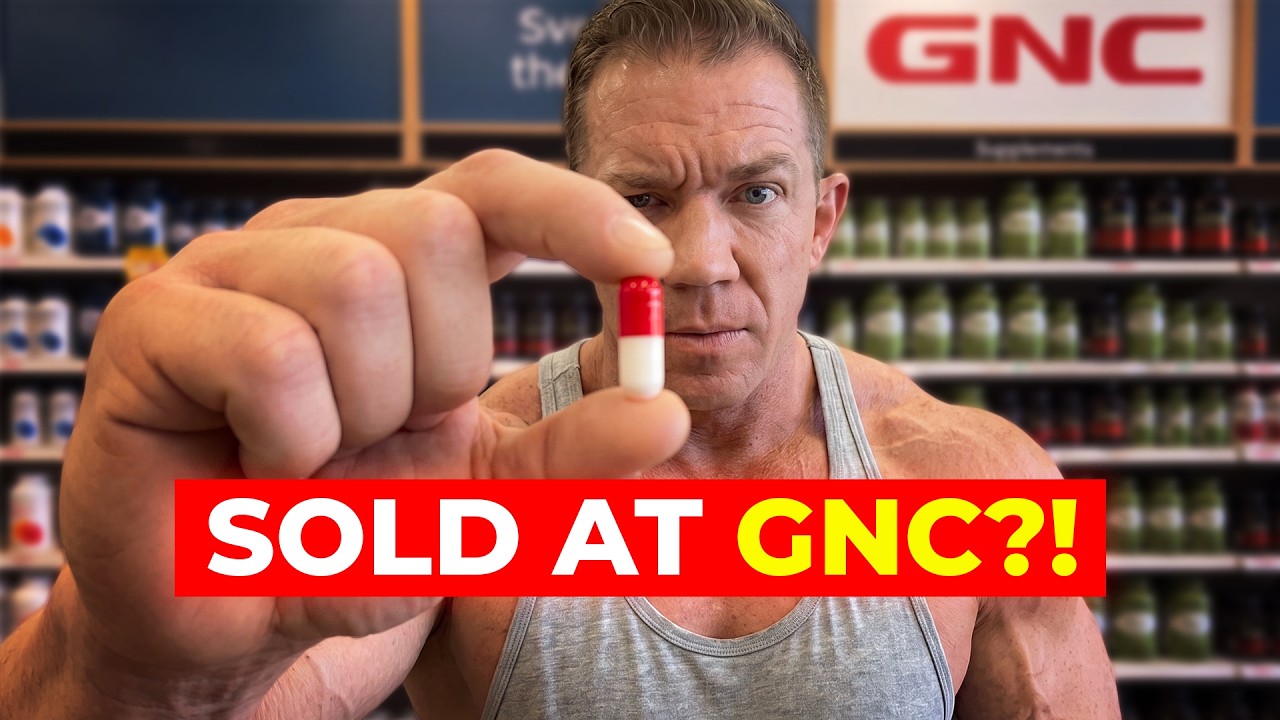
The product was called Superdrol, and its active ingredient, methasterone, was a legitimate anabolic steroid that had never been approved for human use anywhere in the world.
And then some users started turning yellow.
Jump to:
- What Superdrol Actually Is
- A Molecule Born in the 1950s
- The 2005 Comeback
- Don Catlin Breaks the Case
- Six Years of Legal Limbo
- The 400-to-20 Ratio Myth
- Why It Worked So Well Anyway
- The Liver Problem
- Real Cases, Real Damage
- When Liver Injury Becomes Kidney Injury
- No Proven Protection or Treatment
- Three Warning Signs
- Where Superdrol Stands Today
- The Risk-to-Reward Problem
- Sources
What Superdrol Actually Is
Methasterone, the real name behind Superdrol, is also known as methyldrostanolone. Its chemical structure tells the whole story.
Start with dihydrotestosterone (DHT), a powerful androgen the body naturally produces. Add a methyl group at the two position, and the result is drostanolone—better known to bodybuilders as Masteron, an injectable steroid favored for achieving a dry, hard physique before competitions.
Now add a second methyl group at the 17-alpha position. That creates methasterone, or Superdrol.
That single addition does two things: it makes the compound orally active, and it also makes it potentially toxic to the liver.
A Molecule Born in the 1950s
Methasterone was first synthesized in 1956 and fully characterized in a 1959 paper published in the Journal of the American Chemical Society by Howard Ringold and colleagues at Syntex, a pharmaceutical powerhouse of that era.
Syntex was responsible for industrializing cortisone and developing the chemistry behind the birth control pill. In that same journal issue, the very next paper described oxymetholone—known today as Anadrol, another oral steroid notorious for liver toxicity.
Methasterone was described as “a potent orally active anabolic agent with only weak androgenic activity,” but it was never developed further. Syntex already had injectable drostanolone, which worked similarly without the liver risk.
So methasterone was documented, filed away, and forgotten for nearly half a century.
The 2005 Comeback
In 2005, methasterone resurfaced as a dietary supplement under the brand name Superdrol. The timing was everything.
The Anabolic Steroid Control Act of 2004 had just banned a long list of prohormones and steroid precursors by placing them in Schedule III. But that law worked off a specific list of compounds.
Methasterone wasn’t on it. The molecule had never been marketed, never been approved, and had gone unnoticed for decades. Legally, it fell into the same category as creatine.
The label didn’t even say “methasterone.” It said “methasteron,” a trademarked play on the word Masteron, with no clear chemical identity for regulators to trace.
Don Catlin Breaks the Case
In November 2005, Dr. Don Catlin, who ran the U.S. Olympic drug testing lab at UCLA, analyzed five supplements purchased off the internet at the request of The Washington Post.
They are all steroids, and they’re all going to be highly effective.
The Post published the story on November 30, 2005. WADA added methasterone to its prohibited list for 2006, and on March 9, 2006, the FDA issued warning letters declaring these products unapproved drugs.
But the story didn’t end there.
Six Years of Legal Limbo
The FDA saying something is an illegal unapproved drug is not the same as the DEA classifying it as a controlled substance. Those are two different agencies with different jurisdictions.
Methasterone kept reappearing on supplement store shelves under dozens of different names: Imdrol, Mastdrol, Methasterol, Magnadrol, Straight Drol, and even plain methyldrostanolone—the actual chemical name printed right on the bottle.
By March 2010, the DEA had identified 62 products containing methasterone. One recall alone listed 65 products.
It wasn’t until November 2011 that the DEA proposed a rule to place methasterone into Schedule III. That rule was finalized in July 2012 and took effect on August 29, 2012.
Congress closed the loophole completely in December 2014 with the Designer Anabolic Steroid Control Act, which named compounds directly instead of relying on agency action.
The 400-to-20 Ratio Myth
Superdrol earned a legendary reputation in bodybuilding circles, in part because of one widely cited statistic: an anabolic-to-androgenic ratio of 400 to 20.
Testosterone, the reference standard, is 100 to 100. So a 400-to-20 ratio would mean methasterone is four times as anabolic and only one-fifth as androgenic—an extremely tissue-selective profile.
But where does that number come from? It traces back to a 1969 pharmacology reference book by Julius Vida, summarizing unpublished rodent screening assays from the 1950s and 60s.
There is no peer-reviewed study confirming this ratio, no published androgen receptor binding constant, and no independently replicated data.
The DEA’s own summary of animal studies reported that methasterone’s affinity for the androgen receptor was comparable to testosterone, not dramatically more selective.
Why It Worked So Well Anyway
Even if methasterone isn’t the selective anabolic miracle some believed, it was undeniably effective. Users commonly reported gaining eight to ten pounds in just a few weeks, with a dry, hard, vascular appearance.
Two pharmacological features explain this:
- No aromatization: The two-alpha methyl group blocks the aromatase enzyme, so methasterone doesn’t convert to estrogen. That means no water retention, no bloating, and a lean look.
- Oral bioavailability with strong receptor binding: The 17-alpha methyl group allows the compound to survive digestion and reach systemic circulation, while still hitting androgen receptors hard.
For young men in 2005, the appeal was obvious: dramatic results in weeks, no needles, no estrogen management, all for forty dollars at the mall.
The Liver Problem
The same 17-alpha methyl group that makes methasterone orally active is also the structural feature most tightly linked to cholestatic liver injury across the entire steroid class.
Normally, when someone swallows a steroid, the liver oxidizes it on the first pass and the compound is inactivated. Adding a methyl group at the 17-alpha position physically blocks that reaction, allowing the drug to survive.
But this same modification can interfere with bile flow. Research published in 2023 showed that methasterone inhibits an enzyme called AKR1D1, which is critical for producing properly shaped bile acids.
When bile acids lose their normal shape, bile flow slows down, bilirubin backs up into the bloodstream, and jaundice develops. In severe cases, this cholestasis can also damage the kidneys.
Real Cases, Real Damage
Human case reports paint a consistent and alarming picture.
The first documented case appeared in 2006: a man taking an over-the-counter muscle builder developed cholestatic jaundice and kidney problems. In 2008, five more cases were published, showing a dangerous pattern.
Users became jaundiced two weeks after stopping the drug. They presented to hospitals two weeks after that. Bilirubin levels continued climbing for another two to three weeks before peaking, and full recovery took about 12 weeks.
In 2019, researchers documented 44 young men hospitalized with bodybuilding supplement-related liver injury. The median time to symptoms was 73 days. Every single patient was jaundiced, 84% had severe itching, and 71% required hospitalization.
A 2020 UK systematic review of 52 cases identified methyldrostanolone as the most common single agent causing liver injury. Peak bilirubin levels reached approximately 41 mg/dL—about 34 times the upper limit of normal.
When Liver Injury Becomes Kidney Injury
In cholestatic injury from methasterone, bilirubin—a liver marker—can predict acute kidney injury.
Spanish and Latin American drug-induced liver injury registries found that once bilirubin rises to about 21.5 times the upper limit of normal, kidney damage becomes likely. In the UK series, 43% of patients developed kidney injury, and some required dialysis.
A 2025 case report from Australia described a 35-year-old man who needed both hemodialysis and plasma exchange after using methasterone.
Despite the severity, most patients eventually recovered. Across all published series, there were no deaths and no liver transplants, though some individuals may have sustained lasting kidney damage.
No Proven Protection or Treatment
There is no supplement proven to protect against methasterone-induced liver injury. Not milk thistle, not TUDCA, not N-acetylcysteine (NAC). None have been validated in clinical trials for this specific type of cholestatic injury.
Even once someone is hospitalized with jaundice, there is no proven treatment. Recovery depends entirely on the liver working through the damage over weeks to months.
The myth that “liver support” supplements sold at the same store can prevent harm is not only unproven—it’s dangerous, because it creates a false sense of security.
Three Warning Signs
If someone is using methasterone despite the risks, three signs matter most:
- Injury often appears after stopping: Feeling fine during a cycle means nothing. Symptoms typically emerge two weeks after the last dose.
- Itching and dark urine come first: Severe itching, especially on the shins, and urine the color of cola are early signs of cholestasis—not dehydration.
- Jaundice follows: Yellowing of the skin and eyes indicates bilirubin levels have risen significantly.
These are medical emergencies, not minor side effects.
Where Superdrol Stands Today
Methasterone remains a Schedule III controlled substance in the United States. Possessing or distributing it without a prescription is illegal.
Despite this, methasterone and oxymetholone continue to appear in WADA’s annual list of top detected substances in competitive sport. Black-market availability persists, and online forums still discuss the compound regularly.
But availability doesn’t mean safety, and effectiveness doesn’t justify risk.
The Risk-to-Reward Problem
Methasterone is a genuinely effective anabolic steroid. It works, and it works quickly. But effectiveness is only part of the equation.
With testosterone, there are decades of human trials. With other anabolic agents, there is at least a body of animal data or clinical use history in other countries. With methasterone, the evidence base consists of:
- Zero human trials
- Zero published pharmacokinetics
- A potency ratio from unpublished rat assays in the 1950s
- About 100 published case reports of severe cholestatic liver injury
That is an extraordinarily poor risk-to-reward ratio for any compound, no matter how effective it may be.
For those seeking the dry, hard, non-aromatizing effects methasterone offers, safer alternatives exist with far better-documented safety profiles.
Methasterone is not inherently evil—it’s just a molecule doing what it was designed to do. But dragging a 17-alpha methylated steroid through the liver is like setting up a charcoal grill in the living room. The grill works beautifully. The problem is where it’s being used.
Sources
- Ringold HJ, et al. (1959). Journal of the American Chemical Society. Synthesis and characterization of methasterone.
- Catlin DH, et al. (2005). Analysis of dietary supplements, as reported in The Washington Post, November 30, 2005.
- U.S. Food and Drug Administration (2006). Warning letters regarding methasterone-containing products, March 9, 2006.
- U.S. Drug Enforcement Administration (2012). Final rule placing methasterone into Schedule III, effective August 29, 2012.
- Vida JA. (1969). Androgens and Anabolic Agents: Chemistry and Pharmacology.
- Shah NJ, et al. (2008). Case series of cholestatic hepatotoxicity from dietary supplements. Digestive Diseases and Sciences.
- Navarro VJ, et al. (2019). Liver injury from bodybuilding supplements: a 44-patient series. Hepatology.
- Solimini R, et al. (2020). Systematic review of hepatotoxicity associated with anabolic-androgenic steroids. Clinical Toxicology.
- Bessone F, et al. (2015). Spanish and Latin American DILI registries: bilirubin as predictor of acute kidney injury in cholestatic cases.
- Biochemical studies on AKR1D1 enzyme inhibition by anabolic steroids (2023).