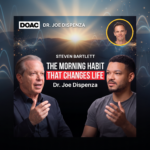
In a recent episode of his podcast, Steven Bartlett sat down with author and researcher Dr. Joe Dispenza to unpack why so many people live the same day on repeat.
Dispenza believes the first minutes after waking can decide whether a day runs on autopilot or on purpose.
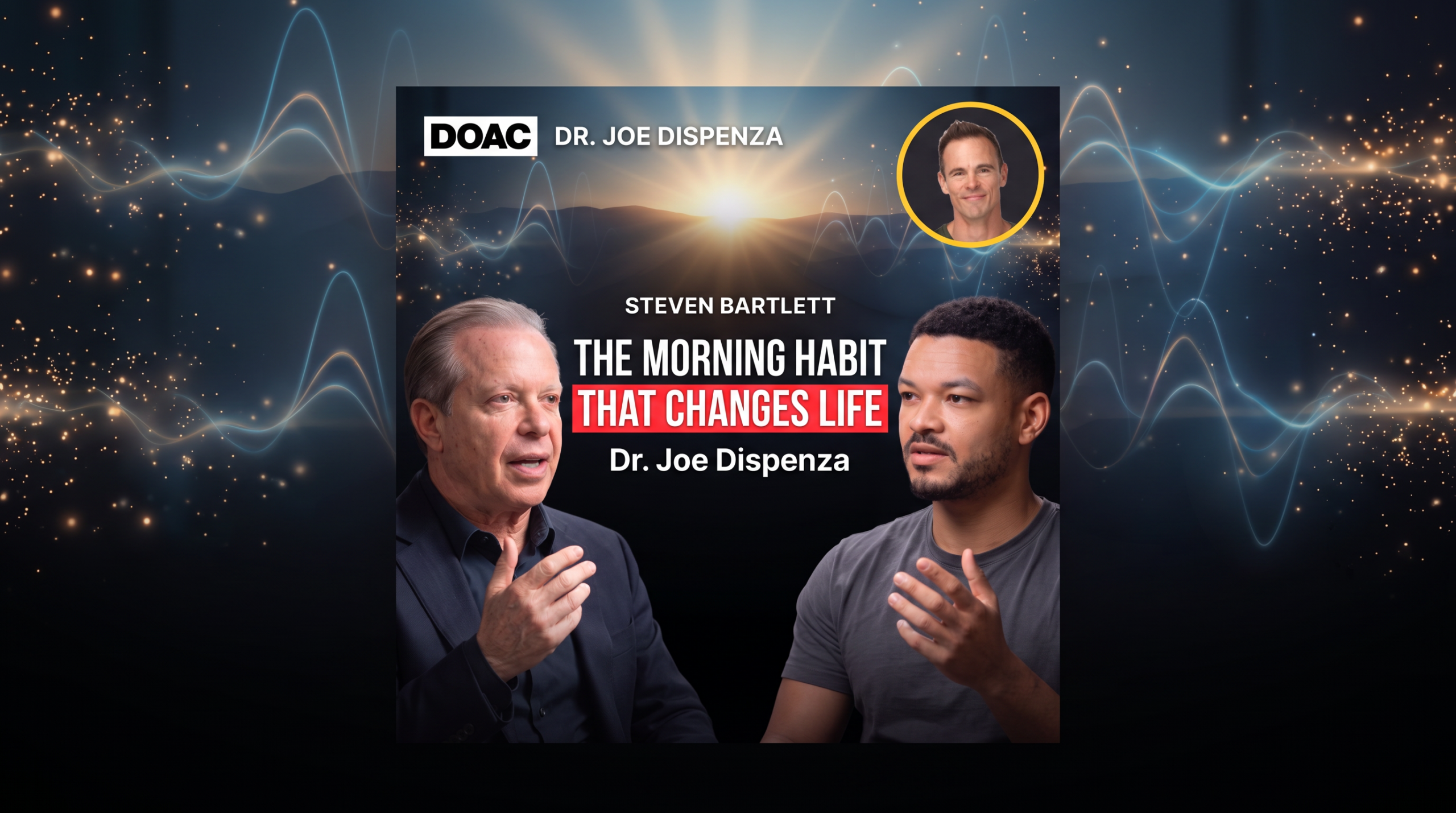
His advice involves one simple thing to do before touching your phone.
He also shares a mental trick aimed at late-night sugar binges and messy habits.
Keep reading for the full routine, plus the spots where the evidence gets shakier than the stories.
Jump to:
The Morning Move Dispenza Puts Ahead Of Your Phone
Before checking a single notification, sit still and decide who you want to be today. Dispenza argues that grabbing your phone instantly reconnects your brain to “everything known” in your life: texts, emails, social feeds, old worries.

If you want something simple that actually works, this is one of the most effective tools I’ve used to build strength, conditioning, and endurance without needing a full gym setup.
- Full-body training with one weight using swings, squats, and presses
- Solid cast iron build that feels stable and lasts for years
- Comfortable grip that makes high-rep workouts easier to handle
Before you start that, try this out as an experiment before you start your day.
Bartlett admitted he is exactly the person Dispenza describes. His phone drags him out of bed and into a day he lives totally unconsciously, and that has gone on for two years.
Now that you know, you can’t not know.
Why Dispenza Targets Waking And Bedtime
According to Dispenza, brain waves slide from delta to theta to alpha to beta as you wake, and in reverse as you fall asleep. He believes those transitions create a rare opening.
There’s two times when the door to the subconscious mind opens up.
The “door to the subconscious” is more metaphor than established science. Brain activity does shift around waking and sleep, but Dispenza offered no evidence on the show that these windows uniquely let you reprogram yourself.
Still, a quiet, phone-free start to the day is a sensible habit. Calm first, chaos later needs no mystical explanation to be useful.
The Step-By-Step Morning Experiment
- Sit your body down. Stay put until you decide it is time to move, not when restlessness says so.
- Ask a big question. What is the greatest expression of yourself you can be today?
- Write down two thoughts, two behaviors and two emotions you refuse to let slip by unnoticed.
- Rehearse mentally how you will think and act in tricky situations.
- Summon a feeling such as kindness, love or gratitude, until you can call it up with eyes open.
- Review at night. Where did you go unconscious?
I’m going to sit my body down. I’m going to tame the animal here.
Slip-ups are expected. Dispenza treats each one as data rather than failure.
Tomorrow morning, new day, new lifetime. Let me go again.
Mental Rehearsal: Practice Without Moving
Bartlett offered two personal pain points: midnight sugar orders followed by instant guilt, and chaotic hotel rooms. Dispenza’s surprising reply was that the real addiction might be to the guilt, not the sugar.
If you want something simple that actually works, this is one of the most effective tools I’ve used to build strength, conditioning, and endurance without needing a full gym setup.
- Full-body training with one weight using swings, squats, and presses
- Solid cast iron build that feels stable and lasts for years
- Comfortable grip that makes high-rep workouts easier to handle
You could actually be addicted to the guilt and not to the sugar.
His fix: replay the situation in your mind, from start to finish, choosing differently. Repeat until it feels doable.
To back this up, Dispenza described a piano experiment. One group physically practiced scales and chords for two hours daily over five days, while another only imagined playing.
They were so present with what they were doing, the brain did not know the difference between the real-life experience and what they were imagining.
Mental practice is a legitimate tool, and athletes, musicians and actors lean on it constantly. Even so, it is generally treated as a booster for real practice, not a full replacement, so the claim of identical results deserves a raised eyebrow.
Why Change Feels Wrong At First
Dispenza says habits are not villains. They let you drive, type and talk on the phone without thinking, and trouble starts when negative patterns become invisible.
The greatest habit we have to break is the habit of being ourselves.
Expect discomfort when you shift course. Leaving the familiar for the unknown feels uncertain, and cravings for old emotional states can masquerade as intuition.
People say, “Well, this feels right.” No, that feels familiar.
Stress, Stories And Stated Statistics
Dispenza says 75 to 90 percent of healthcare visits stem from psychological or emotional stress. He also says the latest memory research shows 50 percent of the stories we tell about our pasts are not true.
If you want something simple that actually works, this is one of the most effective tools I’ve used to build strength, conditioning, and endurance without needing a full gym setup.
- Full-body training with one weight using swings, squats, and presses
- Solid cast iron build that feels stable and lasts for years
- Comfortable grip that makes high-rep workouts easier to handle
Treat both numbers with care. Chronic stress genuinely influences many health conditions, and memory is famously reconstructive. Yet neither figure was tied to a specific study on the show, and the exact percentages are not settled facts.
His healthier takeaway lands better: overcome the emotional charge attached to a memory, and the pain fades.
The memory without the emotion is called wisdom.
The Big Claims Worth A Closer Look
Dispenza went much further than habit change. He described attendees at his events experiencing reversals of stage four cancer, MS, ALS and lupus, and even a woman who regrew a surgically removed thyroid.
I know this is difficult even for me to accept.
The evidence picture is thinner than the stories. These accounts come from Dispenza’s own events, and he did not point to independent, controlled trials showing thought alone reverses serious disease.
Same goes for claims of changed gene expression, metabolites and microbiomes after seven days. Those findings come from his own research team and were described without published, peer-reviewed results.
Another popular line deserves care too. The idea that 95 percent of who we are is programmed by age 35 works better as a metaphor for how much of life runs on habit than as a precise, measured figure.
If you want something simple that actually works, this is one of the most effective tools I’ve used to build strength, conditioning, and endurance without needing a full gym setup.
- Full-body training with one weight using swings, squats, and presses
- Solid cast iron build that feels stable and lasts for years
- Comfortable grip that makes high-rep workouts easier to handle
Meditation, mindfulness and stress management have real benefits. Anyone living with a serious illness should keep medical treatment at the center of care and treat mindset practices as a complement.
What Dispenza Does At 4:30 A.M.
Bartlett pressed for specifics. Dispenza wakes around 4:30 after going to bed between 10 and 11 p.m., and his reason is simple.
Because there’s nobody that can bother me at that time. There’s no emails, there’s no texts.
His routine splits in two. First comes the “think box”, where he reviews why he is meditating and what he wants to avoid. Next is the “play box”, with no thinking at all, only shifting his state.
He allows up to two hours, though he does not always use them. His intention for the morning Bartlett asked about was clear.
I want to be relaxed and awake. I want to be present with everything that I do.
A Scaled-Down Version For Real Life
- Leave the phone across the room overnight so the first touch is not a screen.
- Start with five quiet minutes and one intention, rather than two hours.
- Pick one habit and rehearse the better choice mentally before it appears.
- Review each evening without self-judgment, then try again tomorrow.
Dispenza’s closing reassurance applies to anyone who stumbles:
If you lose it, nothing wrong. Tomorrow’s another day.