Eiza González is pushing her physical limits in ways she never has before.
The Mexican actress, known for her intense dedication to role preparation, is reportedly deep into training for an upcoming bodybuilding film called Iron Jane.
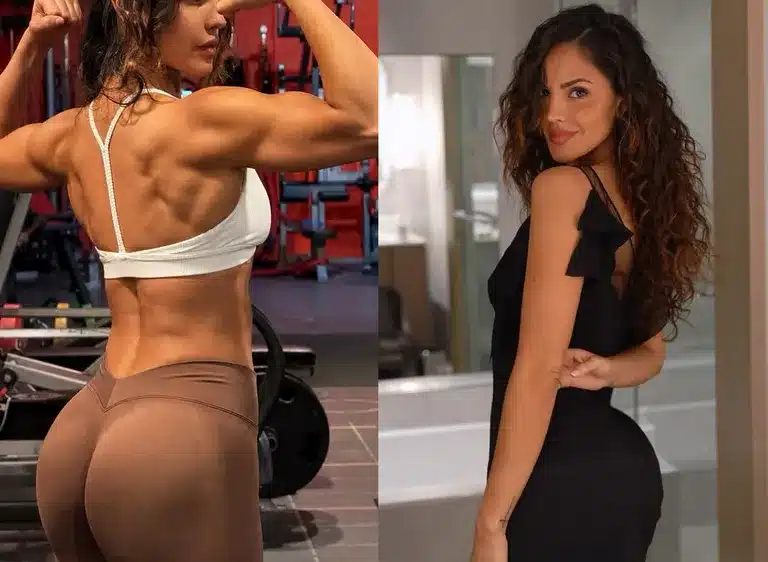
This transformation appears poised to join the ranks of Hollywood’s most dramatic physical metamorphoses—think Charlize Theron gaining muscle for Atomic Blonde or Christian Bale’s legendary body transformations.
For González, who has already proven her action-star credentials in films like Baby Driver and Hobbs & Shaw, stepping into bodybuilding territory represents an entirely new challenge.
Jump to:
From Action Star to Bodybuilding Role
González has built a reputation for committing fully to physically demanding roles throughout her Hollywood career. Her work in Alita: Battle Angel and the Fast & Furious franchise showcased her willingness to undergo rigorous training regimens.
But bodybuilding preparation takes physical transformation to another level entirely.
Unlike standard action film prep that focuses on functional fitness and stunt work, bodybuilding requires specific muscle development, precise nutrition timing, and an understanding of how to sculpt the physique for aesthetic presentation. Professional bodybuilding preparation typically demands 3-6 months of intensive, specialized training.
Bodybuilding Comes to the Big Screen
Cinema’s fascination with bodybuilding isn’t new—Pumping Iron launched Arnold Schwarzenegger into mainstream consciousness back in 1977. However, recent years have seen renewed interest in stories from competitive bodybuilding, particularly women’s divisions.
Female bodybuilding has evolved dramatically over the past decade. Athletes like Iris Kyle, an 10-time Ms. Olympia winner, and Andrea Shaw, the current Ms. Olympia champion, have brought unprecedented attention to women’s competitive bodybuilding.
These athletes represent a shift in how society views female strength and muscularity.
Iron Jane appears positioned to capture this cultural moment, exploring a world where women push against traditional beauty standards and redefine what powerful femininity looks like.
What Bodybuilding Training Actually Requires
Transforming into a credible bodybuilder for film demands more than just hitting weights hard. The process involves multiple interconnected components that must work in perfect harmony.
Progressive Resistance Training
Bodybuilding training splits muscle groups strategically across training days, allowing for maximum growth stimulus while ensuring adequate recovery. Sessions typically focus on higher volume—more sets and repetitions—compared to strength training.
Exercises emphasize the mind-muscle connection, tempo control, and achieving maximum muscle tension rather than simply moving heavy weight.
Precision Nutrition
Building muscle while maintaining definition requires meticulous nutritional planning. Macronutrient timing becomes critical—protein intake distributed throughout the day, carbohydrates strategically placed around training sessions, and fats balanced to support hormone production.
Caloric intake shifts based on whether someone’s building muscle or cutting fat. Competitive bodybuilders often consume 5-7 carefully planned meals daily to maintain metabolic rate and provide constant muscle-building nutrients.
Recovery and Mental Fortitude
Perhaps the most underestimated aspect: the psychological demands. Maintaining the discipline for consistent training, adhering to strict nutrition protocols, and managing the physical discomfort of progressive overload requires extraordinary mental resilience.
Sleep becomes non-negotiable—most serious bodybuilders prioritize 8-9 hours nightly to optimize muscle recovery and hormone production.
Hollywood’s Physical Transformation Trend
González joins a growing list of actors who’ve undergone extreme physical changes for authenticity. This trend has accelerated dramatically over the past two decades as audiences demand more realistic portrayals.
- Christian Bale famously lost 63 pounds for The Machinist, then gained muscle mass for Batman Begins
- Charlize Theron trained intensively in martial arts and strength work for Atomic Blonde
- Robert De Niro gained 60 pounds for Raging Bull, setting an early standard for method acting transformations
- Natalie Portman underwent rigorous ballet training and lost significant weight for Black Swan
These transformations demonstrate commitment to craft, but they also raise questions about sustainable practices and the pressure actors face to alter their bodies dramatically.
Why This Role Matters for Representation
González taking on a bodybuilding role carries significance beyond personal achievement. Female bodybuilders have historically faced criticism for developing muscularity that challenges conventional femininity standards.
Mainstream films exploring this world help normalize different expressions of female strength and beauty. They challenge narrow definitions of what women’s bodies “should” look like and celebrate athletic achievement in its most dedicated form.
For young women who compete in bodybuilding or simply enjoy building muscle, seeing this lifestyle represented authentically in cinema provides validation. It shows their dedication deserves the same respect as any elite athletic pursuit.
The Training Timeline Challenge
Building a physique that reads authentically as a competitive bodybuilder presents timing challenges. Unlike losing weight for a role, which can happen relatively quickly (though not necessarily healthily), muscle development follows biological timelines that can’t be rushed significantly.
Natural muscle growth occurs gradually—even with perfect training and nutrition, women might gain 0.5-1 pound of muscle monthly when starting out. Creating the illusion of someone who’s trained for years requires either extended preparation time or extremely strategic training, lighting, and filming angles.
Production teams typically work with specialized trainers who understand both bodybuilding protocols and film industry demands, creating hybrid programs that develop specific muscle groups prioritized for camera angles while maintaining overall health.
What Success Looks Like
González’s commitment to this transformation—regardless of the final physical outcome—reflects evolving standards for role preparation in modern cinema. Audiences increasingly value authenticity and can detect when actors haven’t fully invested in physical aspects of characters.
The discipline required for bodybuilding preparation translates directly to character development. Understanding the lifestyle—early morning cardio sessions, meal prep routines, pre-competition anxiety, and the unique culture of bodybuilding gyms—creates performance depth that pure acting technique alone cannot achieve.
For González, this journey represents not just another role but an opportunity to showcase an underrepresented athletic community and demonstrate the extraordinary dedication required to compete at elite levels in women’s bodybuilding.
Iron Jane has the potential to do for female bodybuilding what Pumping Iron did for the sport decades ago—bring it into mainstream consciousness and celebrate the athletes who dedicate themselves to this demanding pursuit.