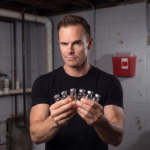
The U.S. Food and Drug Administration just made six experimental peptides more accessible—but that doesn’t mean they’re safe or proven to work.
On Wednesday, federal regulators announced they won’t penalize specialized pharmacies for compounding and supplying BPC-157, epitalon, KPV, MOTS-c, Semax, and TB-500 to patients with prescriptions.
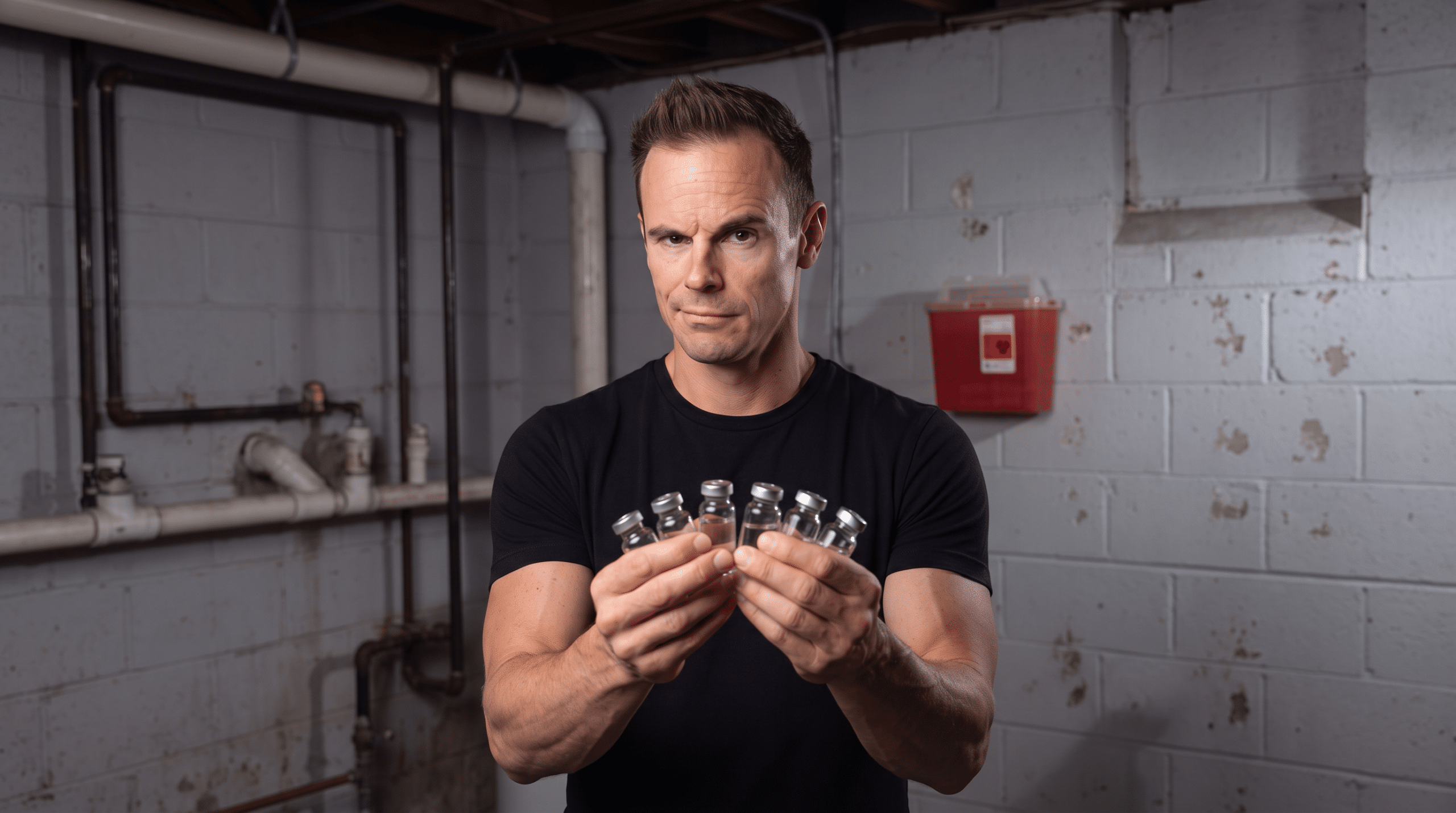
The catch? None of these peptides have FDA approval, and this new policy is temporary—a stopgap while the agency decides what to do long-term.
If you’ve been watching the peptide space, you know this debate has been heating up since summer, when advocates argued that legal, pharmacy-grade peptides would be safer than the gray-market alternatives already flooding online forums and telehealth clinics.
Jump to:
What This Policy Change Actually Means
The new FDA guidance doesn’t grant approval—it grants enforcement discretion. That means compounding pharmacies can legally make and sell these six peptides without facing penalties, as long as they report serious side effects and quality problems to regulators.
According to documents released by the Department of Health and Human Services, this temporary access window allows the FDA to gather more real-world data while deciding whether these substances belong on the official list of compounds pharmacies can make.
For proponents, it’s a win for patient safety. If people are already using these peptides—and they are—better they come from licensed pharmacies under physician supervision than from unregulated overseas labs.
The Gray Market Isn’t Going Anywhere
Ryan Beattie, director of business development at UK-based Adaptog Research & Life Sciences, predicts the underground market will remain strong.
My prediction is that those who are already using the gray market will continue to do so. So I think in the initial term, people will use compounding pharmacies in the US. What I then predict will happen is people will then get used to it, get more aware of it—and then switch to the gray market because of the cost.
He’s probably right. Compounded peptides are more expensive than gray-market versions, and insurance doesn’t cover them.
Two users who spoke about their experience with the “Wolverine stack”—a combination of BPC-157 and TB-500 for chronic pain—said they weren’t sure they’d make the switch. One asked, “What are the hoops and what are the costs going to be?”
Advocates Say Compounding Could Improve Safety
At the recent PepMed conference in Washington, D.C., speakers from the American Academy of Peptide Medicine emphasized the dangers of unregulated peptides and argued that bringing these substances into the legal pharmacy system would protect patients.
Dr. Alex Tatem, a urologist and men’s health specialist with a large YouTube following, framed it as expanding healthcare options beyond a “sick care model.”
Our established medical system is very much a sick care model. It’s important to help patients in a health crisis, but people want to be proactive about disease prevention.
The conference brought together physicians, pharmacy owners, and telehealth CEOs who argued that if patients want access to these peptides, the safest route is through licensed compounders with physician oversight.
But the Science Isn’t There Yet
FDA scientists have repeatedly cautioned against widespread peptide use. At July’s advisory committee meeting, agency experts pointed out that none of these six peptides have undergone the rigorous, long-term human trials typically required for drug approval.
Dr. Abud Bakri, a California physician specializing in longevity medicine, has used BPC-157 himself since his powerlifting days. He believes it helped him recover from injuries—but he’s candid about the evidence gap.
If I’m going to have an honest conversation with a patient, I need to be able to fully elucidate the risk, which I can’t for some of these compounds.
Dr. Thomas Kremen, who works with the Los Angeles Chargers and Lakers, recently reviewed the evidence behind six popular peptides with colleagues at UCLA Health. His conclusion? The research doesn’t support the hype.
When asked if doctors should tell patients that BPC-157 heals tissue, Kremen was blunt: “Maybe if they’re talking about a rat in some study. But I think if you’re making a claim, you better be able to cite the literature that supports that.”
Misleading Claims Are Already Spreading
Part of the problem is that unsupported—and sometimes outright incorrect—claims about these peptides are already circulating widely.
Documents submitted by the American Academy of Peptide Medicine to the FDA describe BPC-157 and epitalon as endogenous, meaning the body naturally produces them. Similar language appears on telehealth websites and peptide vendor sites, suggesting these compounds are just synthetic versions of substances your body already makes.
But that’s not accurate. Dr. Terry Roberts, a researcher at Brunel University of London who studies epitalon, says it’s unclear whether humans produce this peptide naturally. No published study has explicitly confirmed its presence in the human body.
As for BPC-157, Dr. Vince Luca at the Moffitt Cancer Center in Florida notes that while the peptide was discovered in gastric juice, no gene encoding for it has ever been found—even 35 years after its discovery.
It’s not impossible that the body produces BPC-157, but I think it’s unlikely. Health care professionals should know enough not to tell people that it’s an endogenous peptide when it is very unlikely to be one.
Luca also points out that even if a peptide were endogenous, that wouldn’t automatically make it safe. “There are plenty of endogenous peptides that, injected at high concentrations, would have a really negative effect on the body.”
The Risk of Real Harm
One user—who asked to be called James—shared his cautionary tale. Four years ago, he tried an oral version of BPC-157 and says he hasn’t been the same since.
Shortly after taking the peptide, he experienced anxiety, followed by emotional and sensory numbness that persists today. He also developed an autoimmune condition. Online, he found others reporting similar experiences.
I felt very foolish afterwards.
When he dug into the published research, he concluded the science didn’t match the marketing. His story is a reminder that experimental means uncertain—and uncertainty cuts both ways.
What Scientists Are Doing Now
Some researchers are continuing to investigate these peptides in controlled settings. At Moffitt Cancer Center, Luca is currently studying BPC-157 with an open mind.
Over the next few months, his team plans to run basic experiments adding the peptide to human cells to see how they respond. The results could provide insight into what this molecule actually does in the body—and may help explain why user reports range from striking benefits to lasting harm.
Perhaps one day, BPC-157 or another experimental peptide will prove to be an effective drug. But for now, Luca’s advice is clear: wait.
I just worry that people are a little too cavalier in how these are handled.
The Bottom Line
The FDA’s new policy makes six experimental peptides easier to get—but easier access doesn’t equal safety or effectiveness.
Here’s what you need to know:
- These peptides are not FDA-approved. They haven’t been through the long-term human studies required to prove safety and effectiveness.
- Claims may be misleading. Some peptides are marketed as “endogenous” or “natural” when the science doesn’t support those descriptions.
- Gray-market alternatives will likely remain cheaper. If cost is a barrier, some users may continue buying from unregulated sources despite the risks.
- Real harm has been reported. Not all user experiences are positive, and some have described lasting side effects.
- More research is underway. Scientists are studying these compounds, but definitive answers are still years away.
If you’re considering peptides, have an honest conversation with a knowledgeable physician who can walk you through what is—and isn’t—known. And remember: experimental doesn’t just mean “promising.” It also means “unproven.”