Your gut might hold the key to undoing years of high-cortisol damage, and it starts with something as simple as fermented foods.
Stress isn’t just in your head.
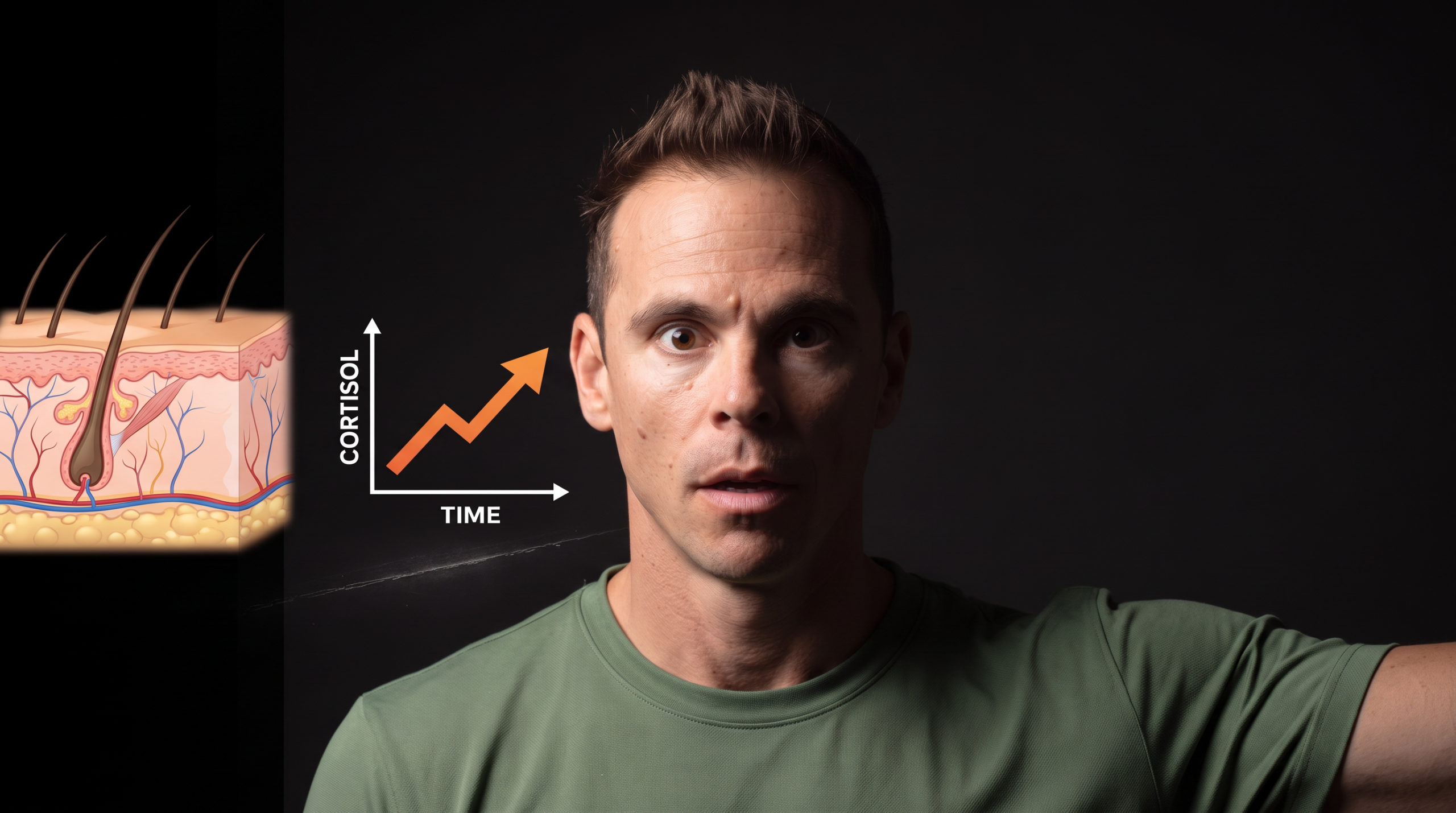
It’s a biochemical cascade that reshapes your body, deposits visceral fat, and leaves you wired yet exhausted at bedtime.
The good news? Specific compounds in everyday foods directly influence your hypothalamic-pituitary-adrenal (HPA) axis—the master control system for cortisol release—and emerging research shows they may help reverse chronic stress damage at its source.
Jump to:
- Fermented Foods Rewire Your Stress Response From the Gut Up
- Taurine Raises Your Stress Threshold
- Saffron Blunts Your Physiological Stress Response
- Dark Chocolate Lowers Daily Cortisol Output
- Spirulina Supports Serotonin and Sleep
- Grounding: The Free Stress Hack That Actually Works
- The Mistake That Sabotaged My Cortisol for Years
- Putting It All Together
Fermented Foods Rewire Your Stress Response From the Gut Up
Fermented foods like kimchi, sauerkraut, kefir, and even salsa contain live bacteria that produce neurotransmitters directly in your gut. This isn’t folklore—it’s biochemistry.
A study published in Molecular Psychiatry gave participants two to three servings of fermented foods daily and measured their stress levels, sleep quality, and metabolic markers. Perceived stress dropped 32% in those eating fermented foods, compared to just 17% in the control group. Researchers also documented shifts in roughly 40 microbial species and changes in urinary tryptophan metabolites—the building blocks of serotonin.
Your microbiome isn’t just digesting food. It’s manufacturing mood-regulating compounds like GABA, serotonin precursors, and dopamine modulators.
Certain strains found in kimchi and sauerkraut—Lactobacillus and Bifidobacterium—have been shown to produce GABA directly. Higher GABA levels increase vagal tone, which dampens HPA axis reactivity. Translation: you’re calmer by default.
These microbes also shift tryptophan metabolism away from the kynurenine pathway, which generates neurotoxic metabolites, and toward serotonin synthesis instead. Your gut bacteria are literally deciding whether you feel anxious or composed.
Fermented foods attack stress from three angles: neurotransmitter production, inflammation reduction, and vagal nerve signaling.
Practical Takeaway
Add yogurt, kefir, kimchi, sauerkraut, fermented salsa, or pickled vegetables to your daily routine. Even pickled asparagus and pickled beets count—they’re fermented and deliver similar benefits.
Taurine Raises Your Stress Threshold
Taurine isn’t just an energy-drink ingredient. It’s a potent nervous system regulator that modulates GABA and glycine receptors, helping your brain receive calming signals more effectively.
Research published in Hormones and Behavior used zebrafish—whose HPA axis mirrors human physiology—to show that taurine prevented anxiety-like behaviors by reducing cortisol response to stress. Human studies back this up: magnetic resonance spectroscopy revealed significantly lower taurine levels in the hippocampus of people with depression, and these levels correlated with symptom severity.
When stress triggers glutamate release in your brain, taurine acts like a brake, increasing inhibitory tone and stabilizing neuronal membranes. It buffers intracellular calcium and prevents stress-induced depolarization—the chemical chaos that cortisol amplifies.
The hippocampus, which regulates memory, mood, and cortisol feedback, is especially vulnerable to stress. Taurine shields those neurons from damage.
How to Use It
Eat taurine-rich foods like seafood and dark poultry meat, or supplement with 2 to 4 grams daily. Taurine also improves exercise performance and time to exhaustion.
Saffron Blunts Your Physiological Stress Response
Saffron contains bioactive compounds—crocin, crocetin, and safranal—that regulate neurotransmitters and lower inflammation.
A randomized controlled trial in Frontiers in Nutrition gave 56 adults 30 milligrams of saffron daily for eight weeks. Depression scores dropped, social functioning improved, and heart rate variability during stress exposure increased—meaning participants recovered faster physically from stressors.
Saffron increases synaptic availability of serotonin and dopamine, giving your brain more of these critical neurotransmitters to work with. It also lowers oxidative stress and inflammation.
Even more remarkable: research in the Journal of Affective Disorders found saffron boosts brain-derived neurotrophic factor (BDNF) in the hippocampus. BDNF is like fertilizer for neurons—it helps your brain grow, learn, and become more resilient to future stressors.
Practical Use
Add saffron spice to cooking or take a standardized supplement (around 30 mg daily). It’s also been shown to improve sleep quality.
Dark Chocolate Lowers Daily Cortisol Output
High-polyphenol dark chocolate does more than satisfy cravings—it modulates cortisol metabolism.
One study gave participants 25 grams of dark chocolate daily (roughly 500 mg of flavonoids) for a month. Results showed lower daily cortisol, reduced morning cortisol, and an improved cortisol-to-cortisone ratio.
Cortisone is inactive cortisol. An enzyme converts cortisone back into active cortisol inside tissues. Flavonoids in chocolate inhibit that enzyme, meaning less active cortisol circulating in your brain and fat tissue.
Flavonoids also boost nitric oxide, increasing cerebral blood flow and elevating BDNF—the same growth factor saffron enhances.
Small amounts of high-polyphenol dark chocolate can reduce baseline HPA activation, giving you a calmer stress baseline. What rocks you is what affects you—so starting from a lower baseline matters.
A Word of Caution
Some dark chocolates contain elevated cadmium levels, a heavy metal that accumulates in tissues. Choose brands tested for low cadmium, and consider regular sauna use—sweating is one of the most effective ways to excrete cadmium.
Spirulina Supports Serotonin and Sleep
Spirulina, a blue-green algae, contains phycocyanins that reduce inflammation at a foundational level. It’s also rich in tryptophan, supporting serotonin production—which converts to melatonin for sleep.
A randomized, double-blind trial gave people with depression 2 grams of spirulina daily for two months. Sleep quality improved, stress scores decreased, and depression test results showed significant improvement.
Spirulina works on two fronts: boosting mood via serotonin and enhancing sleep via melatonin, both through the same metabolic pathway.
Grounding: The Free Stress Hack That Actually Works
Direct skin contact with Earth changes your body’s electrical potential and reduces sympathetic nervous system activation. Yes, it sounds fringe. But the sleep and mood improvements are real.
I dismissed it for years, but the sleep changes were very, very real and I did some detailed videos on this. I’m a believer.
Just 10 to 15 minutes barefoot on grass can shift your physiology. If you live in a city, concrete works better than asphalt because limestone conducts charge. Asphalt does not.
The Mistake That Sabotaged My Cortisol for Years
For years, chronic fasting and severe calorie restriction kept cortisol elevated—even when everything else was dialed in.
I thought that the leaner that I would get, the healthier I would be. But what happens is when you severely restrict calories for long periods of time, you activate cortisol.
Prolonged calorie restriction reduces sodium and potassium availability, impairing the sodium-potassium pump that neurons rely on for stable electrical firing—especially during sleep. Your brain stays hyperexcitable, waking you at 2 or 3 a.m. as cortisol rises to compensate.
This is common in fitness culture, where staying lean year-round becomes the goal. But chronic under-eating creates a stressed physiological state driven by neurochemical and mineral imbalances, not just hunger.
The Fix
Fast two or three days per week, but eat enough on non-fasting days. Focus on weekly calorie balance rather than daily restriction. Aim for roughly maintenance calories or a slight deficit over a rolling seven-day period, not chronic deprivation.
Less energy means a struggling sodium-potassium pump. That disrupts sleep, mood, and stress resilience—no matter how many supplements you take.
Putting It All Together
Reversing cortisol damage isn’t about willpower or relaxation apps. It’s about biochemistry.
- Fermented foods rewire your gut-brain axis
- Taurine raises your stress threshold
- Saffron blunts physiological stress and boosts brain growth
- Dark chocolate lowers baseline cortisol
- Spirulina supports serotonin and sleep
- Grounding shifts electrical charge and calms the nervous system
- Avoiding chronic calorie restriction prevents mineral imbalances that spike cortisol
Stress is largely a cortisol signaling problem. These foods and practices target the signaling directly—through neurotransmitters, inflammation pathways, and the HPA axis itself.
You’re not just managing stress. You’re changing how your body produces and responds to it.