After two decades competing at elite levels—national team cycling, Hyrox Elite 15—one athlete discovered that less can actually be more when life demands balance.
His secret? Just five training principles.
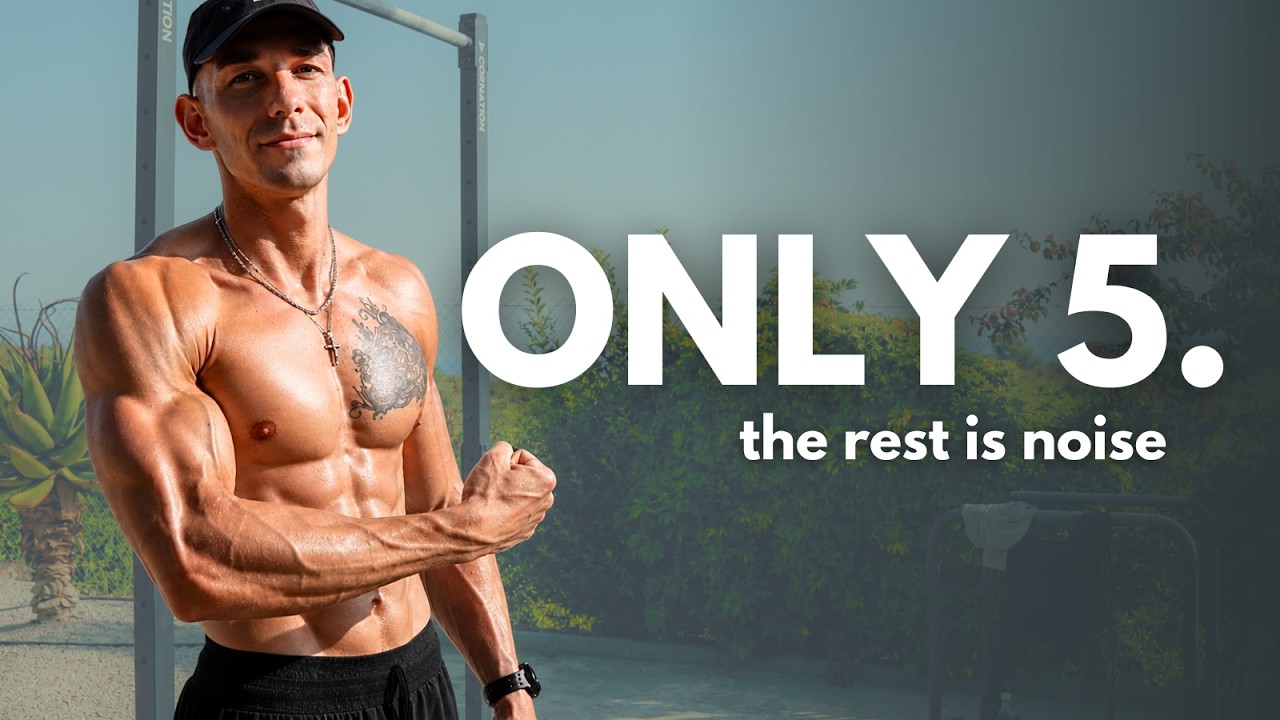
But here’s what makes this approach different: it’s built for men who can’t live in the gym anymore, yet refuse to let fitness slip away.
When career demands, family time, and life responsibilities compress training time, most athletes watch their conditioning fade—but this former elite competitor stripped away everything nonessential and kept only what actually works.
Jump to:
From 20-Hour Weeks to Reality-Based Training
The transition away from elite competition forced a complete recalibration of what matters in fitness.
For 20 years, I trained at the highest level. National team cycling, Hyrox Elite 15. I tested every method, every program, and every approach. And then I stepped away from elite sports. I started a second company. I started spending more time with my family. And I couldn’t train 20 plus hours a week anymore. And honestly, I didn’t want to.
That constraint became liberation. Stripping back revealed five core elements that maintain strength, leanness, and athleticism well into the 30s and beyond—without requiring gym residency.

If you want something simple that actually works, this is one of the most effective tools I’ve used to build strength, conditioning, and endurance without needing a full gym setup.
- Full-body training with one weight using swings, squats, and presses
- Solid cast iron build that feels stable and lasts for years
- Comfortable grip that makes high-rep workouts easier to handle
The Five Essential Training Elements
Simple Strength Training Forms Your Foundation
Pull-ups, dips, push-ups, squats. Fundamental movements performed two to three times weekly minimum.
Progressive overload remains key—getting stronger over time drives results. These compound exercises covering full-body movement patterns create something machines cannot replicate: complete tension distribution across multiple muscle groups simultaneously.
The philosophy differs from traditional bodybuilding. While heavy weights build impressive numbers, tension on muscle tissue actually builds muscle mass. More importantly, these exercises build capability—functional strength that transfers to real-world demands.
Isolation work like curls? Largely unnecessary when time is precious and compound movements deliver superior returns.
Heavy Weighted Carries Build What Age Destroys First
Pick something heavy. Walk with it. Deceptively simple, profoundly effective.
Heavy carries builds that kind of strength and endurance that actually matters. Now, they build your posture, your core, and your grip, the things that fail first when you get older. No machine trains these things at the same time like a heavy carry does.
Loaded carries simultaneously challenge grip strength, postural muscles, core stability, and muscular endurance. This combination creates the isometric strength and endurance required for daily life—eliminating need for separate isometric training protocols.
If you want something simple that actually works, this is one of the most effective tools I’ve used to build strength, conditioning, and endurance without needing a full gym setup.
- Full-body training with one weight using swings, squats, and presses
- Solid cast iron build that feels stable and lasts for years
- Comfortable grip that makes high-rep workouts easier to handle
Weighted Rotations Address Training’s Biggest Blind Spot
Modern training lives in a single plane: forward, backward, up, down.
Then backs give out at 45, seemingly without warning. The reason? Bodies never learned to move under load the way life actually demands.
I don’t understand why barely someone is training heavy rotations. Now, everyone is training and living in one plane, forwards, backwards, up and down. And then they hit 45 and their back gives out. And that’s because they never trained their body in a way to move under loads the way life actually demands.
Weighted rotations with kettlebells or other implements correct what years of conventional training ignore: rotational strength and stability under load.
Strategic Endurance Work Amplifies Everything Else
Running, swimming, cycling, weighted walking, burpees—accessibility determines selection.
Low-intensity zone two work for 30-60 minutes once or twice weekly builds aerobic base. Add high-intensity conditioning finishers after strength sessions occasionally.
Benefits extend beyond cardiovascular health. Strong aerobic systems accelerate recovery between sets, between sessions, between training weeks, and across mesocycles.
If you want something simple that actually works, this is one of the most effective tools I’ve used to build strength, conditioning, and endurance without needing a full gym setup.
- Full-body training with one weight using swings, squats, and presses
- Solid cast iron build that feels stable and lasts for years
- Comfortable grip that makes high-rep workouts easier to handle
A strong aerobic base means you recover faster between your sets, between weeks, and between months and training cycles. And without a strong heart, lungs, your longevity and your life suffers.
Plyometrics Preserve Nervous System Speed
Jumps, bounds, explosive movements maintain what sedentary aging destroys: nervous system responsiveness.
Neural pathways slow with disuse, not merely with age. Explosive training keeps systems sharp, preserving athletic movement quality into the 40s, 50s, and beyond.
Without plyometric work, bodies become stiff, movement becomes labored, and athletic identity fades prematurely.
The Critical Implementation Strategy
Here’s where most approaches fail: attempting all five elements simultaneously every single week creates complexity, burnout, and eventually abandonment.
Strength and endurance form weekly staples—non-negotiable, consistent foundations.
The remaining three elements—carries, rotations, plyometrics—cycle through four-week focused blocks:
If you want something simple that actually works, this is one of the most effective tools I’ve used to build strength, conditioning, and endurance without needing a full gym setup.
- Full-body training with one weight using swings, squats, and presses
- Solid cast iron build that feels stable and lasts for years
- Comfortable grip that makes high-rep workouts easier to handle
- Block One: Emphasis on heavy carries
- Block Two: Focus shifts to weighted rotations
- Block Three: Plyometric development takes priority
So, across a quarter of the year, you train all of them. And across a year, you get exceptionally good at all three of them without burning out or making training too complicated.
This rotation ensures comprehensive development without overwhelming weekly schedules. Each quality receives dedicated attention in focused blocks, allowing meaningful progression rather than surface-level maintenance across too many simultaneous priorities.
Simplicity Wins Long-Term
Five core elements. Simple rotation protocol. Zero overthinking required.
For men balancing careers, families, and limited training windows, this system delivers what complex programs promise but rarely provide: sustainable progress that fits into life rather than consuming it.
Elite-level experience distilled into practical application proves that stepping away from full-time athletics doesn’t mean abandoning athletic capacity. Sometimes constraints reveal what truly matters—and eliminating everything else creates space for what actually works.