A recent UC Davis study has exposed a troubling reality in the avocado oil industry—one that’s costing consumers money and potentially their health.
Dr. Jay, a lipid research expert, recently broke down the shocking findings that reveal widespread fraud in products claiming to contain avocado oil.
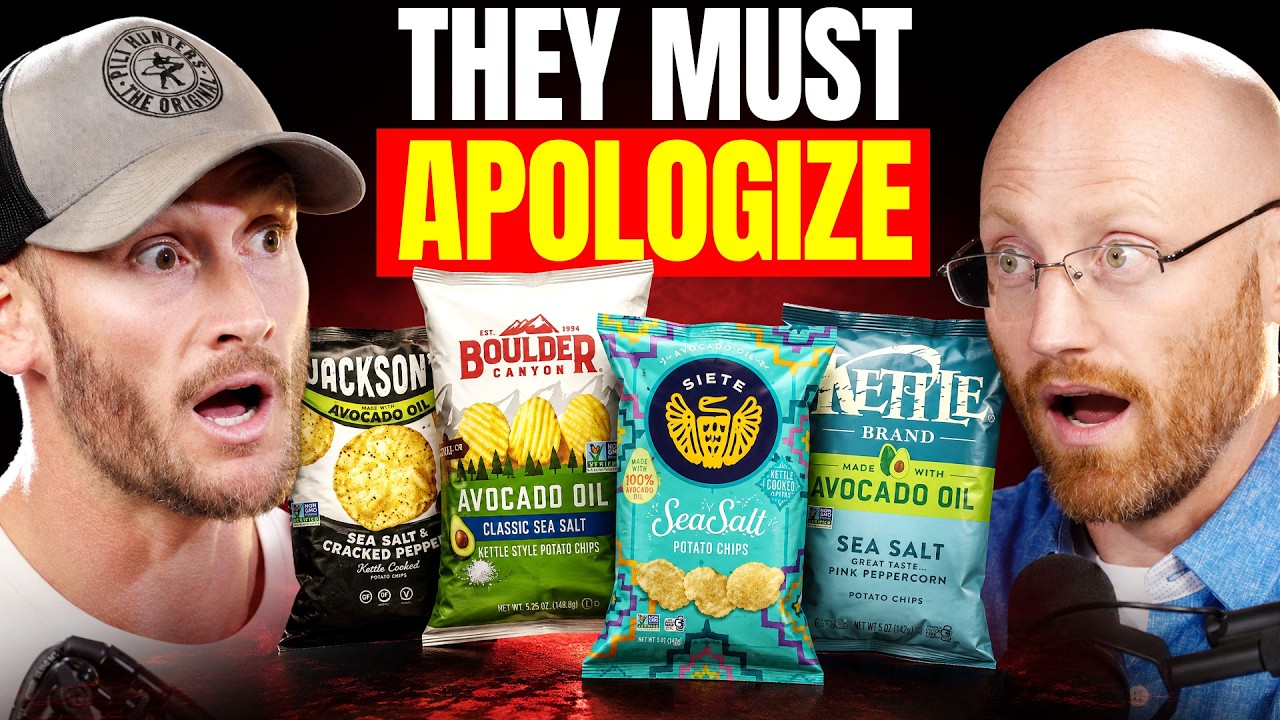
Out of 54 avocado oil-based products tested, 48 were found to be adulterated with cheaper seed oils.
This isn’t a minor contamination issue—some products contained zero avocado oil despite their labels.
Jump to:
- The Science Behind the Scandal
- More Than Just a Little Cheating
- Understanding Plant Sterols: The Smoking Gun
- Addressing Common Criticisms
- The Olive Oil Comparison
- Corporate Consolidation and Quality Decline
- Why Companies Get Away With It
- Real-World Impact on Consumers
- The Molecular Difference Matters
- What Consumers Can Do
- The Legal Question
- Moving Forward
The Science Behind the Scandal
UC Davis researchers employed gas chromatography to analyze the molecular fingerprints of oils in various products, including mayonnaise, chips, and salad dressings. Dr. Jay explained the sophisticated process using an accessible analogy.
It’s like a fingerprint, right? Or maybe like a better analogy would be an animal track or something. So like if you’re good at tracking animals, you look down, you see a deer track and then you look down, you see a wolf track or something. It’s very obvious.
Gas chromatography fires fats through miles of thin copper tubing. Different oils emerge at different times, creating unique molecular signatures that are impossible to fake.

If you want something simple that actually works, this is one of the most effective tools I’ve used to build strength, conditioning, and endurance without needing a full gym setup.
- Full-body training with one weight using swings, squats, and presses
- Solid cast iron build that feels stable and lasts for years
- Comfortable grip that makes high-rep workouts easier to handle
Researchers identified two critical markers: fatty acid profiles and plant sterols. Both tests independently pointed toward seed oil contamination in products labeled as pure avocado oil.
More Than Just a Little Cheating
The adulteration wasn’t minimal. Study parameters required more than 10% variance before flagging a product as contaminated.
One particularly egregious example tested as 100% soybean oil despite being sold as avocado oil. Dr. Jay suspects many products contained 80-90% seed oils rather than the advertised avocado oil.
They’re finding that basically these companies were cheating and adulterating their products with seed oils because it’s cheaper presumably.
Popular brands like Boulder Canyon, which charges premium prices for chips “fried in avocado oil,” were among the offenders. Consumer frustration intensified when companies responded with boilerplate denials rather than transparency.
Understanding Plant Sterols: The Smoking Gun
While fatty acid testing provided valuable data, plant sterols offered irrefutable evidence of fraud. Dr. Jay clarified this complex topic with scientific precision.
Humans have cholesterol. Plants have structurally similar molecules called phytosterols or cytosterols.
If you want something simple that actually works, this is one of the most effective tools I’ve used to build strength, conditioning, and endurance without needing a full gym setup.
- Full-body training with one weight using swings, squats, and presses
- Solid cast iron build that feels stable and lasts for years
- Comfortable grip that makes high-rep workouts easier to handle
Different plants produce distinct phytosterols—betasitosterol, campesterol, and others. These molecules serve as botanical fingerprints that reveal a product’s true origins.
Soybeans, because they’re seeds, they’re going to have widely diverse types of plant cholesterol compared to avocados, for example, or olives.
Avocado and olive oils come from fruit pulp, extracted through simple pressing. Seed oils require intensive chemical processing and high heat to extract oil from materials not naturally oil-rich.
This fundamental difference extends beyond extraction methods. When UC Davis analyzed phytosterol profiles, avocado-specific markers decreased while soybean markers increased—a pattern consistent with deliberate adulteration.
Addressing Common Criticisms
Critics attempted to discredit the study by claiming outdated databases or flawed methodology. Dr. Jay systematically dismantled these arguments.
Some suggested that different avocado varieties might account for the discrepancies. This theory doesn’t withstand scientific scrutiny.
Avocado varieties share fundamental molecular characteristics. Whether grown in 1961 or 2026, avocados produce consistent phytosterol profiles and fatty acid compositions.
If you want something simple that actually works, this is one of the most effective tools I’ve used to build strength, conditioning, and endurance without needing a full gym setup.
- Full-body training with one weight using swings, squats, and presses
- Solid cast iron build that feels stable and lasts for years
- Comfortable grip that makes high-rep workouts easier to handle
Researchers even tested whether high-heat processing during chip manufacturing could alter avocado oil’s molecular signature. They heated confirmed pure avocado oil to extreme temperatures, then retested it.
Result? The oil remained chemically identifiable as avocado oil.
The Olive Oil Comparison
UC Davis simultaneously tested olive oil products using identical methodology. Olive oil products overwhelmingly passed authenticity testing.
Why the stark difference? Regulation.
Olive oil faces established regulatory oversight and quality standards. Avocado oil exists in a regulatory gray zone with minimal enforcement.
Dr. Jay pointed to lead researcher Selena Wang’s expertise and track record. Her previous work on lipid analysis has withstood scientific scrutiny.
If you want something simple that actually works, this is one of the most effective tools I’ve used to build strength, conditioning, and endurance without needing a full gym setup.
- Full-body training with one weight using swings, squats, and presses
- Solid cast iron build that feels stable and lasts for years
- Comfortable grip that makes high-rep workouts easier to handle
I think if there was some database problem, she would have pointed it out in the study. These authors were very honest and they had integrity.
Corporate Consolidation and Quality Decline
Dr. Jay noticed a troubling pattern when investigating affected brands. Many started as small, family-owned companies committed to quality.
Large corporations subsequently acquired these brands—companies like Hershey and UTZ. Following acquisition, product quality frequently deteriorated.
Dr. Jay shared personal experience with Primal Kitchen products, originally owned by Mark Sisson.
He used to send me the avocado mayo and it wouldn’t separate. It was in glass jars. Now I’ve bought it in the past and it’s all separated and weird and it looks different. So I know there’s something different.
Why Companies Get Away With It
According to Dr. Jay, the motivation is straightforward: profit maximization through cost-cutting.
Seed oils cost significantly less than avocado oil. Blending cheap soybean oil with minimal avocado oil—or eliminating avocado oil entirely—dramatically increases margins.
Limited supplier networks compound the problem. Similar to the cadmium and lead contamination found in chocolate products, avocado oil may flow through just a few suppliers serving the entire industry.
If you want something simple that actually works, this is one of the most effective tools I’ve used to build strength, conditioning, and endurance without needing a full gym setup.
- Full-body training with one weight using swings, squats, and presses
- Solid cast iron build that feels stable and lasts for years
- Comfortable grip that makes high-rep workouts easier to handle
If contamination or fraud occurs at the supply level, it propagates throughout every downstream product.
Real-World Impact on Consumers
This isn’t merely academic concern. Families pay premium prices—sometimes $10 per bag—for chips fried in avocado oil, believing they’re making healthier choices.
Parents sacrifice budget flexibility to purchase what they believe are quality products for their children. Instead, they’re unknowingly feeding their families the exact seed oils they’re trying to avoid.
Recent market responses suggest consumers are taking notice. Major retailers have placed avocado oil products on clearance—75% discounts observed at multiple locations. Costco reportedly pulled numerous products from shelves.
The Molecular Difference Matters
Understanding why substitution matters requires basic biochemistry knowledge. Fatty acids consist of a carboxyl group (the “cap”) attached to a carbon chain (the “tail”).
Chain length and structure vary dramatically between oil sources. Short-chain fatty acids, medium-chain triglycerides (MCTs), and long-chain fatty acids each produce different metabolic effects.
If you want something simple that actually works, this is one of the most effective tools I’ve used to build strength, conditioning, and endurance without needing a full gym setup.
- Full-body training with one weight using swings, squats, and presses
- Solid cast iron build that feels stable and lasts for years
- Comfortable grip that makes high-rep workouts easier to handle
Avocado oil contains primarily oleic acid, a monounsaturated fat with one “kink” in its molecular structure. This configuration provides heat stability while offering cardiovascular benefits.
Seed oils contain higher proportions of polyunsaturated fats with multiple kinks. These structures become unstable under heat, producing oxidized compounds linked to inflammation.
Phytosterols add another layer of complexity. These large molecules contain multiple benzene rings and sometimes have fatty acids attached. Different plants produce unique phytosterol profiles that function like botanical DNA.
What Consumers Can Do
Consumer awareness drives corporate accountability. Historical precedent demonstrates this power.
When food blogger Vani Hari exposed azodicarbonamide (a yoga mat chemical) in Subway bread, public pressure forced reformulation. Similar grassroots pressure can address avocado oil fraud.
Demand third-party testing results. Companies claiming purity should willingly provide recent, batch-specific laboratory verification.
If you want something simple that actually works, this is one of the most effective tools I’ve used to build strength, conditioning, and endurance without needing a full gym setup.
- Full-body training with one weight using swings, squats, and presses
- Solid cast iron build that feels stable and lasts for years
- Comfortable grip that makes high-rep workouts easier to handle
Generic claims of “quality control” mean nothing without transparent documentation. Consumers deserve to see actual test results, not marketing assurances.
Consider purchasing whole avocados and making small batches of fresh products at home when feasible. While not practical for all applications, this approach guarantees authenticity.
Support brands that proactively publish third-party test results and maintain transparent supply chains. Vote with purchasing power by rewarding honest companies and boycotting fraudulent ones.
The Legal Question
Many wonder why companies face no legal consequences for mislabeling products. The answer involves complex supply chain dynamics and regulatory gaps.
Companies may claim ignorance, asserting they didn’t know suppliers provided adulterated oil. Without explicit regulation requiring verification testing, enforcement becomes challenging.
Dr. Jay emphasized the ethical dimension beyond legality.
If you want something simple that actually works, this is one of the most effective tools I’ve used to build strength, conditioning, and endurance without needing a full gym setup.
- Full-body training with one weight using swings, squats, and presses
- Solid cast iron build that feels stable and lasts for years
- Comfortable grip that makes high-rep workouts easier to handle
It’s pretty obvious if you’re going to say you’re using 100% avocado oil and you’re cutting it with seed oils that’s just unethical. But people are doing things if they can get away with it.
Regulatory frameworks need updating to match marketplace realities. Avocado oil deserves the same oversight mechanisms that protect olive oil integrity.
Moving Forward
This UC Davis study represents crucial first steps toward market transparency. Despite predictable industry pushback, the methodology remains sound.
Dual-testing protocols—analyzing both fatty acid profiles and phytosterol fingerprints—provide robust, cross-validated results. When independent tests drift in identical directions away from authentic avocado oil markers, coincidence becomes implausible.
Consumer vigilance combined with regulatory pressure can restore integrity to the avocado oil market. The alternative is continued exploitation of families trying to make informed health decisions.
Demand better. Question claims. Insist on transparency. Support honest producers.
Food quality shouldn’t require detective work, but until systemic changes occur, informed consumers remain the most powerful force for accountability.
If you want something simple that actually works, this is one of the most effective tools I’ve used to build strength, conditioning, and endurance without needing a full gym setup.
- Full-body training with one weight using swings, squats, and presses
- Solid cast iron build that feels stable and lasts for years
- Comfortable grip that makes high-rep workouts easier to handle