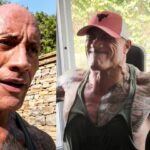
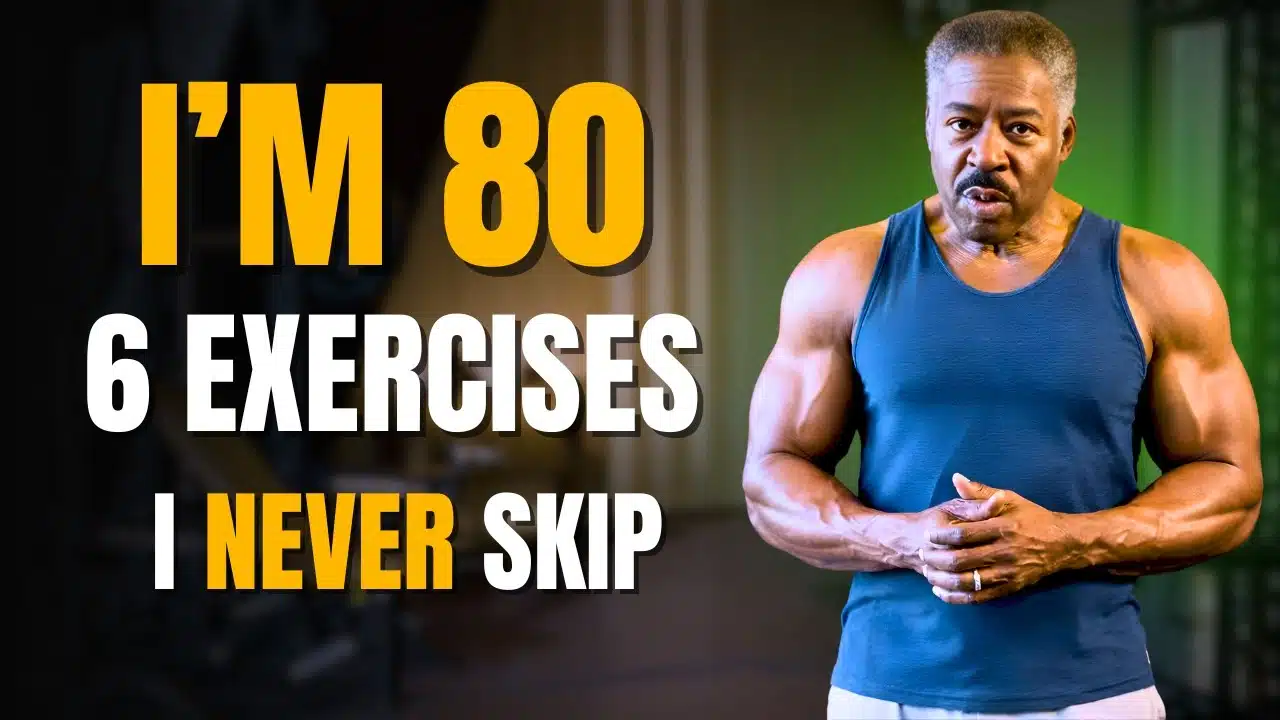
At 80 years old, actor Ernie Hudson isn’t slowing down.
Best known for his roles in Ghostbusters and countless Hollywood films, Hudson maintains the physique and vitality of someone half his age—with clear skin, defined muscles, and impressive functional strength.
But he’s not chasing marathons or extreme fitness trends.
Instead, Hudson focuses on something far more valuable: maintaining strength, flexibility, and independence through six foundational exercises that anyone over 60 can do.
Jump to:
Listen to Your Body First
Hudson’s fitness philosophy starts with awareness, not aggression.
You have to tune into your body and you have to pay attention. The body will tell you what it needs.
This mindset guides his entire training approach. Working alongside his trainer son Ernest, Hudson prioritizes mobility, muscle preservation, and injury prevention over aesthetic goals or heavy lifting records.
The result? A sustainable routine that keeps him strong, flexible, and capable well into his ninth decade.
Exercise One: Squat to Plank Transitions
Hudson begins every session with a dynamic warm-up that targets critical mobility patterns.
This movement isn’t about building muscle immediately—it’s about waking up joints, increasing blood flow, and preparing the body for work ahead.
You want to be at least flexible so you’re not stumbling and falling down, which is the number one hazard, falling and breaking something.
Falls represent one of the greatest dangers for older adults. This exercise addresses that risk by improving hip, knee, and ankle coordination while mimicking everyday movements like sitting and standing.
How to Perform It
- Begin standing upright
- Lower into a squat position
- Place hands on a bench or sturdy chair
- Walk one leg out sideways, then the other, into a plank
- Hold briefly with body straight
- Walk legs back in, return to squat, then stand
- Complete 10 repetitions
Form Considerations
Maintain a straight back throughout the plank position. Don’t allow hips to sag or pike upward.
Use support without hesitation—there’s no shame in modifying movements. If knees feel sensitive, reduce squat depth and move slowly.
Good. As you feel comfortable, you can speed it up.
Control and comfort matter more than speed or depth.
Exercise Two: Push-Ups
Once warmed up, Hudson activates his upper body with classic push-ups.
Now, just to get the blood going, do a few push-ups.
Chest muscles serve critical functional purposes beyond appearance. They enable everyday actions: pushing doors open, rising from chairs, maneuvering shopping carts.
Execution Steps
- Assume plank position with hands slightly wider than shoulders
- Lower body until chest nearly touches ground
- Push back up to starting position
- Perform 8-10 repetitions
Modification Options
Full push-ups aren’t mandatory. Wall push-ups, knee push-ups, or bench-supported variations all provide benefits.
Higher hand placement reduces difficulty. Keep elbows close to your torso rather than flared outward, and maintain spinal alignment throughout.
We’re doing an upper body workout. We want the chest and arms to be warmed up.
Exercise Three: Seated Row
Hudson transitions to the rowing machine to target back muscles, specifically those between shoulder blades.
Aging commonly causes shoulders to round forward—not from weakness, but from neglecting back strength.
This strengthening the back here allows you to kind of keep it back.
Strong back muscles equal better posture, which translates to improved confidence and respiratory function.
Proper Technique
- Sit at rowing machine and grip handles
- Pull handles toward chest
- Squeeze shoulder blades together during the pull
- Hold briefly, then release with control
- Complete 10-12 repetitions
The shoulder blade squeeze matters most—this engages upper back muscles rather than relying solely on arm strength. Maintain upright posture without excessive backward lean, and control resistance during both pulling and releasing phases.
Reduce weight if the machine feels overwhelming. Quality repetitions trump heavy loads.
Exercise Four: Chest Press
Do the chest press cuz chest is important.
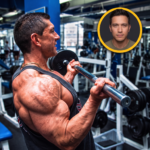
Hudson considers this movement a heavy hitter for maintaining upper body strength and muscle definition.
Muscle atrophy represents a genuine threat as we age. Without regular stimulation, muscle tissue breaks down naturally.
When we get older, muscles begin to keep their chest. I don’t want to say atrophy, but we have to stimulate muscles to keep them, you know, keep them active.
Resistance training signals your body to preserve muscle mass. It’s preventive medicine in exercise form.
Movement Pattern
- Sit or lie on chest press machine
- Grip handles at chest height
- Push weight away until arms nearly straighten
- Control return to chest level
- Perform 8-12 repetitions
Weight selection matters enormously. Choose resistance allowing approximately 12 repetitions with proper form.
Struggling through three reps? Too heavy. Breezing through 20? Too light.
Avoid locking elbows completely at extension—maintain slight bend. Eliminate jerky movements, and reduce weight or range of motion if shoulder discomfort appears.
I’ve always been aware of how important muscle and muscle definition is.
Muscle represents the foundation of healthy aging.
Exercise Five: Bicep Curls
Hudson performs seated dumbbell curls to build arm strength—and independence.
Strong arms enable carrying groceries, recovering from falls, and projecting capability.
I don’t believe that. But I did hear it somewhere and I took it seriously. So it’s very important for me to present strong arms. Not as like that, but strong enough so you appear that you can at least defend yourself.
Execution Guidelines
- Hold dumbbells with arms at sides
- Curl weights toward shoulders
- Keep elbows stationary against torso
- Lower with control
- Complete 10-12 repetitions
Avoid swinging weights—if momentum takes over, reduce resistance. Maintain upright posture even while seated.
Beginning with 5-8 pound dumbbells isn’t weakness; it’s wisdom. Consistency beats intensity every single time.
Exercise Six: Tricep Pulldowns
The final movement targets triceps using cable resistance.
Often overlooked, triceps comprise roughly two-thirds of arm strength. Functional arms require developed triceps.
Performance Details
- Stand at cable machine with rope attachment at chest height
- Grip rope with both hands
- Push downward until arms straighten
- Control upward return
- Execute 10-12 repetitions
Keep elbows pinned at sides without flaring. Movement should flow smoothly and deliberately.
If cable pulls you off balance, decrease weight. Core stability influences this exercise significantly, so maintain upright posture without leaning into equipment.
The Complete Upper Body Strategy
These six exercises comprehensively address chest, back, shoulders, and arms in one efficient session.
Hudson and his trainer maximize both time and effort by targeting multiple muscle groups systematically.
Implementation Plan
- Start with manageable weight—pride has no place in injury prevention
- Prioritize form over ego—perfect repetitions build lasting strength
- Perform this routine 2-3 times weekly—consistency creates results
- Progress gradually—small improvements compound over time
At 80, Ernie Hudson proves that age doesn’t dictate capability. Strategic exercise choices, body awareness, and consistent effort maintain strength and independence regardless of birthday count.
It’s never too late to start taking care of yourself.