A new study drops and suddenly everyone’s changing their entire training program.
Sound familiar?
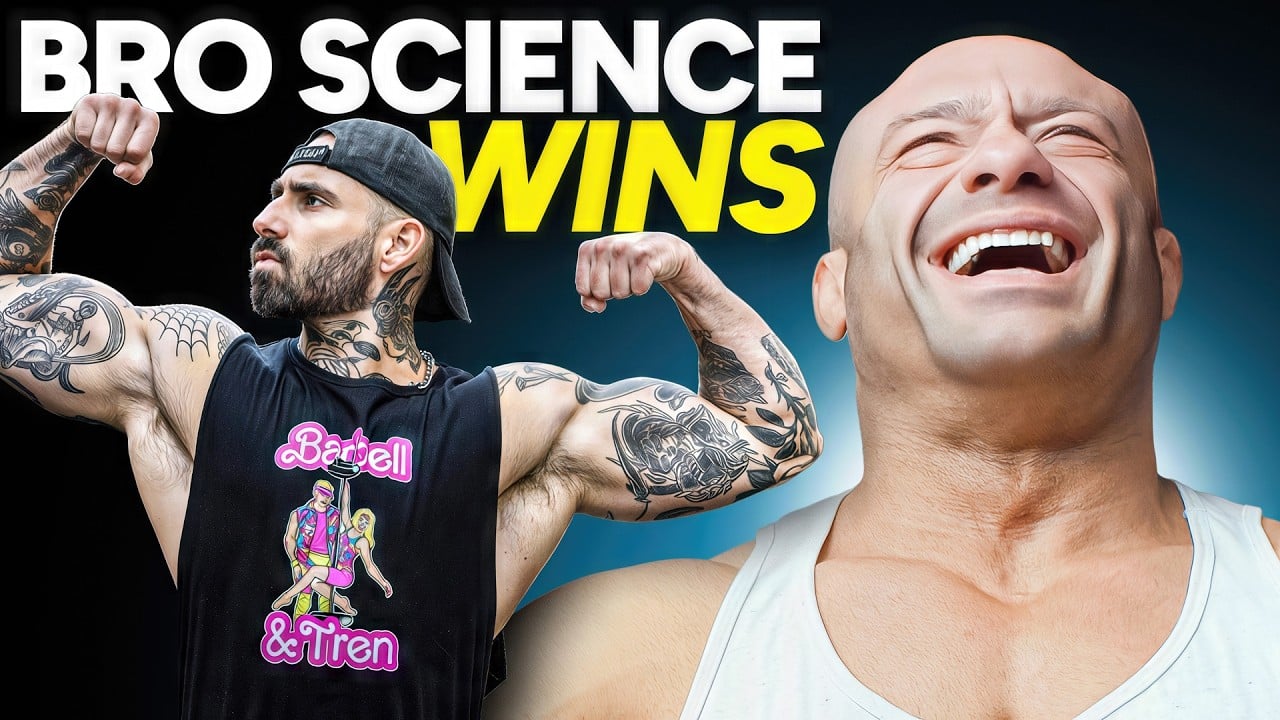
Dr. Mike Israetel, former professor of exercise and sport science and co-founder of Renaissance Periodization, recently tackled this exact phenomenon while reviewing content from fitness comedy legend Dom Mazzetti.
What he revealed might completely change how you think about “science-based” training—and why chasing every new study could actually be holding you back.
Jump to:
The Problem With Hashtag Science-Based Training
There’s a massive difference between being truly science-based and what Israetel calls “hashtag science-based.”
The latter involves frantically adjusting your workouts every time a new research paper hits your feed. This approach is fundamentally flawed.

If you want something simple that actually works, this is one of the most effective tools I’ve used to build strength, conditioning, and endurance without needing a full gym setup.
- Full-body training with one weight using swings, squats, and presses
- Solid cast iron build that feels stable and lasts for years
- Comfortable grip that makes high-rep workouts easier to handle
One study at a time says almost nothing. All the studies together and physiological anatomical rationale that we’ve known for like a hundred years and how it works in the real world on yourself, for other people, for their coaches, so on and so forth. That whole thing is evidence-based training and it’s super valid.
Israetel emphasizes that single studies are just data points, not definitive answers. Real evidence-based training requires context, replication, and practical application.
What Real Science-Based Training Actually Looks Like
According to Israetel, authentic science-based training isn’t about reading PubMed abstracts and immediately overhauling your routine.
Instead, it’s a comprehensive integration of multiple evidence sources.
The Four Pillars of Evidence-Based Training
- Research studies: Not just one, but the collective body of scientific literature
- Physiological and anatomical understanding: Principles established over decades of scientific inquiry
- Personal experience: How your own body responds to different training stimuli
- Coaching wisdom: Practical insights from experienced trainers and successful athletes
When a new study emerges, the proper response isn’t immediate implementation. It’s measured consideration.
If a new study comes out, you pretty much never go, ‘Oh, that’s what I’m doing.’ You go, interesting. Let’s see if a few more studies can replicate the study and then I’ll change my training on the margins to reflect this new discovery of reality.
Why Constantly Changing Your Training Backfires
Program hopping based on individual studies creates several problems that undermine progress.
First, you never give any single approach enough time to work. Muscle growth and strength gains require consistent application over weeks and months, not days.
If you want something simple that actually works, this is one of the most effective tools I’ve used to build strength, conditioning, and endurance without needing a full gym setup.
- Full-body training with one weight using swings, squats, and presses
- Solid cast iron build that feels stable and lasts for years
- Comfortable grip that makes high-rep workouts easier to handle
Second, you lose the ability to evaluate what actually works for you specifically. Different individuals respond differently to training variables like volume, frequency, and exercise selection.
Third, single studies often have limitations—small sample sizes, specific populations, or methodological constraints that affect how broadly their findings apply.
The Replication Crisis
Many initial research findings don’t hold up when subsequent studies attempt to replicate them. This is true across scientific disciplines, including exercise science.
Waiting for replication studies provides much stronger evidence before making training changes. Israetel advocates for this patient, measured approach rather than reactive program modifications.
Separating Performance From Appearance
During his commentary, Israetel addressed common gym controversies like sumo deadlifts and muscle-ups.
His take? Much of the criticism around exercise variations stems from insecurity rather than science.
If you want something simple that actually works, this is one of the most effective tools I’ve used to build strength, conditioning, and endurance without needing a full gym setup.
- Full-body training with one weight using swings, squats, and presses
- Solid cast iron build that feels stable and lasts for years
- Comfortable grip that makes high-rep workouts easier to handle
Every single person that has a problem with pulling sumo is making an excuse for why someone pulled sumo more than they could pull in any style, including sumo, I might add.
The bottom line: effective training uses whatever methods work best for your goals and body, regardless of how they look or what arbitrary standards others impose.
Practical Application: How To Actually Use Research
So how should you incorporate new scientific findings into your training? Israetel suggests this framework:
- Note the finding without immediately acting on it
- Look for replication studies that confirm or refute the initial results
- Consider the physiological mechanism—does it align with established principles?
- Evaluate practical relevance—does this apply to your training level and goals?
- Test cautiously—if warranted, make small adjustments rather than complete overhauls
- Assess results over adequate time periods (typically 4-12 weeks minimum)
This measured approach prevents the whiplash of constant program changes while still allowing you to evolve your training as scientific understanding advances.
The Bigger Picture: Consistency Trumps Optimization
Perhaps the most important insight from Israetel’s commentary is this: consistency with a good program beats constant optimization of a perfect program.
Chasing marginal improvements from every new study often means abandoning proven approaches before they’ve had time to produce results.
The fundamentals of effective training—progressive overload, adequate volume, sufficient recovery, proper nutrition—haven’t changed despite thousands of research papers published annually.
If you want something simple that actually works, this is one of the most effective tools I’ve used to build strength, conditioning, and endurance without needing a full gym setup.
- Full-body training with one weight using swings, squats, and presses
- Solid cast iron build that feels stable and lasts for years
- Comfortable grip that makes high-rep workouts easier to handle
New research refines these principles around the edges. It doesn’t revolutionize them weekly.
Finding Your Balance
The goal isn’t to ignore research or blindly follow tradition. It’s to develop what Israetel calls genuine evidence-based practice—informed by science but grounded in practical reality.
If you are changing your shit every other week based on a new study, you’re hashtag science-based and not actually science-based. And there’s a huge difference.
That difference might be exactly what’s standing between you and the results you’re working toward.
Stop program hopping. Start training smart.