Ever wondered why superheroes look so extraordinarily jacked on screen, yet when you see actors shirtless in real life, their size seems far more modest?
In tight-fitting costumes made of materials like spandex, actual muscle often gets flattened or obscured. So ironically, the more shredded the actor is, the more muted their body can appear on-screen.
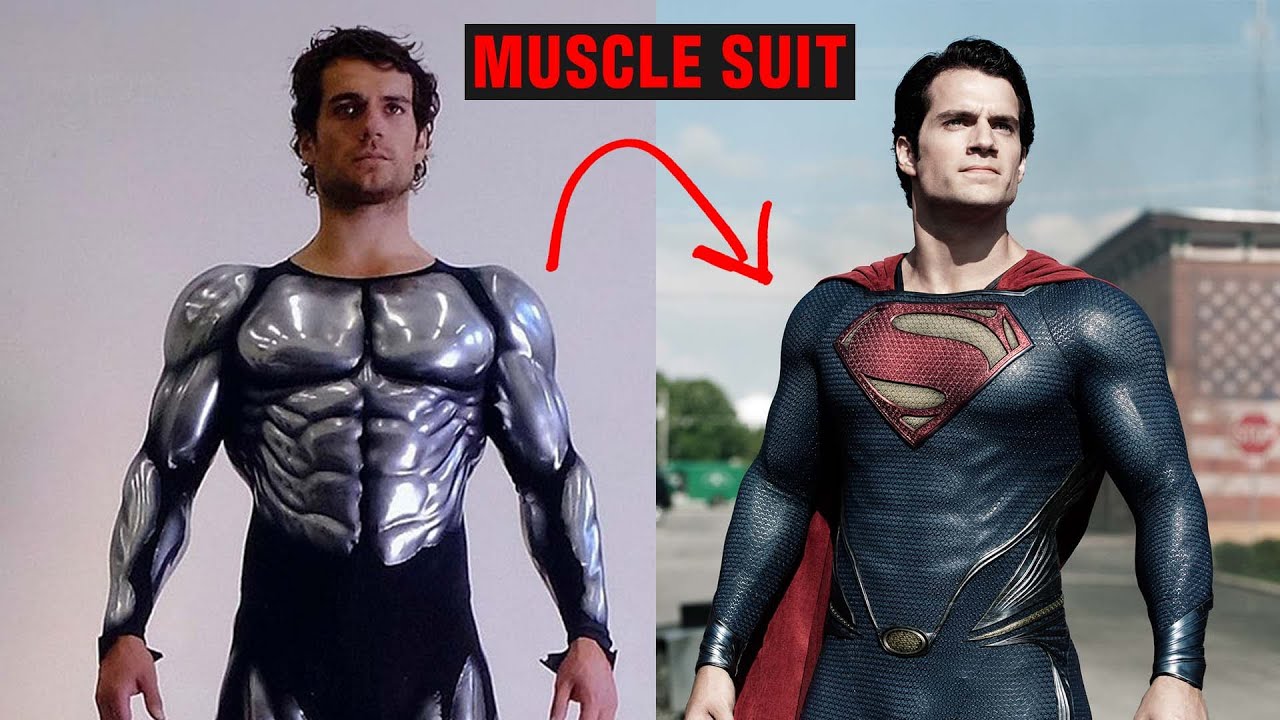
That’s why most superhero suits you see today aren’t just sleek designs — they’re full-on muscle-enhancing illusions powered by costume technology.
This article explores how superhero bodies have been “built” — not just in the gym, but with foam, rubber, latex, lighting tricks, and good old-fashioned padding, from the golden age of TV serials to the big-budget blockbusters of today.
Jump to:
- The Illusion Begins: Early Superhero Costumes
- The Spandex Era: Flattering Fit or Flattened Physique?
- The Muscle Suits Revolution: Tim Burton’s 1989 Batman
- The Post-‘90s Shift: Cut First, Build Later
- Padding Becomes the Norm
- Modern Trends and Subtle Enhancements
- Looking Ahead: The New Era of Costume Realism?
- Superhero Standards: Beyond the Screen
The Illusion Begins: Early Superhero Costumes
Superhero costumes debuted in the 1940s film serials, but they looked nothing like today’s sculpted suits.
Costumes in the 1943 Batman and 1948 Superman serials were primarily made from basic cloth material. These outfits lacked padding and often looked baggy — a stark contrast to the muscle-bound heroes of comic books.
Actor Kirk Alyn’s Superman allegedly had lifts in his boots to add height, but that was about the extent of physical enhancements.
A turning point came in the 1950s. George Reeves’ costume in the Adventures of Superman series introduced an early version of muscle enhancement with a fabric and rubber undersuit in his chest and shoulders to offer more visual definition.
The Spandex Era: Flattering Fit or Flattened Physique?
The introduction of spandex in 1958 changed superhero costumes forever.
By the 1966 Batman series starring Adam West, spandex became the go-to fabric, offering the skin-tight silhouette that echoed comic book visuals.
But it came with a downside — compression suits often flatten natural muscle contours, making even in-shape actors look less impressive. As West himself joked:
“All those other guys had muscles built in their costumes. All I had in my Batsuit was 100% Grade-A West.”
This issue carried into the 1970s with Spider-Man on TV and even to Christopher Reeve’s 1978 Superman — a role where Reeve refused any muscle padding, relying only on his own physique.
The Muscle Suits Revolution: Tim Burton’s 1989 Batman
The real game-changer? Tim Burton’s 1989 adaptation of Batman.
Michael Keaton’s costume was molded using foam rubber based on his body cast. Despite its stiffness (he couldn’t turn his head), it was the first time artificial musculature truly mimicked a comic book frame on screen.
Subsequent Batman films throughout the 1990s took this idea to extremes. Foam-rubber suits became increasingly ornate and exaggerated, looking more like sculpture than functional armor. Director Joel Schumacher leaned into this Greek statue aesthetic, stating he aimed to “accentuate the beauty of the male form.”
The Post-‘90s Shift: Cut First, Build Later
While costume tech evolved, so did fitness expectations — especially after 1999’s Fight Club.
Brad Pitt’s lean, chiseled build redefined the ideal male physique in Hollywood. At just 155 pounds, he looked incredible shirtless, but appeared wiry or even underweight in regular clothing.
This inspired a new approach for actors: prioritize fat loss and muscle definition to look better in shirtless scenes. Costume designers, in turn, added muscle padding to complete the visual illusion for full-body shots.
Actors like Tobey Maguire trained intensely for roles — Maguire reportedly worked out up to 4 hours a day for Spider-Man (2002) — but still wore muscle suits for added bulk on set.
Padding Becomes the Norm
By the early 2000s, nearly every superhero costume incorporated padding to some degree.
- 2003’s Daredevil: Ben Affleck’s leather costume had built-in padding for his chest and shoulders.
- 2005’s Batman Begins: Bale’s suit used foam-latex parts for a bulky, militaristic look.
- 2006’s Superman Returns: Brandon Routh wore a suit with subtle upper body support.
- 2011’s Captain America: The First Avenger: Even Chris Evans, who packed on considerable mass, was fitted with a full-body muscle suit.
This wasn’t about actors not being in shape. It was about translating their hard-earned physiques onto a screen where tight costumes, harsh lighting, and high resolution could flatten or distort the results.
Modern Trends and Subtle Enhancements
Costume design began catching up with audience expectations. Newer suits became high-tech blends of padding, sculpted materials, and strategic tailoring.
2016’s Deadpool originally featured muscle layers, but Ryan Reynolds was reportedly too big and those enhancements were removed. Still, the costume used thick tactical design elements to visually emphasize width and proportion.
Tom Holland’s Spider-Man suit from 2021’s No Way Home drew speculation when he claimed one actor wore a “fake posterior.” Even seemingly minor enhancements like glute padding show how carefully every angle is considered.
In Black Adam (2022), Dwayne “The Rock” Johnson was an exception — his towering, steroid-free* physique stood on its own without muscle pads. It’s one of the rare recent instances of a superhero costume reflecting a truly comparable body to the comics.
Looking Ahead: The New Era of Costume Realism?
James Gunn, director of the upcoming 2025 Superman, announced that the new costume wouldn’t showcase exaggerated fake muscles or look like a “wet T-shirt.” This suggests a move back to subtler, perhaps more body-conscious design — at least for this film.
Meanwhile, shows like The Boys parody superhero tropes with blatant muscle suits. Actor Antony Starr, who plays Homelander, revealed his intense training was unnecessary when he discovered the suit would do all the work:
“Why didn’t you just tell them to add muscles to the suit, bro?”
Superhero Standards: Beyond the Screen
For male actors, the superhero body has become a well-crafted optical illusion. Hours in the gym are still necessary, but foam, latex, and thoughtful design carry much of the visual weight.
And for viewers? It’s essential to remember that superhero physiques are works of fiction — enhanced by Hollywood magic as much as talent and sweat.
The pressure to match these figures often falls unfairly on audiences. As the narrator of the original video notes, a healthy mindset matters more:
“Just because an actor looks jacked doesn’t mean they are jacked. And just because an actor is jacked doesn’t mean they’ll look great in spandex.”
Superheroes are aspirational by design. They aren’t meant to be mirrors — they’re myths in motion.
So if you’re crushing it at the gym or just getting started, remember: you don’t need to look like Batman to be your own kind of hero.