Luca, a fat loss coach who dropped 19 kilos in 18 weeks preparing for a bodybuilding show, understands stubborn belly fat better than most.
His transformation journey began as an overweight teenager, evolving through multiple body transformations that taught him what actually works.
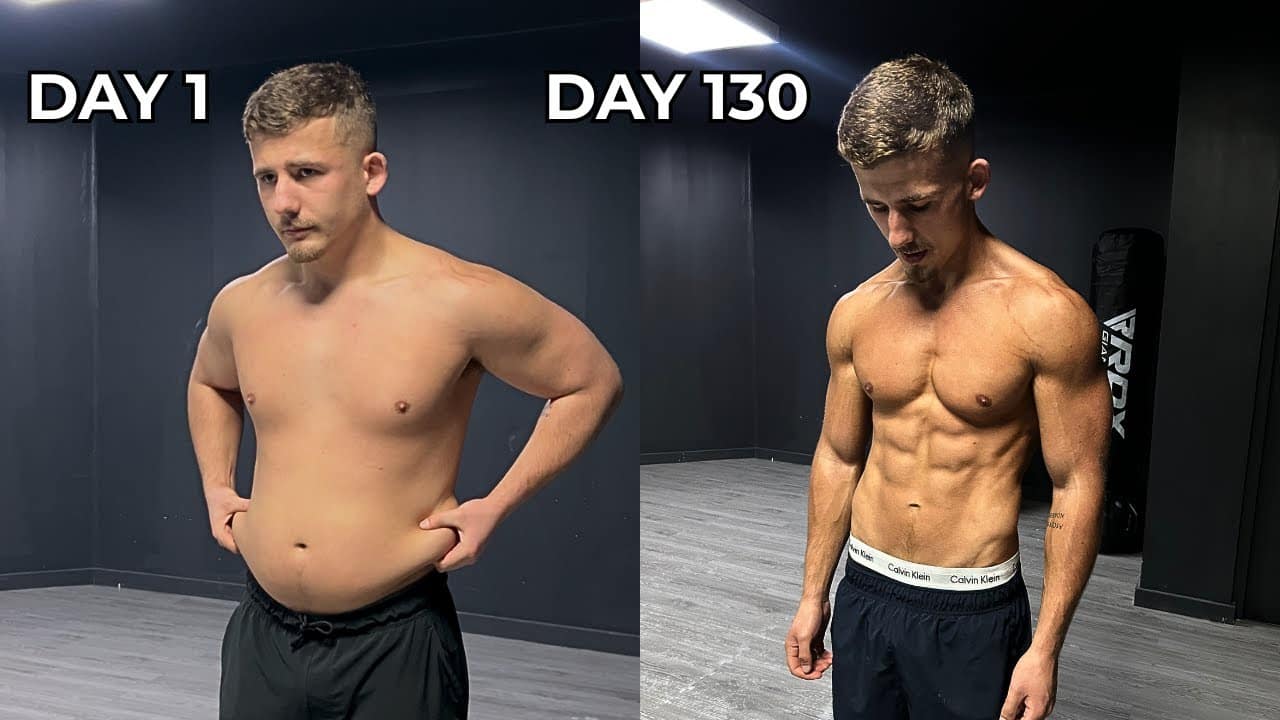
Now he’s helping dozens of men lose 10 to 20 kilos using a systematic approach that cuts through fitness industry nonsense.
Here’s his four-step framework that transforms how people think about losing belly fat—starting with a truth most trainers won’t tell you.
Jump to:
- The Spot Reduction Myth Nobody Wants to Hear
- Step One: Calculate Your Fat Loss Target With Precision
- Step Two: Establish Your Nutritional Foundation
- Step Three: Build Muscle Through Resistance Training
- Step Four: Implement Strategic Cardio and Walking
- Step Five: Prioritize Sleep for Metabolic Health
- Implementation Creates Results
The Spot Reduction Myth Nobody Wants to Hear
Belly fat doesn’t disappear where you want it to—genetics dictate the pattern.
Your belly fat will pull off from wherever it wants to depending on your genetics. So for me, it first goes from my face. I start getting a really chiseled jawline. And when I have abs, my face looks completely gaunt. I look ill.
Luca holds most fat in his lower stomach, requiring extreme dieting to achieve visible abs. Meanwhile, genetically fortunate individuals lose abdominal fat first, maintaining year-round definition without severe restriction.
Understanding this reality shifts focus from targeting belly fat to losing overall body fat systematically.
Step One: Calculate Your Fat Loss Target With Precision
Guesswork sabotages most fat loss attempts. Luca’s mathematical approach removes ambiguity.
Determine Current Body Fat Percentage
Reference a body fat percentage chart and estimate honestly—then add a few percentage points because people consistently underestimate their actual levels.
Calculate Fat Mass
Multiply body weight (kilograms) by estimated body fat percentage.
So for me at the start of my last diet I was 92 kilos times that by 28 which is 28 body fat percentage I was at roughly and that is 25.75 kilos.
Determine Lean Body Mass
Subtract fat mass from total body weight. For Luca: 92 kilos minus 25.75 equals 66.25 kilos of lean mass.
Set Realistic Target Body Fat
Choose a sustainable endpoint. Someone at 40% shouldn’t aim for 10%—that’s a recipe for rebound weight gain.
Shoot halfway toward your ultimate goal. For most people, 15-20% body fat represents a healthy, maintainable range that dramatically improves appearance and health.
Calculate Goal Weight
Subtract desired body fat percentage from 100, then divide lean body mass by that decimal.
So, take your lean body mass. So, for me, it was 66.25 kilos. Divide that by the number that you just worked out before. So, for me, it was 0.9. And that is 73.6 kilos.
Luca knew he needed to drop from 92 kilos at 28% down to 73.6 kilos at 10%—a 19-kilo loss.
Add Time Constraint
Deadlines create urgency. Luca’s bodybuilding show provided his target date.
Aim to lose approximately 1% of body weight weekly—typically 0.5 to 1 kilo per week for most people. Slower progress ensures sustainability and prevents rebound.
Losing 10 kilos at 1 kilo weekly takes 10 weeks. At 0.5 kilos weekly, expect 20 weeks.
Step Two: Establish Your Nutritional Foundation
Diet setup determines whether fat loss happens efficiently or becomes a frustrating guessing game.
Download MyFitnessPal
Food tracking isn’t optional for optimal results. Guessing delays progress significantly.
You might be thinking, do I really have to do that? No, you don’t really have to do that. You could guess, but your results most definitely won’t be as good compared to if you tracked.
Calculate Starting Calories
Multiply body weight (kilograms) by 25-30. The number 25 creates aggressive fat loss; 30 produces slower but potentially more sustainable results.
Monitor progress over two weeks. If weight isn’t decreasing, reduce intake by 100-300 calories. If losing consistently, maintain current intake until progress stalls.
Prioritize Protein Intake
Target 1.5 grams protein per kilogram of body weight minimum. At 100 kilos, that’s 150 grams daily—though higher proves even more beneficial.
Protein controls ghrelin (hunger hormone) during calorie deficits, making adherence dramatically easier.
Eliminate Time Excuses
Food logging requires 5-10 minutes daily—less time than most people spend scrolling social media.
If this is that important to you, carve out the time to do it. Weight loss will dramatically improve your life. It will make you look better. It will make you feel better. It’s going to improve your lifespan.
Step Three: Build Muscle Through Resistance Training
Weightlifting transforms how your body looks at every body fat percentage.
Someone at 15% body fat without muscle appears skinny-fat. Someone with substantial muscle mass at 15% looks impressively lean.
Minimal Time Investment Required
Despite gym culture promoting five or six training days weekly, two 30-minute full-body sessions produce excellent results for time-constrained individuals.
Focus on Compound Movements
Prioritize exercises training multiple muscle groups simultaneously:
- Squat variations for legs and core
- Bench press variations for chest, shoulders, triceps
- Deadlift variations for posterior chain
These deliver maximum efficiency—critical when training time is limited.
Master Form Before Adding Weight
Study YouTube tutorials for proper technique on each exercise. Training safely prevents injuries that derail progress.
Progressive Overload Weekly
Track sets, reps, and weights in a logbook or app. Attempt improvements every session—additional reps, slightly heavier weights, or better form execution.
Muscle building provides metabolic benefits (approximately 8 extra calories burned daily per pound of muscle gained), though aesthetic improvements matter more than this modest metabolic increase.
Step Four: Implement Strategic Cardio and Walking
Low-intensity steady-state cardio (LISS) outperforms high-intensity alternatives for fat loss because duration matters more than intensity.
Target 150 Minutes Weekly
This represents the recommended amount for optimal health—not just fat loss.
Starting from zero activity? Begin with 60 minutes weekly (three 20-minute sessions), then progressively increase to sustainable levels.
Maximize Daily Steps
Walking burns fewer calories per minute than dedicated cardio but adds up significantly throughout the day.
When I was prepping for my bodybuilding show, I was doing 20,000 a day, which is a lot, but I would recommend doing at least 8,000 and then gradually increasing that to a sustainable amount as well.
Start with 8,000 daily steps, increasing gradually based on lifestyle compatibility.
Step Five: Prioritize Sleep for Metabolic Health
Sleep represents the most underrated fat loss factor—yet most people chronically under-sleep.
Individual Sleep Needs Vary
Some function on six hours; others require ten. Luca needs eight hours to feel optimal.
Identify your personal requirement by monitoring energy levels, mood, and hunger at different sleep durations.
Metabolic Consequences of Sleep Deprivation
Insufficient sleep lowers metabolism by 5-10%. At 2,500 calorie daily expenditure, 10% equals 250 calories—totaling 7,500 monthly or approximately 2 pounds of fat.
More significantly, poor sleep dramatically increases ghrelin production, creating overwhelming hunger that demolishes dietary adherence.
Practical Sleep Optimization
Purchase a physical alarm clock (Luca’s cost £15) and remove phones from bedrooms.
Blue light from screens before bed reduces sleep quality. Eliminating phone access improves both duration and depth of sleep.
Also, you’re just more likely to enter a state of fuck it, I don’t really care about dieting. I don’t really care about getting lean right now. I just want to eat because you have less willpower.
Sleep deprivation erodes willpower—the foundation supporting every other fat loss strategy.
Implementation Creates Results
These four steps—precise goal setting, nutritional tracking, resistance training, strategic cardio, and sleep optimization—eliminate ambiguity from fat loss.
Luca’s framework works because it addresses physiological realities rather than marketing promises. Spot reduction doesn’t exist, but systematic fat loss through calculated deficits, muscle preservation, activity increases, and recovery optimization produces transformative results.
The mathematics remove guesswork. Tracking creates accountability. Progressive overload builds aesthetic muscle. Cardio and steps increase energy expenditure. Sleep protects metabolic function and willpower.
Implementation separates those who achieve lasting transformation from those who remain perpetually frustrated by stubborn belly fat.