When it comes to arm development, few names command respect like IFBB Pro Lee Priest.
In a recent analysis video, Dr. Mike Israetel of RP Strength broke down Priest’s arm training philosophy—and the lessons are both humbling and actionable.
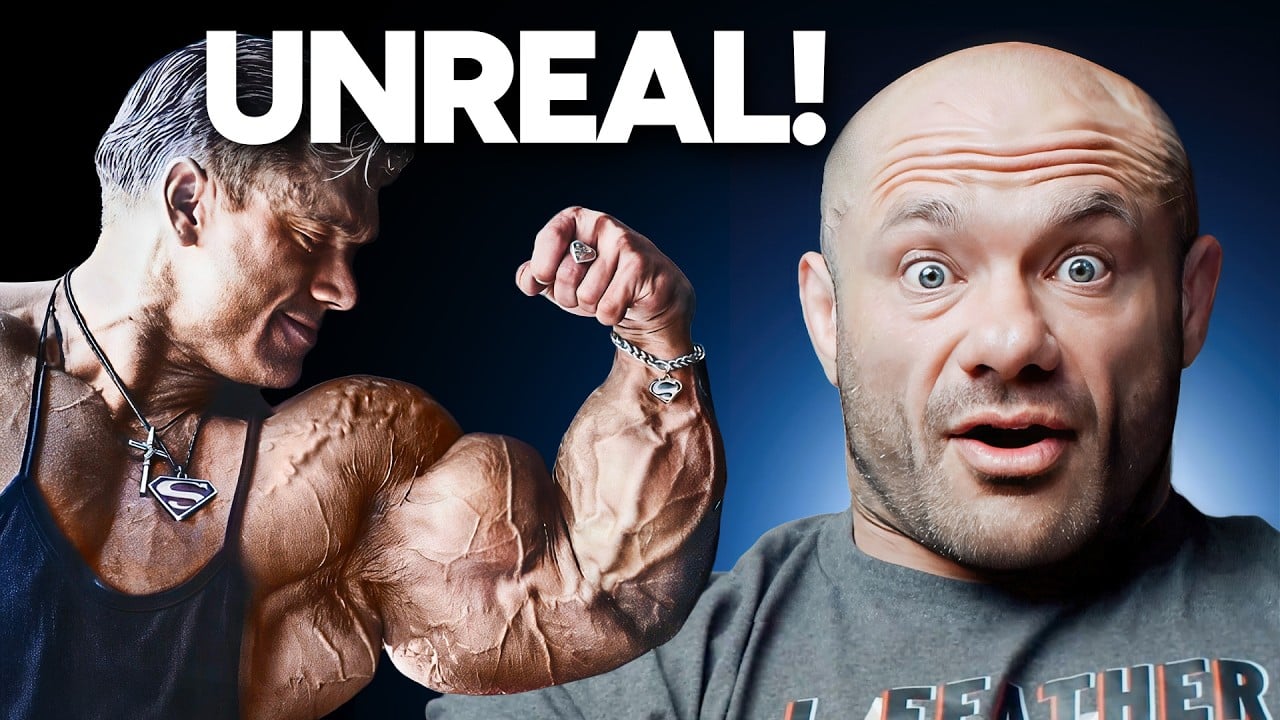
Priest’s approach centers on one brutal truth: massive arms require massive volume.
For anyone stuck with stagnant arm growth, these evidence-backed strategies might just be the missing piece.
Jump to:
Volume Is King for Arm Growth
Lee Priest doesn’t mess around when it comes to training volume.
Always high volume, 20 sets minimum.
That’s not a typo. Twenty sets minimum is where Priest starts for serious arm development.
Dr. Israetel backs this up with science. Research shows that volume is the third most important variable for hypertrophy, behind load and effort. Studies on biceps and triceps demonstrate that even 30+ sets per week can produce superior growth compared to lower volumes like 15 or 20 sets.
If you’re currently doing five to ten sets per week for arms, you’re simply not in the conversation for high-volume training.
The takeaway? Gradually increase your weekly arm volume. If you’re at five sets, bump to six next week, then seven the following week. Slowly climb into the high teens and twenties while monitoring recovery.
The Two-Hour Arm Session
Priest’s arm workouts are legendary not just for their intensity, but their duration.
I could probably do more, but I just stop after like 2 hours. That’s enough.
Two full hours dedicated exclusively to arms might sound extreme—and it is.
But Priest’s philosophy is simple: if you want a body part to grow, you’ve got to punish it just like you would chest, legs, or back.
Dr. Israetel offers a practical gauge: if you’re still achieving a bigger pump as your workout progresses, you’re likely still stimulating growth. Once your pump starts declining, you’ve probably accumulated enough damage, and additional sets may just dig a deeper recovery hole.
Vary Your Rep Ranges
Priest doesn’t stick to one rep scheme throughout his workouts.
I’ve always done high volume, six to eight reps, heavy weight, but then on some movements, cables, that cable curl, tricep push downs, I do maybe 10 to 12, maybe 15 reps.
This variety isn’t just for fun—it’s backed by research.
Studies show that incorporating different rep ranges, even within the same workout, can produce more growth than sticking to one range exclusively.
Try this approach:
- Heavy compound movements: 5-10 reps
- Cable and machine work: 10-15 reps
- Finishing movements: 15-20 reps when fatigued
Don’t Shortchange Direct Arm Work
One common mistake? Assuming triceps get enough work from chest training.
Don’t take the easy way out saying, “Oh, they got work doing chest, my triceps, so I don’t have to do as many sets and then complain they ain’t grow.”
While triceps do receive stimulus during pressing movements, it’s only about half the hypertrophic effect you’d get from direct tricep work like pushdowns or skull crushers.
Those sets count, but they’re not enough on their own. If you’re doing 20 sets of direct tricep work plus 5-10 ancillary sets from chest, you’re hitting 25-30 total sets—which puts you at the lower end of true high volume.
Smart Program Structure Matters
Priest emphasizes training arms when they’re fresh and giving them adequate recovery time.
I want to go starting off your week doing arms and then try to do your upper body the next day because your arms are going to be tired and sore and you might injure them trying to go heavy.
His recommendation: save arms for later in your training week, ideally after your major compound lifts.
A sample split might look like this:
- Day 1: Push (chest, shoulders, triceps)
- Day 2: Pull (back, biceps, rear delts)
- Day 3: Rest
- Day 4: Arms (dedicated bicep and tricep focus)
- Day 5: Legs
This structure ensures arms are fresh for dedicated training while allowing recovery before your next upper body session.
Alternate Exercise Order
Another often-overlooked strategy from Priest: rotate which muscle group you train first.
I first started, I’d probably do chest and biceps sometimes. But then if I did chest first and biceps second, next time I do biceps first and chest second.
Training chest before biceps consistently means biceps never get your best effort. Over time, this creates imbalances.
By flipping the order regularly—biceps then chest one session, chest then biceps the next—you ensure balanced development across muscle groups.
Forget Peak-Building Myths
Many lifters obsess over exercises that supposedly build a bicep “peak.”
Priest dismisses this entirely, and science supports him.
You’re not going to… You either got a nice peaky bicep or some people have a big bicep but it’s longer and flat.
While some architectural changes occur with different exercises—like training at longer muscle lengths promoting growth toward the distal end—we have no evidence that specific exercises build the bicep peak.
Genetics largely determine peak shape. Focus instead on building overall arm size first. Big arms with an average peak still look impressive. Small arms with a slight peak? Not so much.
When Arms Won’t Grow: A Checklist
If you’ve been training arms consistently without results, work through this diagnostic checklist:
- Technique: Are you using full range of motion?
- Effort: Are you training close to failure?
- Volume: Are you doing at least 15-20+ sets per week?
- Frequency: Are you training arms 2-3 times weekly?
- Recovery: Are you sleeping 7-9 hours nightly?
- Nutrition: Are you eating adequate protein (0.8-1g per pound) and calories?
- Stress: Is life stress manageable?
Only after checking all these boxes should genetics be considered a limiting factor.
As Priest bluntly puts it:
If you were training them properly and you were resting and you were taking drugs and you were doing else and they still weren’t growing well, you got fucked genetics.
Harsh, but honest.
The Bottom Line
Lee Priest’s arm training philosophy boils down to high volume, varied rep ranges, proper exercise selection, smart programming, and brutal consistency.
Most lifters dramatically underestimate the volume required for serious arm growth. If you’re stuck at 10 sets per week and wondering why progress stalled, the answer is simple: do more.
Start gradually increasing volume, train arms when fresh, rotate exercise order, and prioritize direct arm work over hoping compound lifts will suffice.
As Dr. Israetel rates it: 9 out of 10. Real, down-to-earth advice from one of the greatest arms in bodybuilding history—backed by modern exercise science.