Peptides are exploding in popularity, and Harvard geneticist David Sinclair says he has never seen anything like it.
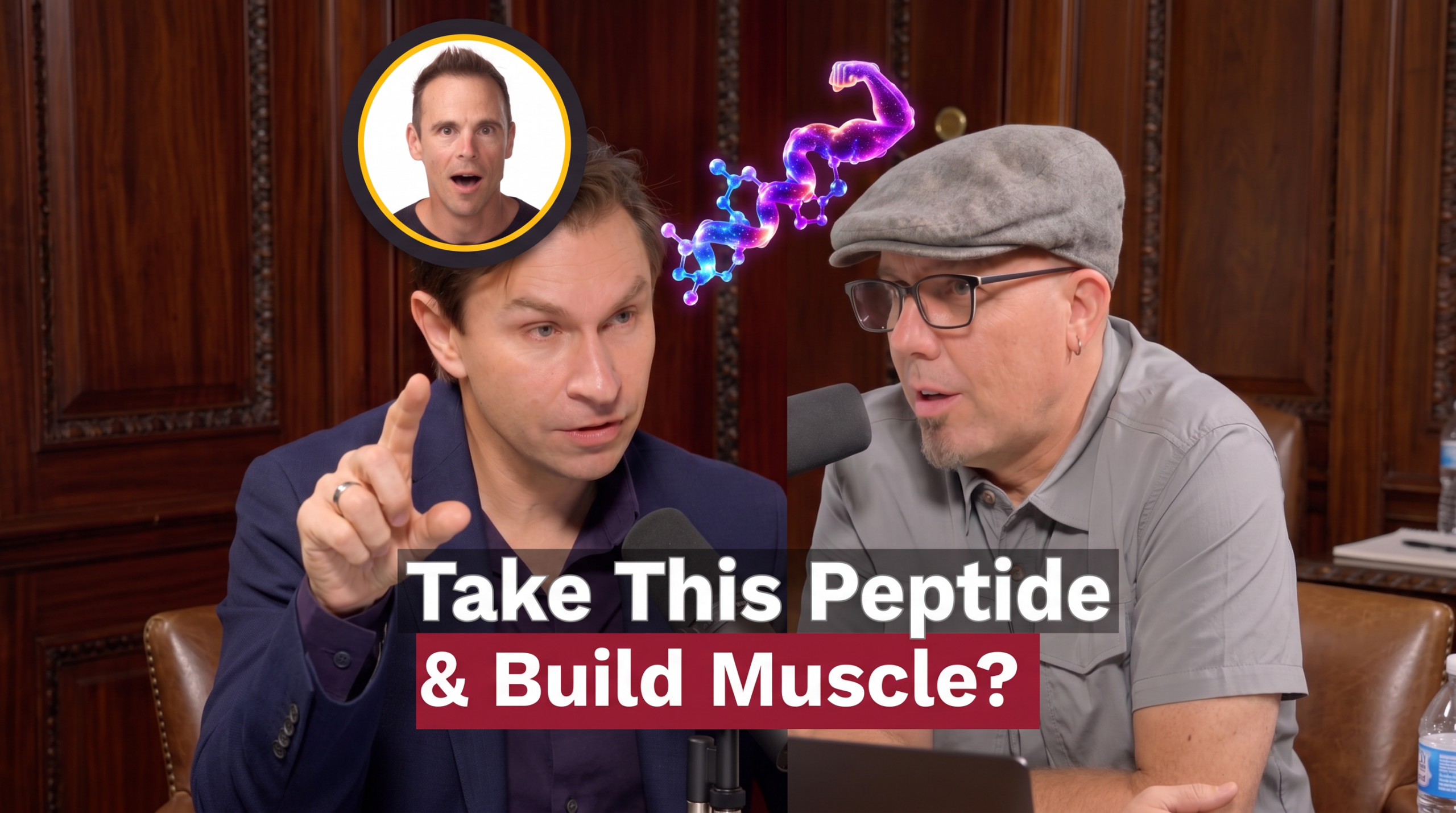
In a recent episode of his Lifespan podcast, Sinclair and co-host Matt sorted the promising peptides from the hype.
Some are FDA-approved, while others sit in a murky gray market.
One wildly popular injury-recovery favorite rests on surprisingly thin human data.
Another family of peptides may help in the short term yet carry a hidden long-term catch.
Jump to:
- Can Peptides Be Called Longevity Drugs Yet?
- The Peptides With Real Regulatory Backing
- Mouse-Stage Stars: MOTS-c, Humanin, FOXO4-DRI, and Klotho
- BPC-157: Wildly Popular, Thinly Studied
- The Growth Hormone Peptide Catch
- The Gray Market Problem Nobody Should Skip
- A Wild Card: Do Animals Sense Peptides?
- The Bottom Line
Can Peptides Be Called Longevity Drugs Yet?
Short answer: not even close.
It’s definitely too much.
Sinclair noted that even GLP-1 drugs, backed by mountains of data, can barely wear that label. His shorthand was “potential longevity drug,” and the evidence for most peptides is mice, cells, and anecdotes.
The Peptides With Real Regulatory Backing
A handful have cleared the FDA bar or earned approval elsewhere. Here is where they stand.
SS-31 (Elamipretide): The Mitochondria Milestone
It’s actually a major milestone. It’s the first FDA approved drug to target mitochondria.
Developed by Stealth BioTherapeutics and sold as Forzinity, it was approved in 2025 for Barth syndrome, a genetic heart-related disease. Sinclair noted that cardiolipin, the molecule involved, declines with age, so benefits beyond Barth syndrome are possible but unproven.
Side effects include frequent injection-site redness, pain, itching, and hypersensitivity.
GLP-2 (Teduglutide): A Gut-Lining Builder
Forget GLP-1. This cousin is made mostly in the gut lining, and in mice it helps stem cells proliferate.
A pivotal 24-week trial of 86 adults with short bowel syndrome produced a 63% response rate, defined as at least a 20% cut in weekly liquid nutrition and fluid support. A sturdier gut barrier might also support healthier microbes, though that remains a hypothesis.
PT-141 (Bremelanotide): Desire Starts in the Brain
This analog of alpha-MSH binds melanocortin receptors in the brain, with clinical trials behind it. It is FDA-approved for hypoactive sexual desire disorder in women, while doctors increasingly prescribe it off label for men.
Semax: Approved in Russia, Not the U.S.
Developed by Russian scientists in the 1980s, this cognitive and neuroprotective peptide was approved there for stroke patients. Americans cannot get it as a regular approved medicine.
Science is global, but regulation is not.
Mouse-Stage Stars: MOTS-c, Humanin, FOXO4-DRI, and Klotho
Excitement runs highest here, and so does the gap between lab results and real-world proof.
MOTS-c: The Peptide From Mitochondrial DNA
Sinclair disclosed that he once sat on the advisory board of a company developing it. Injected into mice, it improved metabolism and raised AMPK, an energy-sensing enzyme.
It’s an exercise mimetic, which is not bad if that is true for humans. But unfortunately, we don’t know how MOTS-c really works.
Animal work also suggests it curbs muscle loss by lowering myostatin. Still, no approval, no proven human benefit.
Humanin: Named to Save Humanity
They call it humanin for a reason. They immediately wanted to show that this peptide might save humanity from diseases like Alzheimer’s.
Japan’s Ikuo Nishimoto discovered the 24-amino-acid peptide in 2001 by studying brain regions spared from amyloid plaques. In human neurons, it shielded cells from beta-amyloid, and it may calm the NLRP3 inflammasome.
Sinclair stressed that this evidence is mostly mouse and cell-based. Compounding restrictions still apply, and it remains a research-only peptide.
FOXO4-DRI: Zombie-Cell Assassin
Senescent “zombie” cells survive partly because FOXO4 holds the death protein p53 hostage in the nucleus. This engineered peptide breaks that chain, using mirror-image D-amino acids so it resists quick degradation.
In prematurely aging mice with a DNA-repair disorder, treated animals looked dramatically younger. Sinclair cautioned that these are not normal mice.
We need clinical trials.
Klotho Fragments: Promising, Still Gray Market
A 2005 paper in Science showed mice engineered to overexpress klotho lived roughly 20 to 30% longer. Shorter fragments such as KP1 may mimic some effects, yet they remain firmly in gray-market territory.
BPC-157: Wildly Popular, Thinly Studied
Roughly 55% of peptide clinics list it on their menus, according to the conversation. Derived from a protective protein in gastric juice, it was championed by Professor Predrag Sikirić at the University of Zagreb.
Early rat studies showed injured tendons healing better across several doses. That image sparked the craze.
Despite widespread use for injury recovery, the human evidence is still extremely limited.
TB-500, often paired with it in the so-called “Wolverine stack,” shows the same pattern: sparse human data and gray-market status. Sinclair offered a candid take on why people try them anyway.
If you’re in pain every day and you need to play, yeah, you’re desperate.
The Growth Hormone Peptide Catch
CJC-1295, GHRP-2, and the “-morelin” family aim to boost growth hormone signaling. Sinclair’s concern is duration.
Mice lacking growth hormone and IGF-1 signaling lived much longer. People with Laron syndrome in Ecuador, who have growth hormone receptor deficiency and very low IGF-1, show low rates of cancer and diabetes.
That doesn’t prove that raising growth hormone has the opposite effect. But it does give us a reason to be cautious.
Short-term recovery benefits may still matter, since getting back to physical activity supports healthy aging. The worry is years of continuous use.
The Gray Market Problem Nobody Should Skip
I’m frankly quite shocked how available some of these rigorously untested products are.
Sinclair flagged overseas sourcing, dilution, and sellers with conflicts of interest. Products labeled “research use only” raise purity, contamination, and dosing questions.
His advice: work with a physician and ask directly where the product originated.
Practical Takeaways
- Separate approved from unapproved: elamipretide, teduglutide, and bremelanotide have regulatory backing for specific conditions.
- Treat mouse data as a starting point: MOTS-c, humanin, FOXO4-DRI, and klotho fragments lack human proof.
- Be skeptical of popularity: BPC-157’s fame outpaces its human evidence.
- Think long term: short-term gains may carry different consequences over years.
- Verify sourcing: quality is a real risk with gray-market products.
A Wild Card: Do Animals Sense Peptides?
Sinclair floated a speculative idea. Just as stressed plants deliver polyphenols through xenohormesis, peptides in animal foods might carry signals between species.
His evidence: mosquitoes sense IGF-1 in the blood they ingest, and one study found they lived 23% longer. He called the human angle speculative, yet fascinating.
The Bottom Line
Peptide science is moving fast, and Sinclair’s own lab is studying small peptides that shift when cells are reprogrammed to be epigenetically young. Even so, the episode closed with a clear message.
Right now, the enthusiasm is ahead of the evidence.
Neither Sinclair nor Matt is a physician, and the show stresses that none of this is medical advice. Talk to a doctor before trying any peptide.