Your feet might be the most underrated piece of your health and longevity puzzle.
One in three people will experience foot pain in their lives — an issue that can snowball into problems with knees, hips, mental health, and even the risk of falls in old age.
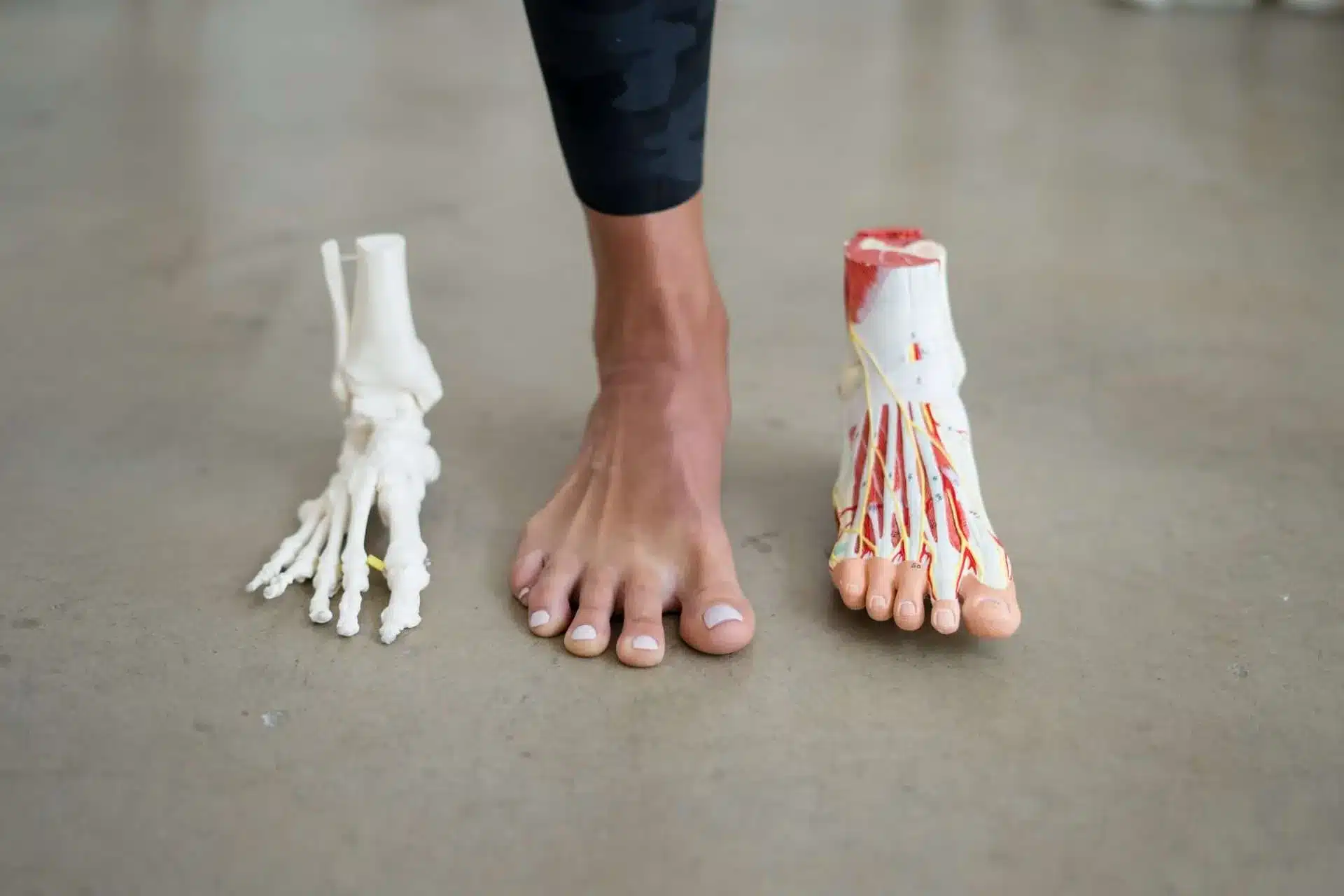
The good news? You can start improving your foot health today — right at home, without expensive equipment or complex routines.
Dr. Courtney Conley, a world-renowned foot specialist, is changing the way we think about feet, movement, and the shoes we wear — and what she shares might make you rethink your footwear immediately.
Understanding foot health is more than just about preventing pain — it’s about extending your freedom, mobility, independence, and even mental health for years to come.
Jump to:
- The overlooked link between feet and longevity
- Why foot pain is more than “just” pain
- What we get wrong — starting from childhood
- The kinetic chain: Why foot alignment impacts your whole body
- Common diagnoses linked to foot weakness
- How to strengthen your feet from home
- Transition wisely to barefoot or minimal shoes
- How to pick a healthy shoe
- Walking: Nature’s medicine for body and mind
- Your foot is the foundation. Build from the ground up.
The overlooked link between feet and longevity
Functional longevity depends on movement, and walking is one of the most underrated forms of movement we have. According to recent research, walking just 5,000 steps per day can reduce the risk of depression symptoms and all-cause mortality by up to 15%.

If you want something simple that actually works, this is one of the most effective tools I’ve used to build strength, conditioning, and endurance without needing a full gym setup.
- Full-body training with one weight using swings, squats, and presses
- Solid cast iron build that feels stable and lasts for years
- Comfortable grip that makes high-rep workouts easier to handle
Remarkably, walking 9,800 steps per day has been found to reduce the risk of developing dementia.
But the key to maintaining this simple life-saving movement is pain-free and functional feet. Without it, walking becomes difficult, and the physical and emotional consequences snowball quickly.
Why foot pain is more than “just” pain
“When you can’t walk, you can’t do much,” says Dr. Conley. “You can’t hike, run, or even pick up groceries.”
Foot pain ranks just behind lower back pain in global prevalence, especially among people over the age of 45. And once the pain sets in, it often affects more than just your body — many people report increased emotional stress and even depression as a consequence.
Dr. Conley describes working with a 27-year-old man who lived with foot pain for two years. Advised to limit his daily steps to just 2,500, he became socially isolated, emotionally distressed, and sedentary. With a slow and consistent plan of rebuilding foot function through strengthening and micro walks, he returned to balancing his mental and physical health.
“It wasn’t about the heel pain anymore. It was about rebuilding his confidence and re-engaging with life,” she says.
If you want something simple that actually works, this is one of the most effective tools I’ve used to build strength, conditioning, and endurance without needing a full gym setup.
- Full-body training with one weight using swings, squats, and presses
- Solid cast iron build that feels stable and lasts for years
- Comfortable grip that makes high-rep workouts easier to handle
What we get wrong — starting from childhood
Foot dysfunction begins early — as early as childhood.
“If we started our children in the proper footwear, I’d be out of a job,” says Conley. A staggering 70% of children wear shoes that are too narrow. This restricts natural toe splay, altering foot structure permanently and setting the stage for long-term issues.
Modern shoes prioritize fashion over function. Narrow toe boxes, elevated heels, and thick cushioning change how the foot interacts with the ground and weaken the intricate muscles and structures designed to support our bodies.
Common footwear mistakes
- Narrow toe boxes: Crowd the toes, leading to bunions, hammertoes, and neuromas
- High heel-to-toe drops: Shorten calf muscles and shift pressure to the forefoot
- Over-cushioned soles: Diminish sensory feedback, impairing balance and foot strength
A healthy foot should have a wide forefoot, four layers of active muscle tissue, and dynamic flexibility. But traditional footwear trains the foot to lose these capabilities over time.
The kinetic chain: Why foot alignment impacts your whole body
The foot isn’t an isolated system. Dr. Conley emphasizes the idea of the “kinetic chain.”
If your foot is misaligned — due to weak muscles, poor foot posture, or improper shoes — the effects ripple upward into the ankle, knees, hips, and back.
If you want something simple that actually works, this is one of the most effective tools I’ve used to build strength, conditioning, and endurance without needing a full gym setup.
- Full-body training with one weight using swings, squats, and presses
- Solid cast iron build that feels stable and lasts for years
- Comfortable grip that makes high-rep workouts easier to handle
For example, a forward-tilted pelvis can cause arches to flatten. A lack of toe mobility can reduce stride and limit hip extension. Even lower back pain can stem from dysfunctional foot mechanics.
Common diagnoses linked to foot weakness
- Plantar fasciopathy: Chronic heel pain due to irritated foot fascia
- Achilles tendinopathy: Stress on the tendon connecting calf to heel
- Neuromas: Nerve irritations caused by limited toe space
- Hammer toes and bunions: Imbalances from long-term joint stress
“The foot is amazing,” says Conley. “It’s one of the few places in the body where dysfunction is visible to the eye — swelling, calluses, bunions. These are signs we need to intervene.”
How to strengthen your feet from home
You don’t need a fancy gym to build foot health. Dr. Conley recommends starting with these simple tools:
- Toe spacers: Help your toes regain natural splay and alignment
- Toe bands: Resistance training for the foot’s intrinsic muscles
- Mobility balls: Promote circulation and nerve feedback in the sole
One useful daily movement: toe yoga. Practice lifting the big toe while keeping others down, and vice versa. This builds sensory feedback and foot stability.
Ball rolling for 60–90 seconds in the morning helps “wake up” the foot’s receptors. And working toward holding firm toe placement during movement (known as the “tripod foot” pattern) strengthens core gait mechanics.
Transition wisely to barefoot or minimal shoes
If you’ve been wearing standard shoes for years, jumping straight into minimalist footwear can backfire. Dr. Conley warns that people often want to toss all their shoes once they learn the science but stresses a smart transition is essential.
If you want something simple that actually works, this is one of the most effective tools I’ve used to build strength, conditioning, and endurance without needing a full gym setup.
- Full-body training with one weight using swings, squats, and presses
- Solid cast iron build that feels stable and lasts for years
- Comfortable grip that makes high-rep workouts easier to handle
Start with 10 minutes a day in barefoot-style shoes, then gradually increase as strength and mobility improve.
“You have to earn your right to wear minimalist footwear,” she says. “It’ll feel bad if your foot isn’t ready.”
How to pick a healthy shoe
Dr. Conley’s three non-negotiables for functional footwear:
- Wide toe box — Allows natural toe splay and prevents structural deformities
- Zero-drop platform — Heel and toes sit on the same level to support posture
- Flexibility — Thin soles so the foot can move and feel the ground
She also encourages a “spectrum” approach. Use structured shoes (with cushion) for specific tasks — like standing for long hours — and rely on barefoot shoes for building strength.
Walking: Nature’s medicine for body and mind
Even low amounts of walking can yield huge benefits:
| Step Count | Benefit |
|---|---|
| 3,800 steps | 50% of dementia risk reduction benefits |
| 5,000 steps | Lower depression symptoms & 15% lower mortality risk |
| 9,800 steps | Significant reduction in dementia risk |
“Micro walks” — just five to ten minutes at a time — can rebuild your body and mindset remarkably, especially for sedentary individuals or those recovering from injury.
If you want something simple that actually works, this is one of the most effective tools I’ve used to build strength, conditioning, and endurance without needing a full gym setup.
- Full-body training with one weight using swings, squats, and presses
- Solid cast iron build that feels stable and lasts for years
- Comfortable grip that makes high-rep workouts easier to handle
Your foot is the foundation. Build from the ground up.
Injury prevention, performance, and even emotional resilience — they all start with how well your foot functions.
If you want to squat more, run longer, or even just move with less pain, your foot needs to be capable of absorbing and generating force correctly. That includes balance, proprioception, and strength in the toes, arches, and stabilizing muscles like the soleus and posterior tibialis.
Wear shoes that allow your foot to function naturally. Prioritize short, consistent foot exercises. And give your feet the same care you give other body parts — if not more.
A strong body starts with strong feet.
And more than that — your feet might just be the gateway to a long, mobile, and mentally healthy life.