Fitness enthusiasts who pride themselves on making science-backed nutrition choices may want to pause before reaching for their next protein shake.
A concerning question has emerged: could the combined artificial sweeteners from protein powders, pre-workouts, diet sodas, protein bars, and sugar-free yogurts actually exceed safe consumption limits?
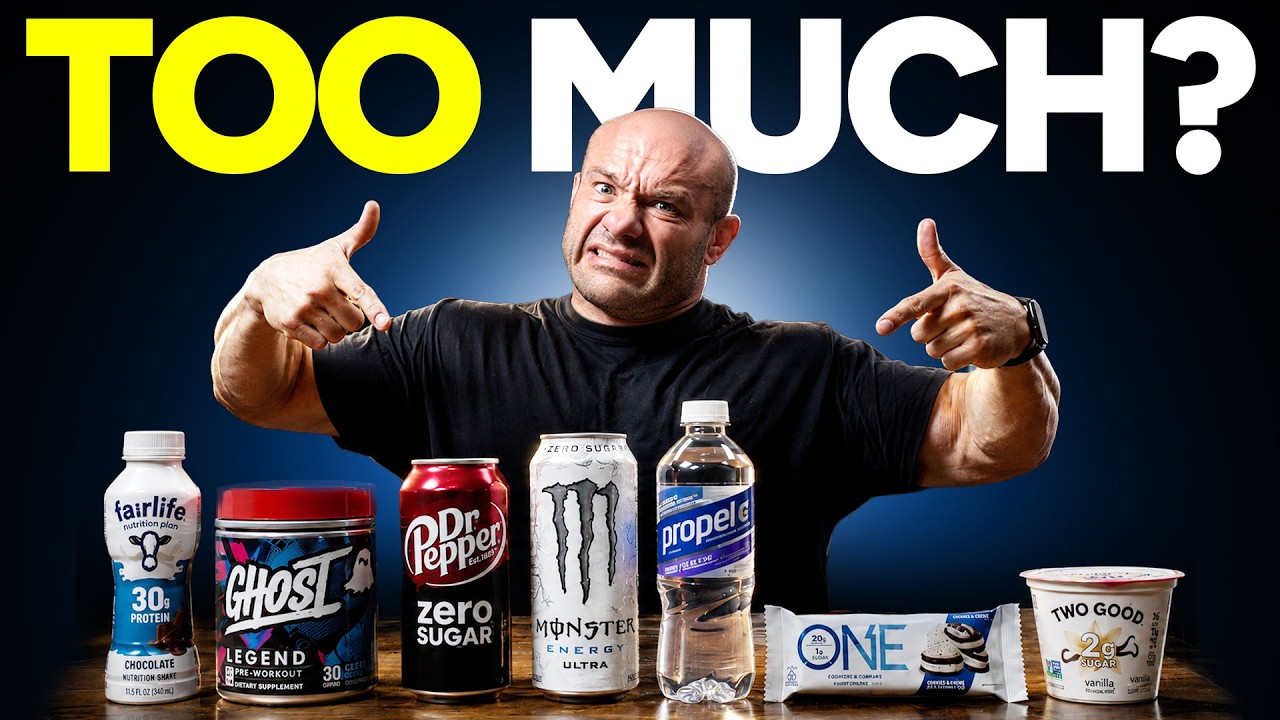
Dr. Mike Israetel, a renowned sports scientist and co-founder of Renaissance Periodization, recently tackled this anxiety-inducing topic in a detailed analysis.
The answer might surprise you—and it comes with important nuance that every fitness-conscious person should understand.
Jump to:
The Artificial Sweetener Safety Consensus
Hundreds of studies paint a remarkably consistent picture: artificial sweeteners appear incredibly safe for human consumption.
From the overwhelming insights of the hundreds of studies we’ve done so far in this space, it appears as if artificial sweeteners are super, super safe for consumption.
Israetel points out that while a few outlier studies suggest otherwise—often conducted on elderly, sick rodents or lacking transparent data—the vast majority demonstrate remarkable safety profiles. Even at consumption levels far beyond typical use, these sweeteners show minimal health concerns.
To reach potentially problematic levels with diet soda alone, someone would need to consume 15 to 20 cans daily for years. And even that lower safety boundary still falls within acceptable parameters.
The Hidden Accumulation Problem
Here’s where things get interesting for the fitness community. People who train seriously don’t just drink the occasional diet soda.
Their daily intake includes multiple sources of artificial sweeteners:
- Pre-workout supplements (often double-scooped)
- Protein powders (morning and evening servings)
- Protein bars (convenient meal replacements)
- Energy drinks (for that afternoon boost)
- Diet sodas (throughout the day)
- Sugar-free yogurts (quick protein sources)
Each product contains varying amounts of different sweeteners. The question becomes: does it all add up to dangerous levels?
A Real-World Calculation
Israetel created a realistic daily scenario for a dedicated bodybuilder. Two scoops of pre-workout provides approximately 100mg of sucralose and 160mg of acesulfame potassium (Ace-K).
Four scoops of protein powder throughout the day—two post-workout whey, two nighttime casein—adds another 240mg of sucralose. Three Diet Pepsis contribute 96mg of Ace-K and 372mg of aspartame.
Two protein bars add 60mg of sucralose and 40mg of Ace-K. Four light Greek yogurts bring another 60mg of sucralose and 60mg of Ace-K.
The totals: approximately 460mg of sucralose, 356mg of Ace-K, and 372mg of aspartame.
Comparing to FDA Limits
For a 150-pound man, the FDA’s acceptable daily intake (ADI) for sucralose sits at approximately 340mg. This hypothetical diet would reach about 135% of that limit.
A 175-pound man with an ADI around 397mg would hit approximately 116%. Even a 200-pound individual with a 450mg ADI would slightly exceed it at 101%.
Meanwhile, Ace-K intake would only reach 26-35% of its ADI, and aspartame just 8-11%. Sucralose emerges as the only sweetener potentially crossing FDA thresholds in this aggressive but realistic fitness diet.
Three Reasons Not to Panic
Before tossing every protein powder and sugar-free product, consider these critical points that dramatically change the risk assessment.
Safety Margins Are Extraordinarily Conservative
The FDA’s acceptable daily intake represents a fraction of what studies show actually causes harm. Regulatory bodies establish ADI levels at one-tenth of the amount that begins showing potential negative effects in animal studies over years of consumption.
The limit is actually 10 times below the actual value which regulators think will begin to possibly cause you harm if you kept at it over years and years of consumption.
But it gets even more conservative. That figure is already reduced by another factor of 10 to account for animal-to-human translation safety margins.
This means the “dangerous” threshold sits approximately 100 times higher than the ADI. When someone consumes double their ADI, they’re not driving at double the speed limit—they’re barely moving at all in terms of actual risk.
Different Sweeteners Don’t Combine
Each artificial sweetener operates through distinct mechanisms with separate safety profiles. Sucralose, aspartame, and Ace-K are chemically unrelated compounds with different metabolic pathways.
Importantly, their ADIs don’t add together. Someone might exceed the total milligrams across all sweeteners while staying well within safe limits for each individual compound.
This pharmacological principle provides significant protection for people consuming multiple sweetener types throughout their day.
Consistent Daily Consumption Matters
Animal studies establishing safety thresholds involve feeding high, consistent amounts every single day for an animal’s entire lifespan. Most humans, even dedicated fitness enthusiasts, show considerable variation in their daily intake.
Training days might include pre-workout and multiple protein shakes. Rest days might involve significantly less supplementation. Weekend eating patterns often differ dramatically from weekday routines.
This natural variation provides additional safety margins beyond what controlled laboratory conditions suggest.
The One Real Concern: Digestive Tolerance
While artificial sweeteners appear remarkably safe from a toxicological standpoint, digestive comfort presents a legitimate constraint for many people.
I highly suggest eating no more than your GI tract can handle in a given meal or day because with some sweeteners, especially the sugar alcohols found in many protein bars, the guts get to move in pretty fast.
Sugar alcohols like erythritol, xylitol, and maltitol—common in protein bars and low-carb products—can cause significant gastrointestinal distress. These compounds draw water into the intestines and undergo bacterial fermentation in the colon.
The result? Bloating, gas, and potentially severe diarrhea in susceptible individuals or at high doses.
Individual tolerance varies dramatically. Some people handle sugar alcohols without issue, while others experience discomfort from relatively small amounts.
Practical Recommendations
For most fitness enthusiasts consuming multiple sweetened products daily, the evidence suggests minimal health risk from a toxicological perspective. The safety margins built into regulatory guidelines provide substantial protection.
Listen to your digestive system. If protein bars or heavily sweetened supplements cause bloating or bathroom urgency, that’s your body providing clear feedback regardless of what safety studies show.
Vary your sweetener sources when possible. Using products with different artificial sweeteners distributes intake across multiple compounds with separate ADIs.
Consider whether you genuinely need every sweetened product in your routine. Two scoops of pre-workout might be unnecessary. That fourth protein shake could be replaced with whole food.
Pay attention to sugar alcohols specifically. These cause digestive issues far more frequently than other artificial sweeteners like sucralose or aspartame.
The Bottom Line
The accumulated evidence strongly suggests that artificial sweeteners, even when consumed well beyond typical amounts, pose minimal health risks for most people. The conservative nature of regulatory safety limits means even exceeding the ADI doesn’t necessarily indicate danger.
For fitness enthusiasts consuming protein powders, pre-workouts, diet sodas, and sugar-free snacks throughout their day, toxicological concerns appear largely unfounded. The science simply doesn’t support panic about artificial sweetener intake at realistic consumption levels.
That said, digestive tolerance remains a valid individual concern. Anyone experiencing gastrointestinal distress should evaluate their sugar alcohol intake and potentially reduce heavily sweetened products regardless of their safety profile.
The smugness about choosing science-backed artificial sweeteners over sugar? Probably still justified. Just maybe keep some extra toilet paper handy if those protein bars don’t agree with you.