Post-workout routines matter more than most people realize, yet countless gym-goers skip the one exercise that could transform their training results.
Jeff Cavaliere, physical therapist and strength coach behind Athlean-X, argues that face pulls deserve a permanent spot in your program.
Not as an afterthought, but as a deliberate strategy to build stronger shoulders, better posture, and a more resilient upper body.
The problem? Most people perform face pulls incorrectly, recruiting wrong muscle groups and missing the exercise’s biggest benefits.
Jump to:
- Why Face Pulls Matter More Than Stretching
- The Equipment Setup Most People Get Wrong
- Grip Position Changes Everything
- The 90-Degree Rule
- Stop Shrugging Your Shoulders
- Two Distinct Training Approaches
- Programming Face Pulls Throughout Your Week
- Set and Volume Recommendations
- Why Building the Rotator Cuff Isn’t Optional
- The Posture Connection
- Common Mistakes to Avoid
- Who Benefits Most From Face Pulls
- The Bottom Line
Why Face Pulls Matter More Than Stretching
Cavaliere makes a bold claim: what happens after your workout determines whether you had a great session or missed an opportunity. While stretching, hydration, and foam rolling all have merit, he believes none compare to properly executed face pulls.
Face pulls target muscles that tend to be weak and dominated by larger muscle groups—specifically the rotator cuff, rhomboids, and rear deltoids. These are the same muscles that help counteract forward shoulder posture caused by pressing movements and desk work.

If you want something simple that actually works, this is one of the most effective tools I’ve used to build strength, conditioning, and endurance without needing a full gym setup.
- Full-body training with one weight using swings, squats, and presses
- Solid cast iron build that feels stable and lasts for years
- Comfortable grip that makes high-rep workouts easier to handle
This is not a trap exercise, not for me at least, because you’re missing one of the biggest benefits, which is to train the rotator cuff, the rhomboids, the rear delts, the muscles that tend to be weaker and dominated anyway by the traps.
The Equipment Setup Most People Get Wrong
Equipment choice matters significantly for face pulls. Cavaliere recommends using a rope attachment roughly two feet in length, considerably longer than standard gym ropes.
Short ropes restrict how wide you can position your hands, which prevents elbows from reaching the optimal 90-degree angle. If longer ropes aren’t available, Cavaliere suggests combining two traditional rope attachments and pulling them to their ends.
Cable height should align approximately with face level—hence the name.
Grip Position Changes Everything
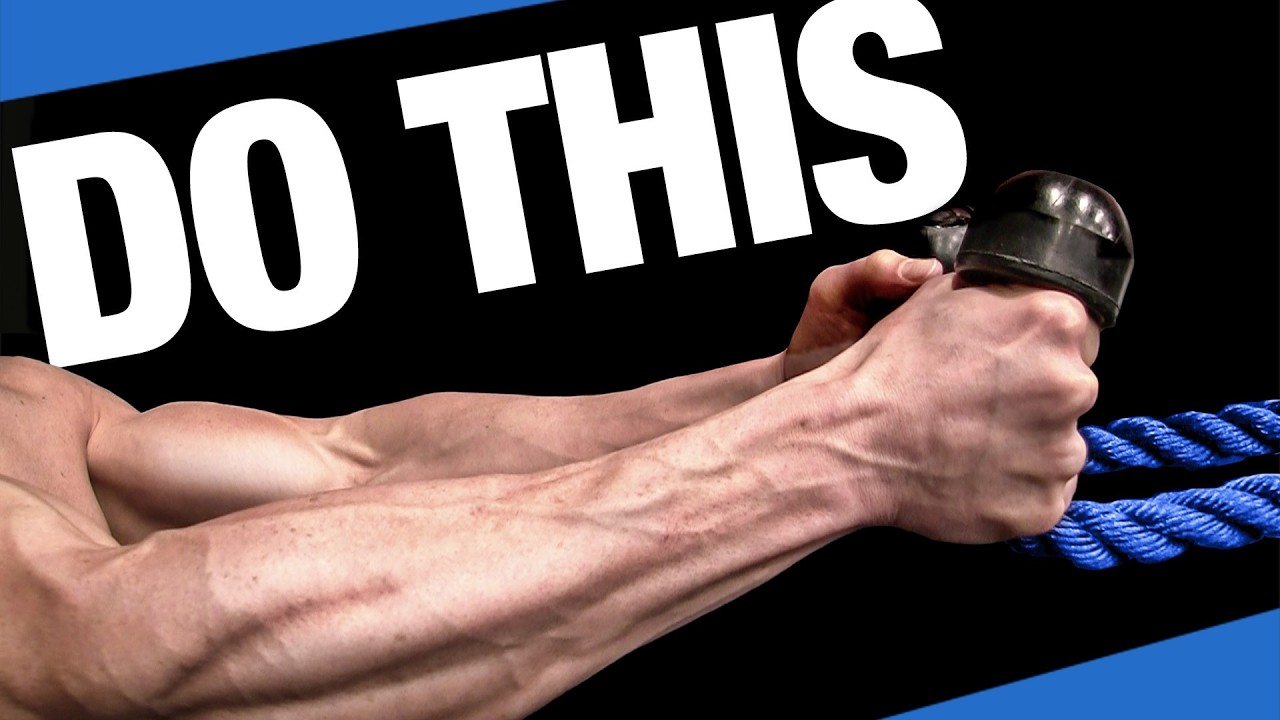
Cavaliere identifies grip as the first major mistake that derails face pulls. Most people grab the rope with palms facing down, but this setup activates the wrong muscles.
Thumbs down means the wrong way. Thumbs up means the right way.
The correct approach: grab the rope from underneath with thumbs pointing up. This neutral-to-supinated grip position primes the rotator cuff and posterior deltoids to do the work, rather than letting the traps take over.
The 90-Degree Rule
When executing face pulls properly, arms should finish in a double-bicep flex position. Elbows bend to roughly 90 degrees, spreading wide apart rather than staying narrow.
If you want something simple that actually works, this is one of the most effective tools I’ve used to build strength, conditioning, and endurance without needing a full gym setup.
- Full-body training with one weight using swings, squats, and presses
- Solid cast iron build that feels stable and lasts for years
- Comfortable grip that makes high-rep workouts easier to handle
This positioning is impossible with short ropes, which is why equipment selection matters so much.
The wide elbow position sets up muscles of the upper back to perform the movement correctly. Narrow elbows shift emphasis away from rear delts and rhomboids toward the trapezius muscles.
Stop Shrugging Your Shoulders
Another common error involves excessive trap involvement. Many lifters unconsciously shrug their shoulders upward as they pull the rope toward their face.
Cavaliere emphasizes keeping shoulders actively depressed throughout the movement. This creates space to open the chest—something that’s physically impossible when shoulders are elevated.
Force the shoulders down, and what that will do is allow you to get an open chest. It’s impossible to get your chest open if you’re shrugged.
Depressed shoulders ensure the smaller, often-neglected postural muscles perform the work instead of letting dominant traps compensate.
Two Distinct Training Approaches
Cavaliere distinguishes between two valid ways to program face pulls: neuromuscular re-education and hypertrophy training. Each serves different purposes and requires different execution.
If you want something simple that actually works, this is one of the most effective tools I’ve used to build strength, conditioning, and endurance without needing a full gym setup.
- Full-body training with one weight using swings, squats, and presses
- Solid cast iron build that feels stable and lasts for years
- Comfortable grip that makes high-rep workouts easier to handle
Neuromuscular Re-Education Version
This corrective approach prioritizes movement quality over weight or speed. Pull slowly and deliberately, hold the contracted position for three to five seconds, then return to the start with control.
Cavaliere describes this as “15 sets of one high-quality repetition” rather than one set of 15 reps—a mindset shift that emphasizes precision.
This is about doing every repetition with high quality. I always say this is not one set to 12 or 15. This is 15 sets of one high quality repetitions.
An optional addition: from the contracted position, press arms straight overhead. This variation recruits lower trapezius muscles, another commonly weak postural muscle group.
Hypertrophy Version
Building muscle in the rear delts and rotator cuff fortifies the entire shoulder girdle. For hypertrophy, increase weight slightly and work in the 8-12 repetition range.
Tempo remains controlled, and shoulders still stay depressed. However, reaching near-failure is acceptable—even encouraged—provided form doesn’t completely break down.
Form failure, not complete failure, remains the standard. Reps should stay recognizable even when difficult.
If you want something simple that actually works, this is one of the most effective tools I’ve used to build strength, conditioning, and endurance without needing a full gym setup.
- Full-body training with one weight using swings, squats, and presses
- Solid cast iron build that feels stable and lasts for years
- Comfortable grip that makes high-rep workouts easier to handle
Programming Face Pulls Throughout Your Week
Frequency recommendations depend on total weekly training volume. Cavaliere provides specific guidelines for different training splits.
Two-Day Training Split
- One corrective session (end of week)
- One hypertrophy session
Three-Day Training Split
- Two corrective sessions
- One hypertrophy session (middle of week)
Cavaliere favors more corrective work with odd-numbered training weeks to maximize neuromuscular benefits.
Five-Day Training Split
- Three corrective sessions (days 1, 3, and 5)
- Two hypertrophy sessions (days 2 and 4)
This balance keeps corrective work slightly ahead of pure hypertrophy training.
Set and Volume Recommendations
Hypertrophy sessions should include 2-3 sets taken to or near failure each time they appear in programming.
Corrective sessions vary based on weekly frequency:
- Once weekly: 3-4 sets
- Twice weekly: 2 sets per session (4 total)
- Three times weekly: 1-2 sets per session (3-6 total)
Higher training volumes allow for greater total corrective work since lifters adapt to increased frequency.
If you want something simple that actually works, this is one of the most effective tools I’ve used to build strength, conditioning, and endurance without needing a full gym setup.
- Full-body training with one weight using swings, squats, and presses
- Solid cast iron build that feels stable and lasts for years
- Comfortable grip that makes high-rep workouts easier to handle
Why Building the Rotator Cuff Isn’t Optional
Many lifters avoid directly training the rotator cuff, viewing it as too small to matter. Cavaliere challenges this thinking.
Strengthening and even building hypertrophy in rotator cuff muscles creates a more stable, resilient shoulder complex. This fortification protects against injury during heavy pressing, pulling, and overhead movements.
Rear deltoids also respond well to face pulls. These muscles are chronically undertrained compared to anterior and middle deltoids, creating muscular imbalances that pull shoulders forward.
The Posture Connection
Face pulls directly address postural issues caused by modern life. Hours spent at computers, phones, and steering wheels create forward head posture and rounded shoulders.
Strengthening muscles that retract the scapula and externally rotate the shoulder—exactly what face pulls do—counteracts these patterns. Rhomboids pull shoulder blades together, while rotator cuff muscles rotate the arm bone outward, opening the chest.
Combined with depressed shoulders, this creates the opposite position of hunched desk posture.
If you want something simple that actually works, this is one of the most effective tools I’ve used to build strength, conditioning, and endurance without needing a full gym setup.
- Full-body training with one weight using swings, squats, and presses
- Solid cast iron build that feels stable and lasts for years
- Comfortable grip that makes high-rep workouts easier to handle
Common Mistakes to Avoid
Beyond grip and shoulder position, several other errors sabotage face pull effectiveness:
- Pulling too high or too low – Cable should end at face height
- Using momentum – Especially during corrective sessions, control matters more than weight
- Incomplete range of motion – Hands must separate wide enough to create that 90-degree elbow angle
- Rushing repetitions – Tempo determines muscle recruitment; fast reps defeat the purpose
- Ego lifting – This exercise requires surprisingly light weight when performed correctly
Who Benefits Most From Face Pulls
While Cavaliere recommends face pulls universally, certain populations gain disproportionate benefits.
Desk workers combat postural dysfunction directly. Overhead athletes—swimmers, baseball players, volleyball players—strengthen vulnerable shoulder structures. Heavy benchers balance pressing volume with posterior work.
Anyone with shoulder pain, impingement symptoms, or chronic tightness in the chest should consider prioritizing face pulls. The exercise addresses common underlying causes rather than merely treating symptoms.
The Bottom Line
Face pulls earn their place as a non-negotiable movement when programmed and executed correctly. The difference between mediocre and excellent face pulls comes down to details: equipment length, grip orientation, elbow position, shoulder depression, tempo, and intent.
Treating this exercise as either pure hypertrophy work or neuromuscular re-education—depending on the day—maximizes benefits. Both approaches strengthen critical but often-neglected muscles that protect shoulders and improve posture.
If you want something simple that actually works, this is one of the most effective tools I’ve used to build strength, conditioning, and endurance without needing a full gym setup.
- Full-body training with one weight using swings, squats, and presses
- Solid cast iron build that feels stable and lasts for years
- Comfortable grip that makes high-rep workouts easier to handle
Rather than relegating face pulls to the end of workouts as an afterthought, Cavaliere’s approach makes them a centerpiece of intelligent programming. Whether training two days or five days weekly, strategic placement of corrective and hypertrophy face pull sessions creates measurable improvements in shoulder health, upper back development, and long-term training sustainability.