Pull-ups have long been hailed as the ultimate back-building exercise, with many fitness enthusiasts believing they’re all you need for complete back development.
But according to calisthenics experts at Calisthenicmovement, this popular belief might be leaving critical muscles—and your posture—vulnerable to imbalances and injury.
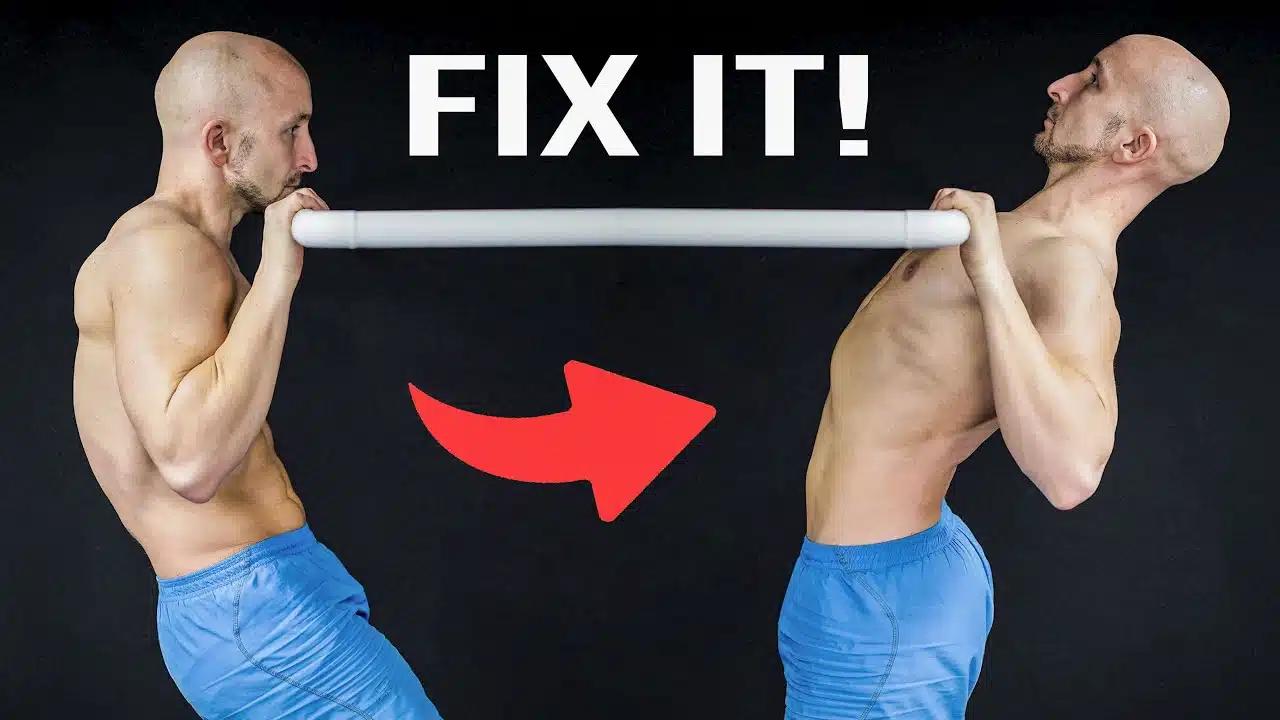
In a recent YouTube video, the team breaks down why the standard pull-up technique most people use is actually turning this “king of back exercises” into primarily a lat exercise, while completely neglecting other crucial back muscles.
The solution? A technique adjustment that could transform your back training entirely.
Jump to:
The Hidden Problem With Standard Pull-Ups
Most beginners and even intermediate athletes make one critical mistake during pull-ups: they round their backs and bring their shoulders forward.
According to the Calisthenicmovement team, this happens because it’s simply the easiest way to perform the movement. This execution style transforms pull-ups into a heavily lat-focused exercise with support from the abs and chest.
While lats are important, your back consists of far more than just these muscles.
The Muscles You’re Missing
Beyond the lats, your back includes several muscle groups that play vital roles in posture, shoulder health, and injury prevention:
- Middle and lower traps
- Rear deltoids
- Rhomboids
- Erector spinae
By neglecting these muscles through improper pull-up technique, you’re setting yourself up for imbalances, pain, and potential injuries down the line.
Solutions for Beginners: Diversify Your Training
If you’re just starting out, the experts at Calisthenicmovement recommend not relying solely on pull-ups for back development.
Instead, incorporate complementary exercises that target those neglected muscle groups. Their top recommendations include:
- Reverse ring fly
- Rear delt press on the ground
- Prone raises
- Body rows (their preferred all-rounder)
Body rows earn special praise as the best general option, though athletes with significant weak points or imbalances may benefit from trying the other variations as well.
The Game-Changer: Arched Back Pull-Ups
For those already proficient at standard pull-ups, there’s an advanced technique that can activate nearly your entire posterior chain.
Enter the arched back pull-up—a hybrid movement that combines elements of both pull-ups and rows.
How to Execute Arched Back Pull-Ups
The goal is simple but challenging: extend your spine and retract and depress your scapula as you pull yourself upward.
This movement targets nearly your complete posterior chain and is a very good alternative to the hollow body pull up.
This technique shift transforms the exercise from a lat-dominant movement into one that engages your rhomboids, traps, erector spinae, and rear delts alongside your lats.
Why You Can’t Just “Fix” Hollow Body Position
You might wonder why you can’t simply extend your upper back while maintaining a hollow position in your midsection.
The Calisthenicmovement team explains this comes down to basic biomechanics. Your vertebrae are connected, and when you extend your thoracic spine, your lumbar spine, pelvis, and even legs naturally want to follow that direction.
Fighting against this natural chain of movement simply isn’t optimal.
While technically possible for athletes with exceptional strength and technique, this approach only works if you pull yourself up very quickly. Once fatigue sets in, you’ll inevitably fall back into rounded shoulders and spine position.
Is Arching Your Back Dangerous?
The degree of arch is actually up to you and your comfort level. A slight arch is easier, while a more pronounced arch will additionally engage your erector spinae and glutes.
Contrary to what some might fear, the arch itself doesn’t pose problems for your back during pull-ups because there are only low shearing forces in the hanging position—especially when you protect your spine with proper muscular tension.
Should You Abandon Hollow Body Pull-Ups Completely?
Not at all. According to the experts, hollow body pull-ups absolutely have their place in a well-rounded training program.
This variation offers the best body alignment for training advanced calisthenics skills including:
- Muscle-ups
- Typewriter pull-ups
- Archer pull-ups
- One-arm pull-ups
- Rope climbs
Additionally, hollow body pull-ups are ideal for weighted variations because the straight alignment puts minimal pressure on your lower spine.
The Weight Belt Consideration
When using a weight belt with arched back pull-ups, the belt can force your pelvis into a passive posterior tilt, making active stabilization more difficult and increasing shearing forces around your lower back.
For weighted pull-ups specifically, the hollow body position remains the safer, more effective choice.
The Complete Pull-Up Training Strategy
Based on the Calisthenicmovement team’s recommendations, here’s how different experience levels should approach pull-up training:
For Beginners
Focus on regular pull-ups while incorporating easier pulling exercises like body rows to target muscles that hollow body pull-ups miss.
For Intermediate and Advanced Athletes
Include both hollow body and arched back pull-up variations in your training program, along with additional pulling exercises for complete back development.
Work on refining technique in both variations rather than abandoning one for the other.
Building a Balanced Back
The key takeaway is that pull-ups alone—especially when performed with poor technique—won’t deliver the complete back development most athletes seek.
By understanding the biomechanics behind different pull-up variations and strategically incorporating complementary exercises, you can build a stronger, more balanced back while reducing injury risk and improving posture.
Whether you’re working toward your first pull-up or refining advanced variations, prioritizing proper technique and muscle balance will pay dividends in both performance and long-term joint health.