What if getting faster wasn’t about running more miles, but about training smarter?
A professional triathlete with two university degrees in sports science and physiotherapy recently helped one of his runners shave over a minute off their 5K time in just six weeks—without adding extra distance.
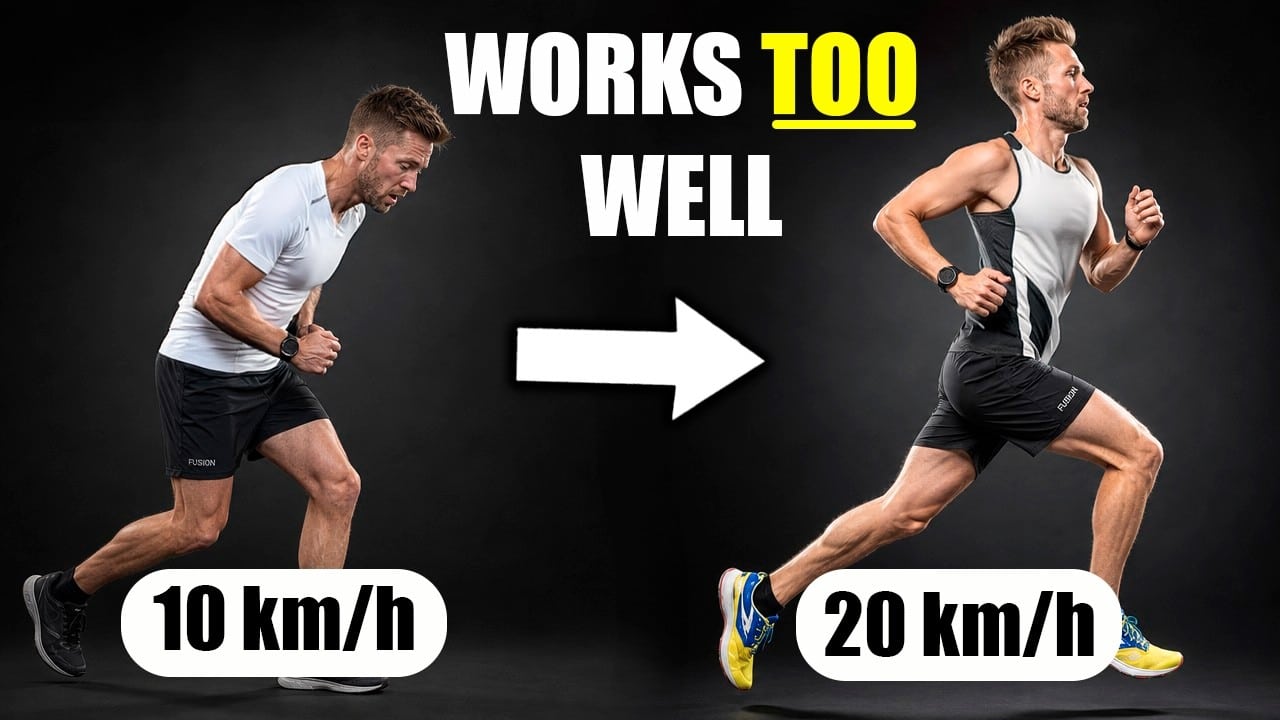
The secret wasn’t volume. It was identifying and fixing the one thing holding them back.
Here’s how you can do the same, no matter where you’re starting from.
Jump to:
Understanding Your Improvement Timeline
Runners often fall into two traps when starting structured training. They either expect dramatic improvements within weeks, or they underestimate their potential entirely.
Both approaches lead to training at the wrong paces—too fast or too slow to maximize results. Social media hasn’t helped, distorting realistic expectations and making sub-3-hour marathons or sub-20-minute 5Ks seem easily attainable for everyone.

If you want something simple that actually works, this is one of the most effective tools I’ve used to build strength, conditioning, and endurance without needing a full gym setup.
- Full-body training with one weight using swings, squats, and presses
- Solid cast iron build that feels stable and lasts for years
- Comfortable grip that makes high-rep workouts easier to handle
The Training Age Factor
Training age—how many years you’ve done structured work—is the biggest predictor of improvement speed. Newer runners improve faster, while veterans see slower gains.
Studies on elite runners show approximately 1% improvement per year at the highest levels. However, beginners can see speed improvements exceeding 10% in just 12 weeks.
Neuromuscular adaptations, where your brain learns to use muscles more efficiently, can appear in as little as 14 days. Bigger physiological changes typically require six weeks or longer.
Setting Realistic Pace Goals
Think of improvement as existing on a slider between 1% and 10%, depending on training experience. After coaching over a thousand runners, the expert notes that individual variation is enormous.
The most effective way to gauge progress? Test every four to six weeks with something that mimics race conditions.
- For 5K training: Run a 5K time trial
- For marathon training: Complete a long run with the final 30 minutes at marathon pace
Finding Your Weakest Link
Most runners follow training plans that attempt to improve everything simultaneously—threshold work, zone two training, VO2 max sessions. The result? Minimal meaningful progress in any single area.
If you want something simple that actually works, this is one of the most effective tools I’ve used to build strength, conditioning, and endurance without needing a full gym setup.
- Full-body training with one weight using swings, squats, and presses
- Solid cast iron build that feels stable and lasts for years
- Comfortable grip that makes high-rep workouts easier to handle
Think of running performance as a chain. It’s only as strong as its weakest link.
I just ran a half marathon a few months ago, and even though I was in great shape and heading for a time of around 1 hour and 11 minutes, I got cramps in my hip flexors and had to stop at around the 17th kilometer mark.
No amount of VO2 max or threshold training matters if hip flexor strength fails first. Identifying your specific limitation is crucial.
Identifying Your Limiter
Fading in the final third? You’re likely dealing with a pacing or durability issue—either starting too fast or lacking sufficient strength endurance.
Can’t shift gears when needed? Missing top-end speed typically indicates a power or VO2 max limitation.
Once identified, train your weakest link at least once per week while maintaining other systems. Fixing your primary limiter delivers faster results than trying to improve everything equally.
The Staircase Approach to Goal Setting
Runners typically sit at two extremes with goal setting. They choose something so comfortable it never pushes them to improve significantly, or they aim so ambitiously they break down chasing it.
If you want something simple that actually works, this is one of the most effective tools I’ve used to build strength, conditioning, and endurance without needing a full gym setup.
- Full-body training with one weight using swings, squats, and presses
- Solid cast iron build that feels stable and lasts for years
- Comfortable grip that makes high-rep workouts easier to handle
Elite athletes take a different approach.
Taking the Right-Sized Step
Imagine performance as a staircase. Jumping straight to the 10th step from the bottom results in failure and injury. Staying on the ground floor keeps you safe but stagnant.
The fastest progress comes from taking steps close enough to reach, but far enough to require stretching.
If your current 5K pace is 5 minutes per kilometer, don’t target 4 minutes per kilometer in 12 weeks—that’s a 10-step jump. Instead, aim for 4:45 or 4:50 per kilometer.
Your goal should feel uncomfortable, maybe even scary, but achievable with maximum effort. If training sessions don’t occasionally make you nervous about holding pace, your goal isn’t ambitious enough. If you’re certain you can nail every session perfectly, it’s too small.
The Minimum Effective Dose Principle
When progress happens, most runners instinctively add more—another session, extra miles, faster paces. The logic seems sound: if this amount works, more should work better.
If you want something simple that actually works, this is one of the most effective tools I’ve used to build strength, conditioning, and endurance without needing a full gym setup.
- Full-body training with one weight using swings, squats, and presses
- Solid cast iron build that feels stable and lasts for years
- Comfortable grip that makes high-rep workouts easier to handle
This instinct destroys more potential than almost anything else.
Don’t Drown Your Progress
Training is like watering a plant. The right amount produces growth. Double that amount thinking it’ll grow faster, and you drown it.
If you’re improving, don’t add more. Apply the minimum effective dose—the smallest training volume that still generates improvement.
Adding more typically doesn’t accelerate progress. It just increases injury and burnout risk. Consistent weekly improvement, however slow, guarantees you’ll reach goals eventually.
Most of the time, the fastest way forward is the slow way.
The Motivation Myth
There’s a persistent myth surrounding elite athletes—that they’re constantly motivated to train.
If you want something simple that actually works, this is one of the most effective tools I’ve used to build strength, conditioning, and endurance without needing a full gym setup.
- Full-body training with one weight using swings, squats, and presses
- Solid cast iron build that feels stable and lasts for years
- Comfortable grip that makes high-rep workouts easier to handle
The truth? Even professional triathletes training 18 sessions weekly are only truly motivated for about five of them.
When I was a professional triathlete training 18 sessions per week, I was probably motivated for around five of them. Then I had another 10 that were fine, like I wasn’t really motivated, but I wasn’t demotivated either. And then I had another three that I was really demotivated to do.
Even Muhammad Ali, one of history’s greatest athletes, famously said he hated every second of training.
Action Creates Motivation
Stop waiting for motivation. Motivation doesn’t lead to action—action leads to motivation.
Think about it: when was the last time you felt less motivated after starting a run? You don’t wait until you feel like running. You go, and after a few minutes, motivation follows.
Your goal and training plan get you out the door, not feelings.
- Build a plan simple enough to execute on your worst days
- Put it on your fridge and mark each completed workout with a red X
- Visual reminders of work already done reinforce consistency
The athletes who became great were those who showed up on the worst days—when it was raining and the hardest sessions loomed. Sessions completed without motivation are the ones that build consistency and deliver results.
If you want something simple that actually works, this is one of the most effective tools I’ve used to build strength, conditioning, and endurance without needing a full gym setup.
- Full-body training with one weight using swings, squats, and presses
- Solid cast iron build that feels stable and lasts for years
- Comfortable grip that makes high-rep workouts easier to handle
Building the Goal-Achievement Muscle
Most runners jump straight to big goals—the marathon, sub-20-minute 5K, or dream race. When they fall short, they blame fitness, their plan, or genetics.
The real problem lies elsewhere.
Start Small to Go Far
At 13 years old, the coach set a goal to ride 100 km on his bike within four weeks. Hitting that target changed not just his fitness, but his self-perception.
He set a bigger goal—winning a race within six months. After achieving that, yearly goals followed. Eventually, an eight-year Olympic goal emerged. Though he reached World Championships, the Olympics remained elusive.
But he stayed consistent for eight full years.
If I had started with the Olympic goal at 13 years old, I would have never gotten to that consistency. Simply because every single small win gave me proof.
Each small win provided proof that targets could be set and reached, building confidence to aim higher. Goal-setting skill grew alongside physical capacity.
If you want something simple that actually works, this is one of the most effective tools I’ve used to build strength, conditioning, and endurance without needing a full gym setup.
- Full-body training with one weight using swings, squats, and presses
- Solid cast iron build that feels stable and lasts for years
- Comfortable grip that makes high-rep workouts easier to handle
Train Your Achievement Muscle
If you’ve never reached a big goal, don’t start with one. You wouldn’t walk into a gym and immediately lift 100 pounds. You’d start with lighter weight and progress gradually.
Give yourself something completable within a few weeks. Prove you can do it. Once you’ve hit a four-week goal, aim bigger.
The skill of achieving goals compounds exactly like fitness does. Each win makes the next more believable and reachable.
Your Path Forward
You don’t need a better app, more complicated plan, or perfect training week. What you need:
- Identify your specific limiter based on your current goal
- Set a goal just outside your comfort zone—uncomfortable but reachable
- Apply just enough training stimulus to keep improving without drowning your progress
- Show up consistently by building the muscle of setting and reaching progressively bigger goals
Getting faster isn’t about motivation or genetic gifts. It’s about understanding your limitations, setting smart goals, training strategically, and proving to yourself—one small win at a time—that you’re capable of more than you imagined.