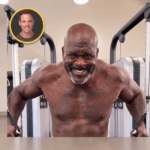
At 71 years old, Mark Sisson maintains a body composition and energy level that would make most 30-year-olds envious.
The former elite endurance athlete turned ancestral health pioneer credits his vitality not to genetics or expensive biohacking gadgets, but to 10 simple principles he calls the Primal Blueprint Laws.

His journey from broken-down marathoner to thriving septuagenarian offers a roadmap for anyone seeking sustainable health without pharmaceutical shortcuts or five-figure longevity protocols.
And his message is clear: nature already provides everything your body needs.
Jump to:
- From Elite Athlete to Physical Wreck
- The Birth of the Primal Blueprint
- The 10 Primal Blueprint Laws
- Metabolic Flexibility: The Central Pillar
- The Protein Question
- Against the Biohacking Industrial Complex
- The Social Dimension of Longevity
- What Science Says About Ancestral Health
- Practical Takeaways for Healthy Aging
- The Mainstreaming of Ancestral Health
- The Real Test: Sustainable Vitality
From Elite Athlete to Physical Wreck
Sisson’s story begins where many fitness journeys end: in chronic pain and inflammation.
During the late 1970s and 1980s, he competed as a professional marathoner and triathlete, finishing fourth in the 1982 Ironman World Championship. But by his late 30s, the very training that had made him an elite athlete was destroying his body.
Arthritis plagued his joints. Inflammation was constant. His immune system faltered despite logging more than 100 miles per week of running.
The breaking point forced a radical rethinking of everything he thought he knew about health and fitness.
The Birth of the Primal Blueprint
Sisson’s transformation began when he started questioning conventional wisdom through the lens of evolutionary biology.
He asked a simple question: What lifestyle were our genes designed for?
The answer led him to develop the Primal Blueprint, a framework based on how pre-agricultural humans lived. In 2006, he launched Mark’s Daily Apple, which became one of the most influential blogs in the paleo and ancestral health movement.
His approach challenged the pain-and-punishment mentality that had nearly destroyed him. Instead of chronic cardio and calorie restriction, he advocated for metabolic flexibility, joyful movement, and ancestral eating patterns.
The results spoke for themselves. Today, at 71, Sisson reportedly maintains approximately 10% body fat while eating around 110 grams of protein daily within a compressed eating window.
The 10 Primal Blueprint Laws
Sisson’s framework rests on 10 core principles that mirror the lifestyle patterns of our ancestors.
These laws form the foundation of his approach to healthy aging without expensive interventions.
Eat Plants and Animals
Sisson advocates for whole, unprocessed foods that humans have eaten for millennia: meat, fish, eggs, vegetables, fruits, nuts, and seeds.
He built Primal Kitchen, a whole-food condiment brand founded in 2015, around this principle. Kraft Heinz saw the value, acquiring the company in 2019 for approximately $200 million.
Avoid Poisonous Things
This law extends beyond obvious toxins to include processed foods, industrial seed oils, excessive sugar, and environmental pollutants that trigger inflammation.
Modern diseases of civilization, Sisson argues, stem largely from the mismatch between ancient genes and modern chemical exposures.
Move Frequently at a Slow Pace
Walking, hiking, and low-intensity movement form the foundation of ancestral fitness.
This type of activity builds aerobic capacity without the inflammatory stress of chronic cardio. It’s what longevity scientists call zone 2 training—exercising at an intensity where you can still hold a conversation.
Lift Heavy Things
Resistance training preserves muscle mass and bone density as we age.
For Sisson, this doesn’t mean grinding through painful gym sessions. It means functional strength work that mimics ancestral movement patterns: carrying, pulling, pushing, squatting.
Sprint Once in a While
Brief, intense bursts of effort stimulate human growth hormone production and maintain fast-twitch muscle fibers.
Sisson practices this through activities like ultimate frisbee rather than formal sprint intervals. The key is occasional intensity, not constant punishment.
Get Adequate Sleep
Sleep is when the body repairs, consolidates memory, and regulates hormones.
Sisson emphasizes aligning sleep patterns with natural light cycles—something our ancestors did automatically but modern life disrupts constantly.
Play
This might be the most underappreciated principle in modern fitness culture.
Sisson has shifted away from pain-tolerance-driven endurance training toward joyful activities: playing ultimate frisbee, fat-tire biking, and paddleboarding with friends.
Behavioral health experts note that the social dimension of play is among the strongest predictors of healthy aging, often more powerful than formal exercise protocols.
Get Adequate Sunlight
Daily sun exposure regulates circadian rhythms, produces vitamin D, and provides therapeutic wavelengths of light.
Sisson is sharply critical of people spending thousands on red-light therapy panels when sunlight delivers the same benefits for free.
Nature already provides the same wavelengths and hormonal signals that people are paying thousands of dollars to simulate artificially.
Avoid Stupid Mistakes
This law is about risk awareness and injury prevention.
Ancestors who took unnecessary risks didn’t pass on their genes. Modern application means avoiding preventable injuries that derail long-term health and fitness.
Use Your Brain
Mental stimulation, learning new skills, and cognitive challenges keep the brain plastic and resilient.
Sisson maintains that cognitive function in older adults depends as much on continued learning and problem-solving as physical activity.
Metabolic Flexibility: The Central Pillar
According to a 2026 BoxLife Magazine profile, Sisson continues to emphasize metabolic flexibility as the cornerstone of his longevity approach.
Metabolic flexibility refers to the body’s ability to efficiently switch between burning carbohydrates and fat for fuel depending on availability and activity level.
Most modern diets—high in processed carbohydrates and constant snacking—lock people into glucose dependence. Their bodies lose the ability to access stored fat efficiently.
Sisson practices intermittent fasting, consuming the majority of his calories within a compressed eating window. This approach, combined with low-carbohydrate eating focused on whole foods, trains the body to burn fat effectively.
The result is stable energy throughout the day without blood sugar crashes or constant hunger.
The Protein Question
Sisson’s reported intake of 110 grams of protein daily raises interesting questions about optimal nutrition for aging adults.
Current research generally recommends 1.2 to 1.6 grams of protein per kilogram of body weight for older adults to prevent sarcopenia—age-related muscle loss.
Whether Sisson’s intake meets that threshold depends on his body weight, which hasn’t been publicly disclosed. For a 160-pound (73 kg) individual, 110 grams would provide approximately 1.5 grams per kilogram—solidly within recommended ranges.
Nutritional researchers emphasize that protein distribution throughout the day matters as much as total intake. Consuming adequate protein at each meal stimulates muscle protein synthesis more effectively than front-loading or back-loading daily intake.
Against the Biohacking Industrial Complex
One of Sisson’s most pointed critiques targets expensive biohacking protocols and pharmaceutical shortcuts.
He’s particularly vocal about GLP-1 drugs like Ozempic and Wegovy, which have become trendy weight-loss tools among people seeking metabolic benefits without lifestyle change.
His argument is straightforward: Why pay thousands for artificial interventions when ancestral practices deliver the same hormonal signals naturally?
- Red-light therapy panels: Sunlight provides the same wavelengths
- Hyperbaric oxygen chambers: Zone 2 training improves mitochondrial function
- Continuous glucose monitors for non-diabetics: Whole foods and fasting naturally stabilize blood sugar
- Ice baths and cryotherapy: Cold water immersion costs nothing
This low-tech philosophy doesn’t dismiss science—it embraces evolutionary biology as the original biohacking toolkit.
The Social Dimension of Longevity
While diet and exercise dominate health conversations, Sisson’s emphasis on play highlights an often-overlooked longevity factor.
He describes his shift from solitary endurance suffering to group activities like ultimate frisbee as transformative—not just physically but mentally and socially.
Research on Blue Zones—regions where people routinely live past 100—consistently identifies strong social connections as a defining characteristic. Loneliness and social isolation carry health risks comparable to smoking or obesity.
Behavioral health experts note that playful, social movement provides benefits beyond what solitary exercise can deliver: laughter, competition, cooperation, and community belonging.
Sisson’s current lifestyle embodies this principle. Fat-tire biking with friends. Paddleboarding. Pick-up ultimate frisbee games.
Movement that doesn’t feel like punishment.
What Science Says About Ancestral Health
The Primal Blueprint aligns with several evidence-backed interventions for healthy aging.
Resistance training consistently shows benefits for maintaining muscle mass, bone density, and metabolic health in older adults. Low-intensity cardiovascular activity improves mitochondrial function and aerobic capacity without inflammatory stress.
Sleep quality directly impacts cognitive function, immune health, and metabolic regulation. Sun exposure regulates vitamin D production and circadian rhythms.
However, longevity scientists and geriatricians note that Sisson’s self-reported body composition and metabolic markers are anecdotal rather than clinically verified. His physique and health outcomes haven’t been published in peer-reviewed literature.
This makes it difficult to determine how much of his success stems from his specific framework versus individual genetics, lifestyle consistency, or other unmeasured factors.
That doesn’t invalidate his principles—it simply means the evidence supporting them comes from general research on their individual components rather than controlled studies of his complete system.
Practical Takeaways for Healthy Aging
Whether or not someone adopts the complete Primal Blueprint, several principles offer actionable value.
- Prioritize protein: Older adults need more protein per pound of body weight than younger people to maintain muscle
- Move daily at low intensity: Walking, hiking, or cycling builds aerobic base without inflammatory stress
- Lift heavy things twice weekly: Resistance training prevents sarcopenia and maintains bone density
- Get morning sunlight: Early sun exposure regulates circadian rhythms and improves sleep quality
- Find playful movement: Social activities provide psychological benefits beyond solitary exercise
- Practice time-restricted eating: Compressed eating windows improve metabolic flexibility
- Avoid processed foods: Whole foods reduce inflammation and support stable blood sugar
None of these require expensive equipment, pharmaceutical interventions, or genetic advantages.
The Mainstreaming of Ancestral Health
Kraft Heinz’s $200 million acquisition of Primal Kitchen signals how far ancestral nutrition has moved from fringe movement to mainstream acceptance.
Major food corporations now recognize consumer demand for minimally processed, whole-food products. What started as a blog challenging conventional nutrition wisdom in 2006 evolved into a business model attractive to one of the world’s largest food companies.
Sisson’s trajectory—from broken athlete to influential health educator to successful entrepreneur—demonstrates that ancestral health principles resonate beyond paleo diet enthusiasts.
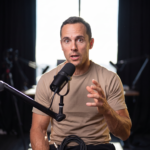
His current focus remains education rather than commercialization. Recent podcast and YouTube appearances continue promoting accessible, low-tech approaches to longevity.
The Real Test: Sustainable Vitality
At 71, Sisson represents something increasingly rare: someone who appears to be thriving in older age rather than merely surviving.
Whether his specific metrics—10% body fat, 110 grams of daily protein—are precisely accurate matters less than the broader pattern his life demonstrates.
He’s physically active and pain-free after decades of chronic inflammation. He maintains muscle mass and cognitive sharpness. He engages in joyful movement rather than punishing exercise.
Most importantly, his approach is sustainable. No extreme restrictions. No expensive protocols. No pharmaceutical dependencies.
Just principles aligned with how human bodies evolved to function.
For anyone seeking healthy aging without complexity or expense, that might be the most valuable lesson of all.