In a recent article on Military.com, former Navy SEAL and certified strength and conditioning specialist Stew Smith made a compelling case for prioritizing lower body training.
Strong legs aren’t just about aesthetics or athletic performance—they’re literally foundational to longevity and independence as we age.
Smith outlined an advanced leg workout that’s completely scalable for beginners through elite athletes, emphasizing that leg training has no age limit.
Whether you’re preparing for tactical operations or simply want to maintain quality of life into your golden years, this workout delivers results.
Jump to:
Why Leg Strength Matters More Than You Think
Smith emphasizes that leg training goes far beyond vanity metrics or military fitness tests.
Strong legs mean longer life, greater independence as we age and optimal performance in running, rucking and other load-bearing activities involved in tactical training.
Research backs this up significantly. Studies have shown that leg strength and grip strength are among the most reliable predictors of longevity and functional independence in older adults.
When you can squat, lunge, and carry loads effectively, you’re investing in decades of mobility and self-sufficiency.
The Complete Leg Day Protocol
Smith’s workout is structured in four distinct phases, each targeting different aspects of lower body strength and conditioning.
Phase 1: Dynamic Warm-Up With Half Pyramid
One of Smith’s favorite warm-up techniques is the half pyramid combined with dynamic movement.
Start with one bodyweight squat and one toe touch, then jog or walk 50 meters. Increase by one rep each set until you reach 10 squats and 10 toe touches.
This progressive approach gradually elevates heart rate while preparing joints and muscles for heavier loads. Follow this sequence with a one-mile jog, 10-minute bike ride, or other non-impact cardio.
Phase 2: Strength Building With Squats
Now comes serious strength work.
Choose either barbell front squats for advanced lifters or kettlebell goblet squats for those building foundational strength. Complete three rounds of 5-10 reps.
Between sets, Smith recommends hanging knee-ups on a pullup bar or vertical knee raise device—10 reps per round. This decompresses the spine while simultaneously building core strength, creating a perfect recovery-active movement combination.
Phase 3: Posterior Chain Emphasis
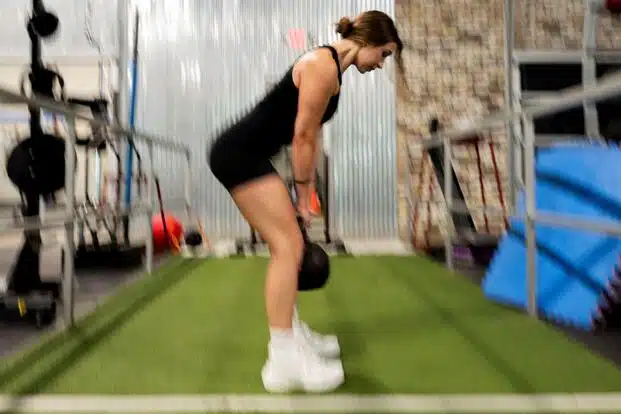
Deadlift variations target the hamstrings, glutes, and lower back—crucial muscle groups for athletic performance and injury prevention.
Advanced lifters perform barbell deadlifts for 5 reps per set, while others use kettlebells for Romanian deadlifts (RDL) at 10 reps. Again, decompress between sets with 10 hanging knee-ups.
Repeat this circuit three times, focusing on quality movement patterns rather than maximal weight.
Phase 4: Functional Carries and Dynamic Movement
This section transforms traditional strength training into tactical, real-world conditioning.
Smith’s preferred method? Fireman carries with a partner for 100 meters. If that’s not feasible, farmer walks with heavy weights work perfectly.
Complete the circuit with:
- Kettlebell swings: 20 reps for explosive hip power
- Walking lunges: 100 meters to build unilateral strength
- Recovery cardio: 400-meter jog or 2-minute bike
Repeat this demanding sequence three times.
Phase 5: High-Volume Squat Pyramid Finish
Just when your legs think they’re done, Smith delivers the finale.
Starting at 11 bodyweight squats, perform a 200-meter run (or 30-second bike), then increase to 12 squats. Continue this pattern up to 20 squats.
The total damage? 155 air squats and 2,000 meters of running. You control the intensity—these runs can be easy recovery pace or challenging tempo efforts depending on your fitness level and goals.
Scaling for All Fitness Levels
Smith emphasizes that while this protocol appears advanced, every component is completely adaptable.
Beginners can reduce weights, decrease rep counts, or substitute easier movement variations. The goblet squat replaces front squats, kettlebell RDLs substitute for heavy deadlifts, and farmer walks can replace fireman carries.
What matters most isn’t the specific load or volume—it’s consistent progressive overload over time.
Recovery Is Non-Negotiable
Smith doesn’t leave athletes hanging after this demanding session.
The cooldown consists of 15 minutes of easy cardiovascular work—jogging, biking, elliptical, or walking. Every three minutes, pause for one minute of dedicated stretching focused on legs and lower back.
This deliberate recovery period helps reduce muscle soreness, improve flexibility, and begin the adaptation process that makes you stronger for next session.
The Science Behind Leg Strength and Longevity
Smith references physiology research linking leg and grip strength to longevity markers.
Studies show that lower body strength is strongly associated with reduced all-cause mortality, better metabolic health, and maintained independence throughout aging. When leg strength declines, so does quality of life—difficulty climbing stairs, getting out of chairs, and performing daily activities becomes increasingly common.
By prioritizing leg training now, you’re essentially buying insurance for your future mobility and health.
Weekly Programming Recommendations
Leg days have no age group, as we all need to do them each week of our lives.
Smith’s statement underscores an important principle: consistency beats intensity over the long haul.
Dedicate at least one focused leg session weekly, though two sessions allow for better volume distribution and recovery. Tactical athletes and military personnel may benefit from emphasizing load-bearing exercises like carries and rucking to build mission-specific durability.
When You Invest in Legs, You Invest in Life
Smith’s comprehensive leg workout represents more than just another training session.
It’s a strategic investment in power, endurance, stability, and longevity that pays dividends across decades. Whether you’re preparing for Special Operations selection, maintaining tactical readiness, or simply want to play with grandchildren without limitations, strong legs provide the foundation.
The workout’s scalability means beginners through elite athletes can benefit immediately. Start where you are, progress consistently, and watch how improved leg strength transforms not just performance, but quality of life itself.