Learning to jump rope doesn’t have to mean sacrificing results.
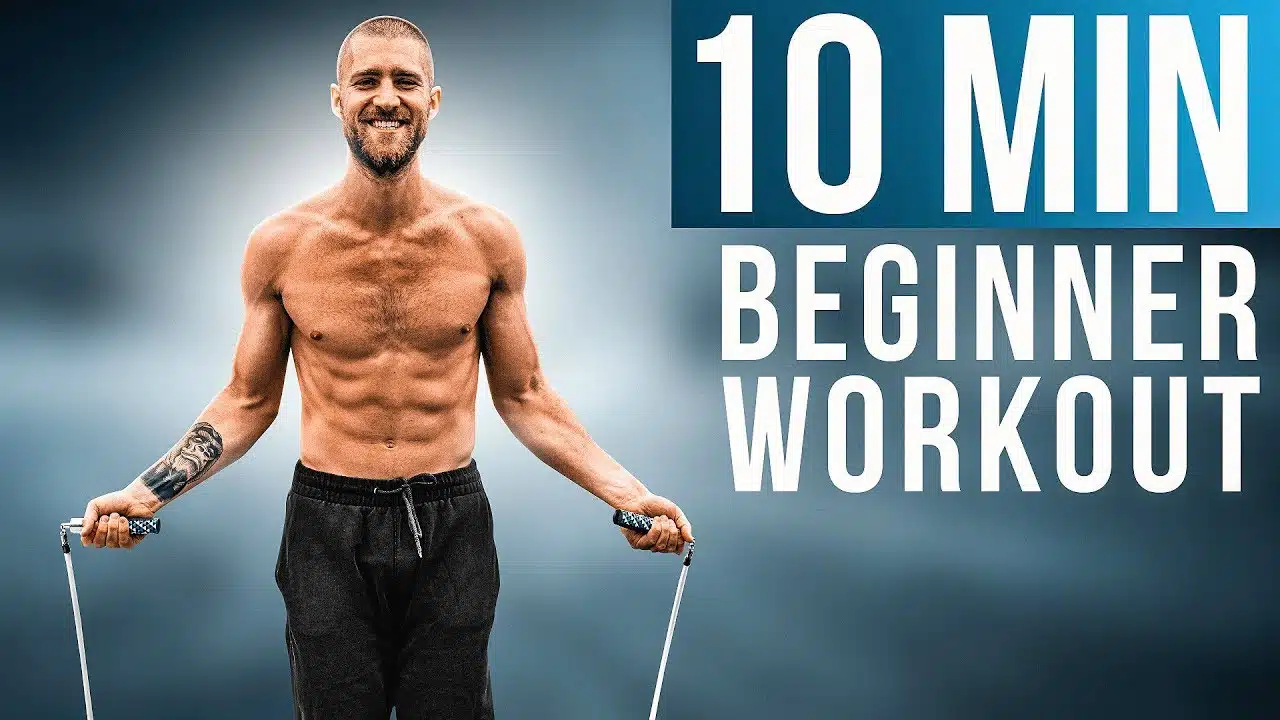
Brandon Epstein of the Jump Rope Dudes recently shared a 10-minute beginner workout that promises real calorie burn while building fundamental rope skills.
The secret? Combining basic jump rope technique with high-intensity bodyweight exercises.
No complicated tricks required—just proper form and genuine effort.
Jump to:
Why Heavier Ropes Make Learning Easier
Epstein recommends starting with a one-pound weighted rope, specifically the Cross Rope brand he demonstrates in his tutorial.
Heavier ropes provide crucial feedback for beginners who struggle with coordination and timing.
The heavier ropes give you more feedback so if you’re a beginner it’s easier to feel the rope as you rotate it.
That tactile sensation helps newcomers develop rhythm without requiring advanced skill. You can literally feel where the rope is in its rotation, making it easier to time jumps correctly.
But don’t let equipment become an excuse. Epstein emphasizes that any jump rope works for this workout—weighted versions just accelerate the learning curve.
The 20-10 Interval Structure
This workout follows a straightforward Tabata-style format: 20 seconds of exercise alternating with 10 seconds of rest, repeated 20 times total.
The pattern alternates between jump rope sets and bodyweight movements like jumping jacks, air squats, push-ups, high knees, butt kickers, and lunges.
This approach serves dual purposes. First, it maintains cardiovascular intensity even when rope technique breaks down. Second, it gives frustrated beginners productive recovery time between skill-building rope intervals.
The bodyweight exercises aren’t filler—they’re calorie-burning bridges that prevent workout quality from deteriorating during the learning phase.
Mastering the Regular Bounce: Technique Breakdown
Throughout the workout, Epstein coaches specific technical elements during each rope interval.
Jump Height and Foot Positioning
The first thing I want you to focus on is taking tiny steps, tiny hops. You don’t need to take big jumps in the air, it’s not necessary.
Minimal clearance—just enough to let the rope pass underneath—conserves energy and improves sustainability. Land on the balls of your feet, not flat-footed or exclusively on toes.
This position sits between the base of your foot and your toes, creating natural shock absorption.
Arm and Wrist Mechanics
Common beginner mistakes include excessive arm movement and using shoulder rotation to swing the rope.
Epstein corrects this pattern with clear instruction:
Try to keep your arms against your body and keep them pretty stationary. You don’t need to move your arms up and down, just keep where they are and use the flick of the rope.
Wrist rotation powers the rope, not sweeping arm motions. Keep elbows close to ribs, hands roughly at hip level, positioned symmetrically on both sides.
Posture and Core Engagement
Proper jump rope form engages far more than just legs and wrists. Epstein emphasizes maintaining straight back alignment with shoulder blades pulled together and down.
This posterior chain activation transforms jumping rope into genuine full-body conditioning rather than isolated cardio.
Shoulders should be pulled away from ears, preventing the hunched position many beginners adopt when concentrating.
Progressive Speed Development
As comfort increases throughout the workout, Epstein encourages gradual tempo increases.
If you’re starting to feel more comfortable with the jump rope forward, see if you can speed things up a little bit. You’re going to do so by flicking your wrist faster.
Speed comes from wrist velocity, not larger movements. Faster wrist flicks create quicker rope rotation, requiring correspondingly faster but still minimal hops.
The final jump rope interval serves as a burnout set where participants test their maximum sustainable pace with proper form.
Mental Game: Handling Mistakes
Rope trips are inevitable, especially for beginners. Epstein normalizes this frustrating reality with refreshing honesty.
Whenever you trip over the rope, you know, just swing it back over, hop back into it. It’s not the end of the world, it’s just part of the process. I personally still trip over the rope all the time and ain’t no thing, just keep going.
This mindset prevents the discouragement that derails many jump rope beginners. Mistakes don’t invalidate the workout—they’re simply data points in skill acquisition.
The bodyweight exercise intervals provide psychological reset opportunities, allowing rope frustration to dissipate before the next attempt.
Why This Format Works for Beginners
Traditional beginner jump rope workouts often fail because they prioritize skill development over fitness results, leaving participants feeling like they “wasted” workout time on failed attempts.
Epstein’s hybrid approach solves this problem elegantly:
- Guaranteed calorie burn through bodyweight intervals regardless of rope proficiency
- Skill practice in manageable doses without overwhelming newcomers
- Built-in recovery that prevents early fatigue from destroying form
- Progressive coaching cues that address one technical element at a time
- Psychological wins from completing exercises successfully between rope attempts
The workout structure also functions as a dynamic warm-up for more advanced training. Epstein notes these low-impact movements and basic rope work typically appear in his warm-up routines for experienced jumpers.
Efficiency Advantages of Jump Rope Training
Beyond skill development, Epstein highlights jump rope’s fundamental appeal as a conditioning tool.
Jump rope is an amazing tool for burning a lot of calories in the least amount of time. It’s very efficient.
Research supports this claim. Studies show jump rope training can burn approximately 10-16 calories per minute depending on intensity and body weight—comparable to running at 6-7 mph but with significantly less impact stress.
The full-body coordination required activates multiple muscle groups simultaneously, creating metabolic demand that persists beyond the workout itself through elevated post-exercise oxygen consumption.
The Foundation-Building Philosophy
This workout deliberately avoids flashy tricks and complex variations. The regular bounce—the most fundamental jump rope movement—receives exclusive attention across all rope intervals.
Mastery of basics creates the platform for everything advanced. Attempting crossovers, double-unders, or side swings before developing solid regular bounce mechanics builds skills on unstable foundations.
Epstein’s approach prioritizes proper movement patterns over variety, understanding that correct fundamentals practiced consistently produce better long-term results than premature progression.
The 10-minute duration makes this workout accessible as a daily practice session. Consistent repetition of these basic patterns with coached attention to specific technical elements accelerates skill acquisition far more effectively than occasional longer sessions.
For beginners intimidated by jump rope’s coordination demands, this structured, results-focused approach offers a practical entry point that delivers fitness benefits while building competence.